
Tesla's FSD v14 Free Trial as a Catalyst for Mass Adoption and Revenue Growth
Strategic Market Expansion: From North America to Global Rollout
The FSD v14 trial's eligibility criteria-targeting owners of Model S, Model 3, Model X, Model Y, and Cybertruck with FSD v14.2 or later-ensure that Tesla's most tech-savvy and early-adopter customer base is prioritized. This segment is critical for generating initial feedback and fostering organic word-of-mouth marketing. According to a report by Stifel, FSD adoption rates are expected to surge as users gain firsthand experience with the system, increasing their willingness to pay for either a one-time purchase or a subscription model. The trial's design, which includes a free month for active subscribers, further incentivizes participation while aligning with Tesla's recurring revenue strategy according to the source.
Beyond North America, Tesla is aggressively pursuing regulatory approvals in Europe and Asia, two markets with stringent but evolving autonomous driving frameworks. In Europe, the Dutch vehicle authority (RDW) has committed to granting national approval for FSD by February 2026, leveraging exemptions under EU Article 39 to bypass rigid regulatory constraints. This approach allows Tesla to maintain the system's advanced capabilities while meeting safety standards, creating a domino effect for approvals in other EU countries. Meanwhile, in China, Tesla is navigating partial regulatory approvals and localizing its neural networks to adapt to dense urban environments, with full approval anticipated by early 2026. These efforts underscore Tesla's ability to tailor its technology to regional requirements, ensuring scalability without compromising innovation.
Data-Driven Product Refinement: Enhancing Reliability and Safety
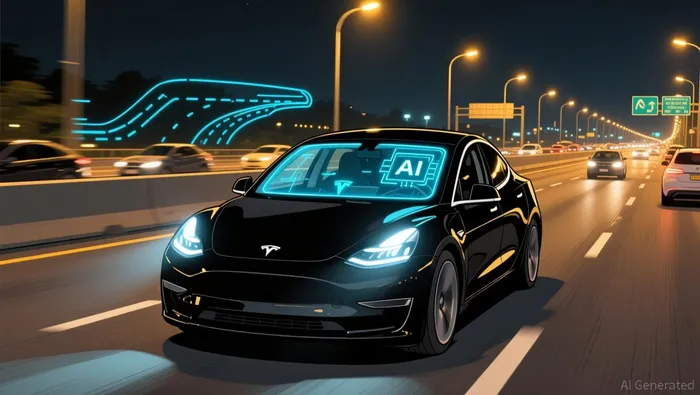 The FSD v14 trial's success hinges on Tesla's ability to collect and analyze vast amounts of real-world data. Early results indicate significant improvements in miles between driver interventions, a key metric for system reliability. For instance, FSD v14.1.4 introduced navigation integration into the vision-based neural network, enabling the system to handle detours and blocked roads more effectively. Additionally, the update's "Arrival Options" feature, which simulates Robotaxi-style drop-offs, demonstrates Tesla's focus on user convenience and seamless integration into daily routines as noted in release notes.
Data-driven refinements are also evident in FSD v14.1.7, which removed the "beta" label and incorporated attention-monitoring features to meet European safety standards. These updates highlight Tesla's iterative development process, where user feedback and real-world performance data are rapidly translated into software improvements. As Piper Sandler noted, FSD v14 is "probably already better" than the average American driver in terms of safety and performance, a testament to the effectiveness of Tesla's data-centric approach.
Revenue Growth and Long-Term Value Creation
The FSD v14 trial's impact on revenue is twofold. First, it accelerates adoption rates, which directly boosts sales of the $15,000 FSD package or the $199/month subscription. With current adoption at 12% of Tesla's fleet, even a modest increase could translate into billions in incremental revenue. Second, the trial generates a wealth of data that fuels further AI advancements, reducing the need for expensive third-party testing and accelerating the development of future iterations like FSD v15.
Moreover, Tesla's global expansion strategies are poised to unlock new revenue streams. In China, where FSD is priced at ¥62,000 ($8,700), the system's premium positioning aligns with the purchasing power of Tier-1 city buyers. Meanwhile, the company's robotaxi ambitions, supported by in-house AI5 chip development and planned Cybercab production in 2027, suggest a long-term shift toward mobility-as-a-service as analysts note. Analysts like Rob Wertheimer of Melius argue that Tesla's FSD roadmap could dominate a $7 trillion autonomous driving sector, reshaping the automotive industry's value proposition.
Challenges and Mitigation Strategies
Despite its momentum, Tesla faces regulatory and market challenges. In Europe, UNECE standards and marketing claims remain hurdles, while in China, EV subsidy cuts could impact delivery expectations according to market analysis. However, Tesla's focus on 5G infrastructure and smart traffic signal integration in key markets mitigates these risks by enhancing FSD's scalability and reliability as observed in China's regulatory context. Additionally, the company's over-the-air update capabilities ensure rapid post-approval improvements, maintaining a competitive edge in a rapidly evolving sector.
Conclusion
Tesla's FSD v14 free trial is more than a marketing tactic-it is a calculated strategy to drive mass adoption, refine its AI systems, and expand into global markets. By combining user-centric design with data-driven innovation, Tesla is not only accelerating its path to profitability but also redefining the future of autonomous mobility. As regulatory approvals materialize and user adoption grows, the FSD v14 trial will likely serve as a catalyst for sustained revenue growth and long-term value creation in the autonomous vehicle revolution.







Comentarios
Aún no hay comentarios