
Tesla's FSD Conundrum: A Blessing in Disguise?
Generado por agente de IAWesley Park
jueves, 30 de enero de 2025, 6:42 am ET1 min de lectura
REVB--
Tesla (TSLA) stock surged in Thursday's premarket despite a bearish report from GLJ Research's Gordon L. Johnson, who pointed out that 80% of Tesla's cars on the road use HW3, which cannot fully utilize the company's Full Self-Driving (FSD) technology. This revelation has sparked a conversation about the potential long-term implications of this issue on Tesla's revenue, growth prospects, and investor sentiment. Let's dive into the details and explore how Tesla might address this challenge.
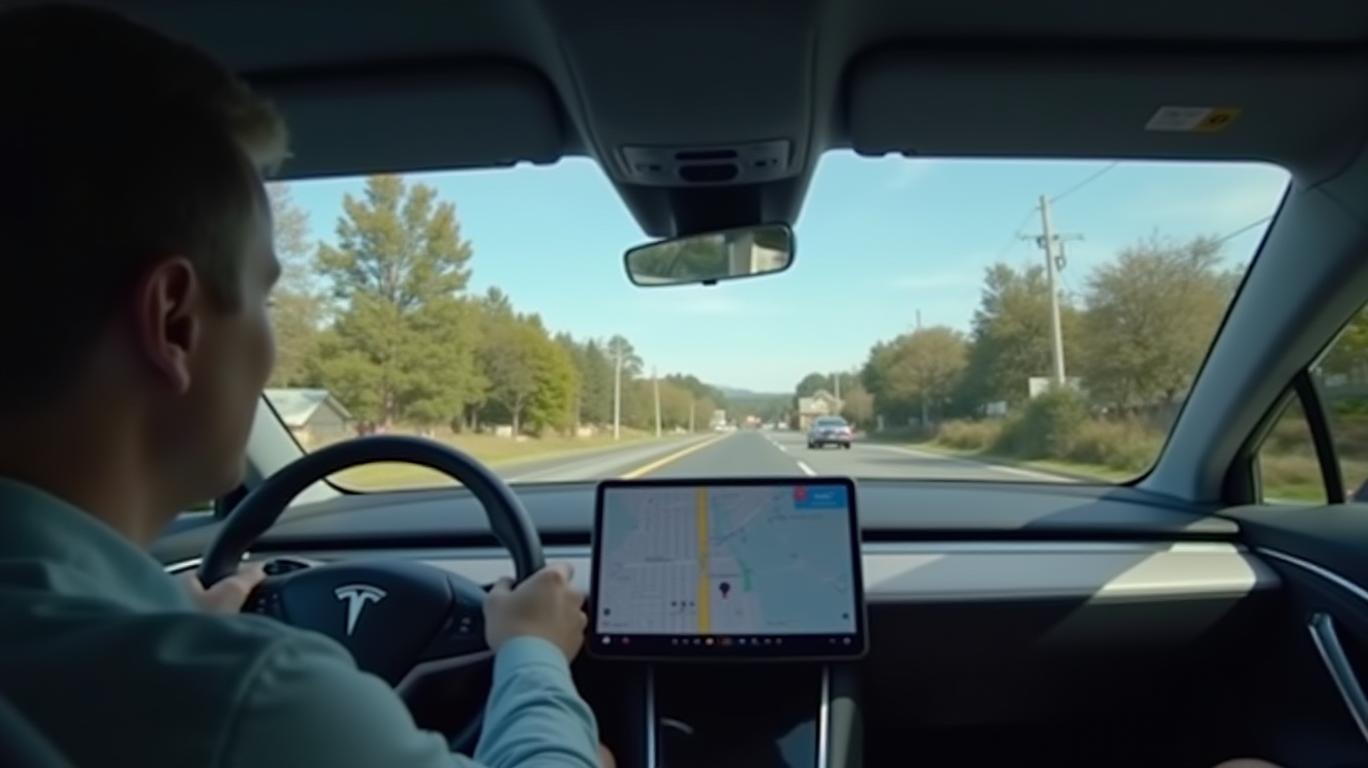
First, it's essential to understand the context. Tesla has been promising that all its cars since 2016 had the hardware to utilize FSD, and many sell-side analysts have been giving the company billions in value for its HW3 cars, assuming they would generate millions in revenues as FSD robotaxis. However, Johnson's report suggests that this assumption may be flawed, as the HW3 computers cannot fully support FSD capabilities.
This revelation has significant implications for Tesla's valuation and investor sentiment. The company's stock price has been volatile in recent months, and this news has further fueled concerns about the company's ability to deliver on its promises and maintain its competitive edge in the market. If Tesla's revenue and growth prospects are negatively impacted, it could lead to further declines in the company's stock price.
To address this challenge, Tesla might offer a free upgrade to customers who purchased the FSD package, allowing them to retain the value of the $8,000 they spent on the capability. This solution could help maintain customer satisfaction and loyalty, which could lead to further sales and positive word-of-mouth marketing. However, it's important to note that this solution would come with associated costs, such as the production and installation of the new hardware and labor costs.
For customers, the benefits of this solution would include the ability to upgrade their existing vehicles with the latest FSD technology without having to purchase a new vehicle. This could save customers significant money, as the cost of a new vehicle can be much higher than the cost of an upgrade. Additionally, customers who choose to upgrade their vehicles with the new hardware may experience improved safety and convenience, as the new hardware is designed to support fully unsupervised autonomous driving.
In conclusion, Tesla's admission that it will have to replace the HW3 computers in existing cars to make them full self-driving (FSD) compatible has significant implications for the company's revenue, growth prospects, and investor sentiment. However, by offering a free upgrade to customers who purchased the FSD package, Tesla can address this challenge and maintain customer satisfaction and loyalty. While this solution comes with associated costs, it could ultimately benefit both the company and its customers in the long run.
TSLA--
Tesla (TSLA) stock surged in Thursday's premarket despite a bearish report from GLJ Research's Gordon L. Johnson, who pointed out that 80% of Tesla's cars on the road use HW3, which cannot fully utilize the company's Full Self-Driving (FSD) technology. This revelation has sparked a conversation about the potential long-term implications of this issue on Tesla's revenue, growth prospects, and investor sentiment. Let's dive into the details and explore how Tesla might address this challenge.
First, it's essential to understand the context. Tesla has been promising that all its cars since 2016 had the hardware to utilize FSD, and many sell-side analysts have been giving the company billions in value for its HW3 cars, assuming they would generate millions in revenues as FSD robotaxis. However, Johnson's report suggests that this assumption may be flawed, as the HW3 computers cannot fully support FSD capabilities.
This revelation has significant implications for Tesla's valuation and investor sentiment. The company's stock price has been volatile in recent months, and this news has further fueled concerns about the company's ability to deliver on its promises and maintain its competitive edge in the market. If Tesla's revenue and growth prospects are negatively impacted, it could lead to further declines in the company's stock price.
To address this challenge, Tesla might offer a free upgrade to customers who purchased the FSD package, allowing them to retain the value of the $8,000 they spent on the capability. This solution could help maintain customer satisfaction and loyalty, which could lead to further sales and positive word-of-mouth marketing. However, it's important to note that this solution would come with associated costs, such as the production and installation of the new hardware and labor costs.
For customers, the benefits of this solution would include the ability to upgrade their existing vehicles with the latest FSD technology without having to purchase a new vehicle. This could save customers significant money, as the cost of a new vehicle can be much higher than the cost of an upgrade. Additionally, customers who choose to upgrade their vehicles with the new hardware may experience improved safety and convenience, as the new hardware is designed to support fully unsupervised autonomous driving.
In conclusion, Tesla's admission that it will have to replace the HW3 computers in existing cars to make them full self-driving (FSD) compatible has significant implications for the company's revenue, growth prospects, and investor sentiment. However, by offering a free upgrade to customers who purchased the FSD package, Tesla can address this challenge and maintain customer satisfaction and loyalty. While this solution comes with associated costs, it could ultimately benefit both the company and its customers in the long run.

Divulgación editorial y transparencia de la IA: Ainvest News utiliza tecnología avanzada de Modelos de Lenguaje Largo (LLM) para sintetizar y analizar datos de mercado en tiempo real. Para garantizar los más altos estándares de integridad, cada artículo se somete a un riguroso proceso de verificación con participación humana.
Mientras la IA asiste en el procesamiento de datos y la redacción inicial, un miembro editorial profesional de Ainvest revisa, verifica y aprueba de forma independiente todo el contenido para garantizar su precisión y cumplimiento con los estándares editoriales de Ainvest Fintech Inc. Esta supervisión humana está diseñada para mitigar las alucinaciones de la IA y garantizar el contexto financiero.
Advertencia sobre inversiones: Este contenido se proporciona únicamente con fines informativos y no constituye asesoramiento profesional de inversión, legal o financiero. Los mercados conllevan riesgos inherentes. Se recomienda a los usuarios que realicen una investigación independiente o consulten a un asesor financiero certificado antes de tomar cualquier decisión. Ainvest Fintech Inc. se exime de toda responsabilidad por las acciones tomadas con base en esta información. ¿Encontró un error? Reportar un problema




Comentarios
Aún no hay comentarios