
Tesla Faces Employee Morale Issues, CEO Elon Musk's Leadership Under Scrutiny
PorAinvest
miércoles, 4 de junio de 2025, 4:09 am ET2 min de lectura
AAPL--
Tesla's latest quarterly earnings report revealed a 13% drop in vehicle deliveries compared to the previous year, reaching only 337,000 vehicles — the lowest figure since Q2 2022. The company is also facing intensifying competition from Chinese electric vehicle manufacturers and has seen investment funds pulling out since Musk's involvement in the Trump administration [1].
Musk's strategic shift includes renewed focus on the company's mission to accelerate the transition to electric transport and sustainable energy. He is emphasizing the importance of Tesla's "higher purpose" and the need for employees to focus on this mission [1]. This strategic change is aimed at transforming Tesla from a car company into a technological infrastructure for an autonomous world.
Tesla's first advantage is its control over the entire value chain. Like Apple, Tesla develops both the hardware and software for its products, allowing it to offer a smooth and customized user experience. The company manufactures the batteries, motors, and computing systems for its electric cars and integrates these components seamlessly. Additionally, Tesla provides remote software updates for its vehicles, enabling performance and functionality improvements even after the sale [1].
Beyond cars, Tesla is building an entire ecosystem around renewable energy. It offers products like solar panels, energy storage batteries (Powerwall), and a network of fast-charging stations (Supercharger). By providing energy solutions for homes and businesses, Tesla strengthens customer relationships and increases their dependence on the company's products [1].
Another leading area for Tesla is autonomous driving. By collecting data from millions of kilometers of driving, Tesla improves its AI systems and advances toward a future where vehicles drive themselves. The investment in the Dojo supercomputer, designed to train machine learning models, highlights Tesla's commitment to advanced technologies [1].
If Tesla succeeds in launching a commercial robotaxi service, it won't just shift from a "vehicle sales" model to a Mobility-as-a-Service model — it will create an entirely new category. Similar to how Apple turned the iPhone into a monthly revenue platform through services, Tesla aims to turn every vehicle into an autonomous robot that generates income — 24/7 [1].
The vision is to transform Tesla from a car brand into an infrastructure company — providing transportation, energy, data, and autonomous solutions. If successful, it won't just catch up to Apple — it may reinvent the way we move, consume, and interact with the world [1].
Tesla's future no longer lies in selling cars — but in leading a model shift that could redefine the company's entire identity. After Musk's strategic change, Tesla is no longer just a car company, but a technological infrastructure for an autonomous world [1].
References:
[1] https://www.ynetnews.com/business/article/hyduvyqgle
[2] https://www.morningstar.com/news/marketwatch/20250603112/elon-musk-calls-trump-tax-bill-an-abomination-does-he-have-the-clout-to-stop-it
TSLA--
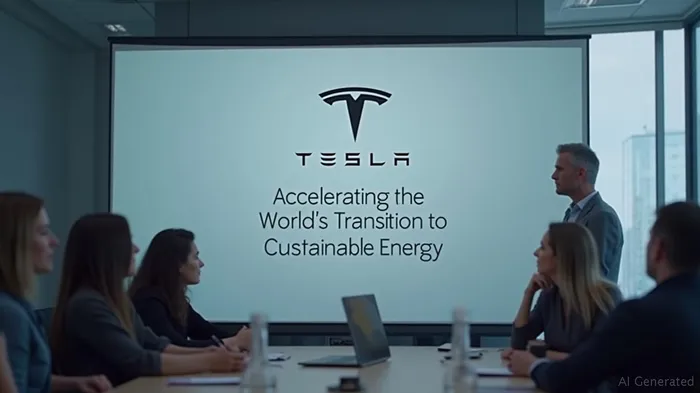
A leaked recording of a Tesla training program reveals the company is addressing employee morale issues, citing high turnover and negative experiences among departing employees. The instructor emphasized the importance of Tesla's "higher purpose" and the need for employees to focus on the company's mission to accelerate the transition to electric transport and sustainable energy. Tesla's mission has shifted in recent years, with CEO Elon Musk prioritizing autonomous driving and backing the Republican party, which has historically opposed electric vehicles and renewable energy.
In the face of slowing sales and increasing competition, Tesla is pivoting its business model. Inspired by Apple's transformation, Elon Musk is steering the company towards autonomous transport, energy ecosystems, and AI, with robotaxis at the center of the plan [1].Tesla's latest quarterly earnings report revealed a 13% drop in vehicle deliveries compared to the previous year, reaching only 337,000 vehicles — the lowest figure since Q2 2022. The company is also facing intensifying competition from Chinese electric vehicle manufacturers and has seen investment funds pulling out since Musk's involvement in the Trump administration [1].
Musk's strategic shift includes renewed focus on the company's mission to accelerate the transition to electric transport and sustainable energy. He is emphasizing the importance of Tesla's "higher purpose" and the need for employees to focus on this mission [1]. This strategic change is aimed at transforming Tesla from a car company into a technological infrastructure for an autonomous world.
Tesla's first advantage is its control over the entire value chain. Like Apple, Tesla develops both the hardware and software for its products, allowing it to offer a smooth and customized user experience. The company manufactures the batteries, motors, and computing systems for its electric cars and integrates these components seamlessly. Additionally, Tesla provides remote software updates for its vehicles, enabling performance and functionality improvements even after the sale [1].
Beyond cars, Tesla is building an entire ecosystem around renewable energy. It offers products like solar panels, energy storage batteries (Powerwall), and a network of fast-charging stations (Supercharger). By providing energy solutions for homes and businesses, Tesla strengthens customer relationships and increases their dependence on the company's products [1].
Another leading area for Tesla is autonomous driving. By collecting data from millions of kilometers of driving, Tesla improves its AI systems and advances toward a future where vehicles drive themselves. The investment in the Dojo supercomputer, designed to train machine learning models, highlights Tesla's commitment to advanced technologies [1].
If Tesla succeeds in launching a commercial robotaxi service, it won't just shift from a "vehicle sales" model to a Mobility-as-a-Service model — it will create an entirely new category. Similar to how Apple turned the iPhone into a monthly revenue platform through services, Tesla aims to turn every vehicle into an autonomous robot that generates income — 24/7 [1].
The vision is to transform Tesla from a car brand into an infrastructure company — providing transportation, energy, data, and autonomous solutions. If successful, it won't just catch up to Apple — it may reinvent the way we move, consume, and interact with the world [1].
Tesla's future no longer lies in selling cars — but in leading a model shift that could redefine the company's entire identity. After Musk's strategic change, Tesla is no longer just a car company, but a technological infrastructure for an autonomous world [1].
References:
[1] https://www.ynetnews.com/business/article/hyduvyqgle
[2] https://www.morningstar.com/news/marketwatch/20250603112/elon-musk-calls-trump-tax-bill-an-abomination-does-he-have-the-clout-to-stop-it
Divulgación editorial y transparencia de la IA: Ainvest News utiliza tecnología avanzada de Modelos de Lenguaje Largo (LLM) para sintetizar y analizar datos de mercado en tiempo real. Para garantizar los más altos estándares de integridad, cada artículo se somete a un riguroso proceso de verificación con participación humana.
Mientras la IA asiste en el procesamiento de datos y la redacción inicial, un miembro editorial profesional de Ainvest revisa, verifica y aprueba de forma independiente todo el contenido para garantizar su precisión y cumplimiento con los estándares editoriales de Ainvest Fintech Inc. Esta supervisión humana está diseñada para mitigar las alucinaciones de la IA y garantizar el contexto financiero.
Advertencia sobre inversiones: Este contenido se proporciona únicamente con fines informativos y no constituye asesoramiento profesional de inversión, legal o financiero. Los mercados conllevan riesgos inherentes. Se recomienda a los usuarios que realicen una investigación independiente o consulten a un asesor financiero certificado antes de tomar cualquier decisión. Ainvest Fintech Inc. se exime de toda responsabilidad por las acciones tomadas con base en esta información. ¿Encontró un error? Reportar un problema


SOBRE NOSOTROS
Nuestra historiaAutores de noticiasBase de conocimientosPolítica de privacidadTérmino de usoDescargo de responsabilidad de corretaje de tercerosTérminos de uso de AIMEDivulgaciones de riesgos de AInvest AICarrerasCONTÁCTENOS
Email: support@ainvest.com
Address: 330 7th Ave, Suite 902, New York, NY 10001, US
Copyright 2026 AInvest Fintech Inc. All rights reserved.


Comentarios
Aún no hay comentarios