
Tesla's European Struggles: A 13% Drop in Registrations and the First Global Delivery Decline in Years
Generado por agente de IAWesley Park
martes, 21 de enero de 2025, 7:13 am ET1 min de lectura
TSLA--
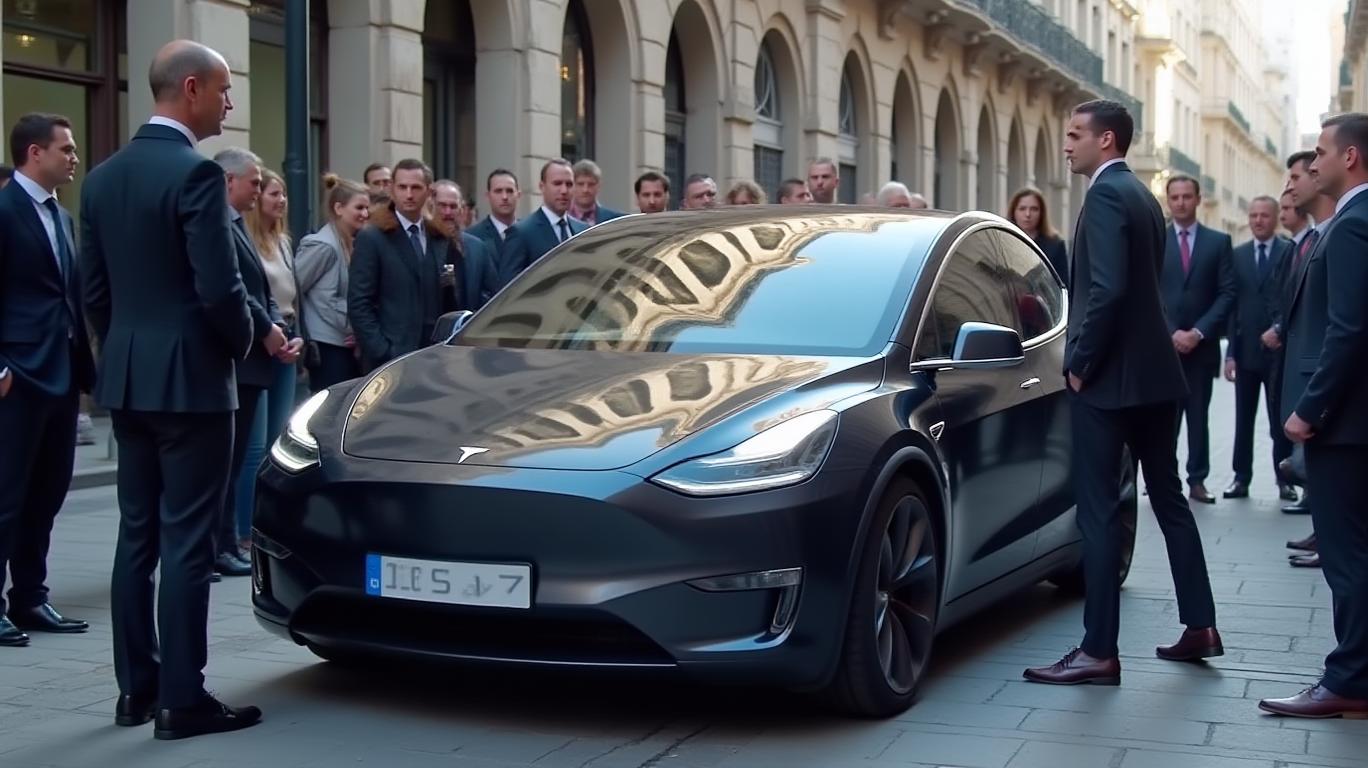
Tesla, the once-dominant electric vehicle (EV) manufacturer, is facing a significant challenge in Europe. The company's registrations in the region have fallen by a staggering 13% in 2024, marking the first global delivery decline in years. This decline can be attributed to a combination of reduced government incentives, increased competition, and an aging model lineup.
The reduction in government incentives has played a significant role in Tesla's European sales performance. Many European states have reduced or eliminated incentives for purchasing electric vehicles, making Tesla models less affordable to consumers. This has led to a decrease in demand for Tesla vehicles, as customers are now more likely to opt for more affordable alternatives from competitors.
Increased competition has also contributed to Tesla's decline in market share. The European EV market has seen a surge in new entrants, both from traditional automakers and startups. These competitors are offering more affordable and feature-rich electric vehicles, drawing customers away from Tesla. For instance, Volkswagen Group, the largest automaker in Europe, saw its EV registrations increase by 2.8% in 2024, while Tesla's registrations declined by 13.7%.
Tesla's aging model lineup has also been a factor in its declining sales. The company's current models, such as the Model S and Model X, have been on the market for several years without significant updates. This has allowed competitors to catch up and offer more modern features and technology, making their vehicles more appealing to customers.
Elon Musk's controversial stance has also drawn criticism and may have alienated some potential customers in Europe, where environmental and social issues are highly valued. Musk's public statements and actions have drawn criticism, and some potential customers may be hesitant to support a company with such a polarizing figure at the helm.
To adapt to a less supportive regulatory environment, Tesla could consider lowering prices, expanding its product lineup, investing in charging infrastructure, and lobbying for more supportive policies. By implementing these strategies, Tesla can better position itself to navigate a less supportive regulatory environment and maintain its competitive edge in the European EV market.
In conclusion, Tesla's struggles in Europe can be attributed to a combination of reduced government incentives, increased competition, an aging model lineup, and Elon Musk's controversial stance. To overcome these challenges, Tesla must adapt its pricing strategy, expand its product lineup, invest in charging infrastructure, and lobby for more supportive policies. By doing so, the company can better compete with local and international rivals and regain its lost market share in the European EV market.
Tesla, the once-dominant electric vehicle (EV) manufacturer, is facing a significant challenge in Europe. The company's registrations in the region have fallen by a staggering 13% in 2024, marking the first global delivery decline in years. This decline can be attributed to a combination of reduced government incentives, increased competition, and an aging model lineup.
The reduction in government incentives has played a significant role in Tesla's European sales performance. Many European states have reduced or eliminated incentives for purchasing electric vehicles, making Tesla models less affordable to consumers. This has led to a decrease in demand for Tesla vehicles, as customers are now more likely to opt for more affordable alternatives from competitors.
Increased competition has also contributed to Tesla's decline in market share. The European EV market has seen a surge in new entrants, both from traditional automakers and startups. These competitors are offering more affordable and feature-rich electric vehicles, drawing customers away from Tesla. For instance, Volkswagen Group, the largest automaker in Europe, saw its EV registrations increase by 2.8% in 2024, while Tesla's registrations declined by 13.7%.
Tesla's aging model lineup has also been a factor in its declining sales. The company's current models, such as the Model S and Model X, have been on the market for several years without significant updates. This has allowed competitors to catch up and offer more modern features and technology, making their vehicles more appealing to customers.
Elon Musk's controversial stance has also drawn criticism and may have alienated some potential customers in Europe, where environmental and social issues are highly valued. Musk's public statements and actions have drawn criticism, and some potential customers may be hesitant to support a company with such a polarizing figure at the helm.
To adapt to a less supportive regulatory environment, Tesla could consider lowering prices, expanding its product lineup, investing in charging infrastructure, and lobbying for more supportive policies. By implementing these strategies, Tesla can better position itself to navigate a less supportive regulatory environment and maintain its competitive edge in the European EV market.
In conclusion, Tesla's struggles in Europe can be attributed to a combination of reduced government incentives, increased competition, an aging model lineup, and Elon Musk's controversial stance. To overcome these challenges, Tesla must adapt its pricing strategy, expand its product lineup, invest in charging infrastructure, and lobby for more supportive policies. By doing so, the company can better compete with local and international rivals and regain its lost market share in the European EV market.

Divulgación editorial y transparencia de la IA: Ainvest News utiliza tecnología avanzada de Modelos de Lenguaje Largo (LLM) para sintetizar y analizar datos de mercado en tiempo real. Para garantizar los más altos estándares de integridad, cada artículo se somete a un riguroso proceso de verificación con participación humana.
Mientras la IA asiste en el procesamiento de datos y la redacción inicial, un miembro editorial profesional de Ainvest revisa, verifica y aprueba de forma independiente todo el contenido para garantizar su precisión y cumplimiento con los estándares editoriales de Ainvest Fintech Inc. Esta supervisión humana está diseñada para mitigar las alucinaciones de la IA y garantizar el contexto financiero.
Advertencia sobre inversiones: Este contenido se proporciona únicamente con fines informativos y no constituye asesoramiento profesional de inversión, legal o financiero. Los mercados conllevan riesgos inherentes. Se recomienda a los usuarios que realicen una investigación independiente o consulten a un asesor financiero certificado antes de tomar cualquier decisión. Ainvest Fintech Inc. se exime de toda responsabilidad por las acciones tomadas con base en esta información. ¿Encontró un error? Reportar un problema


SOBRE NOSOTROS
Nuestra historiaAutores de noticiasBase de conocimientosPolítica de privacidadTérmino de usoDescargo de responsabilidad de corretaje de tercerosTérminos de uso de AIMEDivulgaciones de riesgos de AInvest AICarrerasCONTÁCTENOS
Email: support@ainvest.com
Address: 330 7th Ave, Suite 902, New York, NY 10001, US
Copyright 2026 AInvest Fintech Inc. All rights reserved.


Comentarios
Aún no hay comentarios