
Tesla's Erosion in EV Market Leadership and Strategic Implications for Investors Amid Geopolitical Shifts
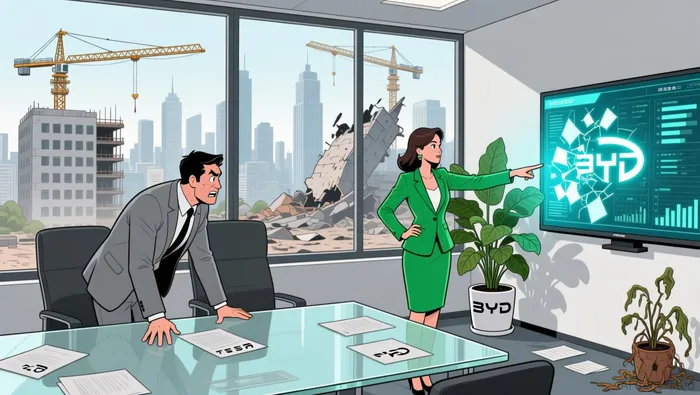
The electric vehicle (EV) landscape in 2025 has undergone a seismic shift, with Tesla's long-held dominance now under threat from a confluence of competitive pressures and geopolitical realignments. For the first time since its meteoric rise in the EV sector, TeslaTSLA-- delivered fewer vehicles in Q4 2025 than its rivals, with global deliveries of 418,227 units-a 16% decline compared to the same period in 2024. For the full year, Tesla's total deliveries fell to 1.64 million vehicles, an 8.6% drop from 2024. This erosion of market leadership coincides with the emergence of Chinese automaker BYD as the new global EV leader, which reported over 2.25 million deliveries in 2025. The shift underscores a broader transformation in the EV sector, driven by intensifying competition, evolving consumer preferences, and the geopolitical reconfiguration of energy and mineral supply chains.
Tesla's Decline: A Confluence of Factors
Tesla's waning dominance is not merely a function of increased competition but also a reflection of broader market dynamics. In Europe, Tesla's market share plummeted by 39% in the first 11 months of 2025, while BYD's registrations surged by 240% in the region. This divergence highlights the growing appeal of Chinese EVs, which combine advanced technology, competitive pricing, and aggressive expansion strategies. Meanwhile, Tesla's brand has faced reputational headwinds linked to Elon Musk's political activities, further complicating its position in key markets.
The company's struggles are compounded by a global slowdown in EV demand, as consumers and regulators grapple with economic uncertainties and shifting priorities. While Tesla's technological innovations remain formidable, its inability to adapt to the rapid pace of competition has left it vulnerable to rivals like BYD, which now commands a more diversified product portfolio and a stronger foothold in international markets.
Geopolitical Energy Shifts: Venezuela's Role in Reshaping Supply Chains
Parallel to these market developments, geopolitical shifts in energy and mineral supply chains are reshaping the EV industry's strategic landscape. The U.S. has positioned Venezuela's vast oil and mineral reserves as a cornerstone of its 2025 "energy dominance" strategy, aiming to counter China's influence in global energy markets. Venezuela holds 18% of the world's proven oil reserves and significant deposits of lithium and cobalt-critical minerals for EV batteries. U.S. President Trump's intervention in Venezuela, including the arrest of President Nicolás Maduro, has opened the door for American energy firms to invest in the country's oil and mining sectors, potentially altering the global supply of raw materials essential to EV production.
However, the path to leveraging Venezuela's resources is fraught with challenges. Restoring Venezuela's oil production to pre-2014 levels would require up to $100 billion in investment and a decade of effort, given the country's deteriorated infrastructure and political instability. Similarly, extracting lithium and cobalt from Venezuela's reserves faces hurdles, including environmental concerns and the need for sustainable extraction practices. These uncertainties highlight the risks of over-reliance on a single geopolitical lever, even as the U.S. seeks to diversify supply chains away from China and the Democratic Republic of the Congo according to industry analysis.
Strategic Implications for EV Investors
For investors, the interplay between Tesla's market erosion and geopolitical energy shifts presents both risks and opportunities. The EV sector's reliance on critical minerals like lithium and cobalt makes it acutely vulnerable to supply chain disruptions. While the U.S. Inflation Reduction Act (IRA) aims to bolster domestic battery production, the long-term success of this strategy hinges on securing stable access to raw materials-a challenge exacerbated by Venezuela's geopolitical volatility.
Investors must also contend with the growing dominance of Chinese EV manufacturers like BYD. These companies benefit from a vertically integrated supply chain, government subsidies, and a rapidly expanding domestic market. Tesla's struggles in Europe and its declining global market share signal that investors cannot assume a monopoly on innovation or brand loyalty in the EV space.
The Venezuela factor introduces additional layers of complexity. While U.S. access to Venezuelan oil and minerals could theoretically enhance energy security and reduce EV production costs, the timeline for realizing these benefits remains uncertain. Short-term volatility in oil prices and geopolitical tensions could disrupt markets, while long-term gains depend on sustained political stability and infrastructure investment in Venezuela.
Risk Mitigation and Future Outlook
To navigate these dynamics, investors should prioritize strategies that enhance supply chain resilience and diversify exposure to EV manufacturers. This includes:1. Diversifying mineral sourcing: Supporting companies that secure access to alternative lithium and cobalt reserves, such as those in North America or Australia, to mitigate risks tied to Venezuela's geopolitical instability.2. Investing in technological innovation: Focusing on firms developing alternatives to cobalt-dependent batteries, such as lithium iron phosphate (LFP) or sodium-ion technologies, which reduce reliance on volatile supply chains.3. Monitoring geopolitical developments: Closely tracking U.S. policy shifts in Venezuela and their implications for global energy markets, including potential tariffs, trade realignments, and currency fluctuations.
The EV sector's future will be defined by its ability to adapt to these converging forces. Tesla's decline is not a terminal event but a harbinger of a more competitive and geographically fragmented industry. For investors, the key lies in balancing optimism about the EV transition with a pragmatic assessment of the geopolitical and supply chain risks that will shape its trajectory in the years ahead.





Comentarios
Aún no hay comentarios