
Tesla's DREAM Framework: Assessing the Scalability of Its AI and Robotics Growth Moat
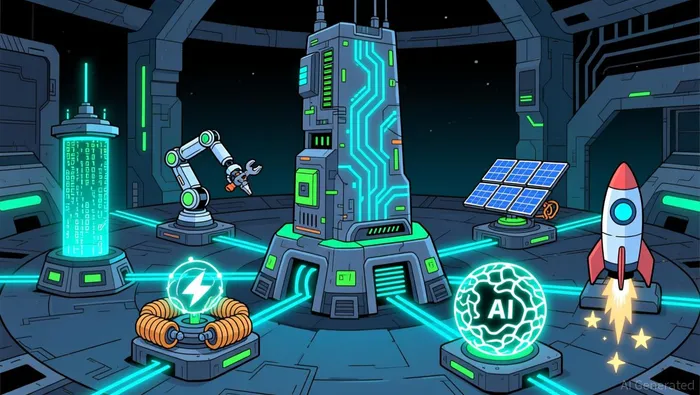
Tesla's investment thesis rests on a formidable, six-pillar competitive moat. As Morgan Stanley's research team outlines, this moat is built on the combination of Data, Robotics, Energy, AI, Manufacturing, and Space. Each attribute reinforces the others, creating a system that is greater than the sum of its parts. Yet, within this framework, one pillar stands above the rest. When asked which component is most critical, the answer from the company's own leadership is unequivocal: Manufacturing. It is the bedrock that enables vertical integration, cost control, and the rapid scaling of hardware-a necessity for any company aiming to transition from vehicle producer to platform builder.
That transition is the core of Master Plan 4. The company's stated goal is to build the products and services that bring AI into the physical world. This isn't just a rebranding; it's a fundamental pivot. TeslaTSLA-- aims to unify its hardware and software at scale, creating an integrated ecosystem that spans transport, energy, and robotics. The vision is for this ecosystem to introduce a revolutionary period primed for unprecedented growth, moving beyond automotive into a broader AI and robotics platform.
The scalability of this new growth vector is already being demonstrated. While the automotive business faces near-term headwinds, Tesla's energy storage division has set a new quarterly benchmark. In the final quarter of 2025, the company deployed a record 14.2 GWh of battery storage. This achievement is a tangible signal that Tesla's non-automotive businesses can scale rapidly, providing a crucial diversification and a new revenue stream that supports the long-term AI and robotics ambitions. It shows the moat is not just about cars, but about building a resilient, multi-pronged growth engine.
Market Penetration and Scalability: The Path to New TAMs
The path to Tesla's next growth phase is defined by a stark contrast. On one side, the core automotive business faces a clear contraction, with analysts projecting a significant plunge of 15.0% in global EV deliveries for 2026. This decline is driven by the expiration of key policy incentives like the U.S. tax credits and weakening demand, pressuring the company's established revenue stream. On the other side lies a vast, unproven opportunity. The total addressable market for Tesla's AI and robotics ambitions-including the humanoid Optimus robot and a future Robotaxi network-is described as immense. This represents a high-risk, high-reward expansion beyond the automotive sector, where success is not guaranteed but could redefine the company's valuation.
The scalability of this new growth vector hinges on near-term catalysts that prove the commercial viability of these platforms. The company's 2026 roadmap is explicitly centered on consolidating technological advancements, with the commercialization of Cybercab and Optimus serving as key milestones. For investors focused on market penetration, these are the litmus tests. A successful rollout of the Optimus V3 robot would demonstrate Tesla's ability to scale its robotics manufacturing and software stack. Similarly, the launch of the Cybercab fleet would be the first tangible step into the autonomous ride-hailing market, a segment with enormous potential but also immense execution risk.
The bottom line is one of transition. The automotive business is consolidating, pressured by market saturation and policy changes. The AI and robotics narrative, however, offers a potential new TAM. The company's projected EV delivery decline underscores the urgency of this pivot. Success in scaling the Cybercab and Optimus ventures is not just about introducing new products; it's about proving the scalability of the entire DREAM moat in a new, capital-intensive arena. For growth investors, the opportunity is in backing this unproven expansion, betting that Tesla's manufacturing and AI leadership can translate into market dominance beyond the road.
Valuation and Financial Impact: Growth vs. Headwinds
The financial impact of Tesla's strategic pivot is etched in its volatile stock price. The shares trade at a 11.1% discount to their 52-week high, with a wide range between the peak and the low reflecting high uncertainty. This volatility is a direct function of the growth thesis itself-investors are pricing in both the potential for a revolutionary new TAM and the very real execution risks of scaling AI and robotics.
A key source of investor unease has been the distraction of its CEO. Elon Musk's role leading the Department of Government Efficiency (DOGE) created significant concern that his focus on Tesla was waning during a period of slowing demand and rising competition. This uncertainty about capital allocation and strategic direction weighed heavily on sentiment, contributing to the stock's wild swings. The recent rally to record highs has been driven by tangible progress on autonomy, but the underlying volatility underscores the market's struggle to value the company's future.
Financially, the company's capital allocation decisions have also drawn scrutiny. In the third quarter of 2025, the board proposed a record $975 billion pay package for Musk. While this signals the company's future hinges on his vision, it also raises questions about the use of shareholder capital for executive compensation, especially as the company navigates a period of automotive contraction. This is compounded by the existence of a 'special share reserve' of $26 billion set aside for Musk in the same earnings period, a move that has fueled debate about priorities for returning capital to investors versus funding ambitious new ventures.
The bottom line is a tension between a soaring valuation based on future potential and a present reality of slowing core growth. The stock's ability to sustain its premium depends entirely on the successful commercialization of the Cybercab and Optimus platforms, which will need to demonstrate not just technological prowess but also the financial scalability to justify the current market price. For now, the wide range between the 52-week high and low is the clearest metric of that uncertainty.
2026 Catalysts and Growth Hurdles: What to Watch
The coming year is a decisive test for Tesla's growth narrative. Investors must watch a clear set of milestones that will validate or challenge the scalability of its AI and robotics ambitions. The primary risk is a dual failure: automotive headwinds persist while new ventures fail to materialize, leading to a continued decline in market share and profitability. This scenario would leave the company without a clear path to growth, undermining its entire DREAM moat.
The first critical metric to monitor is the energy storage business. A record 14.2 GWh deployed in Q4 2025 showed this non-automotive segment can scale. For growth investors, the key is whether Tesla can maintain or grow that deployment rate. This is a tangible sign of the company's manufacturing and software integration working outside the car business. Any stagnation here would signal that the DREAM moat's scalability is not as broad as hoped.
The most significant catalyst for 2026 is tangible progress on the Robotaxi fleet. The company's roadmap explicitly centers on consolidating technological advancements, driven by the commercialization of Cybercab. A successful, visible rollout of the Cybercab fleet would be the first major step into the autonomous ride-hailing market, a segment with enormous potential. This would mark a significant milestone for diversification beyond automotive and provide a new, high-margin revenue stream. Conversely, any delay or setback in this timeline would be a major red flag for the entire AI and robotics thesis.
The bottom line is one of binary outcomes. The stock's volatility reflects this tension. While the automotive business faces a significant plunge of 15.0% in global EV deliveries for 2026, the market is betting on the new ventures. The coming year will show if that bet is justified. Investors should watch for evidence that Tesla can scale its energy business and, more importantly, deliver on its promise to bring AI into the physical world via the Robotaxi fleet.





Comentarios
Aún no hay comentarios