
Tesla's Declining Delivery Momentum and Strategic Rebalancing: Assessing the Long-Term Investment Implications
The electric vehicle (EV) revolution that once seemed unstoppable is now facing headwinds, as Tesla Inc.TSLA-- (NASDAQ: TSLA) reports a 15% decline in Q4 2025 vehicle deliveries compared to the prior year, marking the first significant drop in its delivery growth trajectory in over a decade. With 422,850 vehicles delivered in the final quarter of 2025, the automaker's performance underscores a broader industry-wide slowdown in EV adoption, compounded by waning demand incentives and intensifying price competition. For investors, the question looms: Can Tesla's strategic pivot toward autonomy and artificial intelligence (AI) offset its weakening automotive sales and rekindle long-term growth?
The Delivery Decline: A Confluence of External and Internal Factors
Tesla's Q4 2025 delivery slump is not an isolated event but the result of a perfect storm of policy shifts and market dynamics. The expiration of the U.S. federal $7,500 EV tax credit at the start of Q4 2025 accelerated demand into Q3, creating a "pull-forward" effect that left Q4 with a void. According to a report by , this policy change, combined with Q3's higher deliveries than production, set the stage for a "gloomy" Q4 outlook. Additionally, Tesla's aggressive price cuts on its Model 3 and Model Y variants-now priced under $40,000-have eroded profit margins while failing to fully offset the loss of the tax credit.
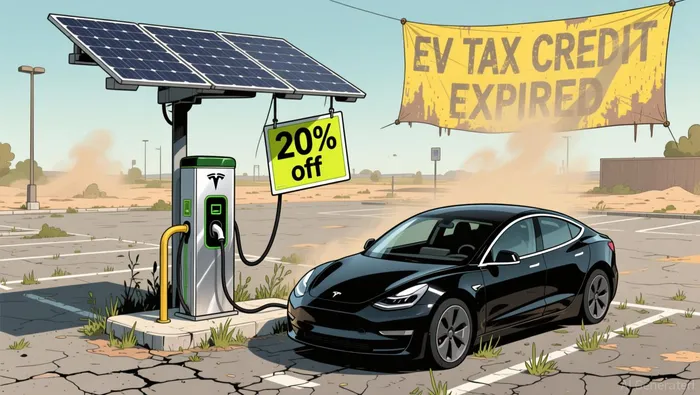
The broader EV market has also seen a cooling in consumer enthusiasm. While TeslaTSLA-- remains the dominant player, its overreliance on disruptive narratives-such as its early lead in EV innovation-has left it vulnerable to regulatory shifts and economic cycles. As noted by , the company's full-year 2025 deliveries of 1.64 million vehicles represent an 8.3% decline from 2024, signaling a structural slowdown rather than a temporary blip.
Strategic Rebalancing: Autonomy and AI as the New Growth Engine
In response to these challenges, Tesla has doubled down on its long-term vision of autonomy and AI. CEO Elon Musk has repeatedly emphasized the importance of achieving unsupervised full self-driving (FSD), with the company planning to ramp up production of autonomous systems as soon as regulatory hurdles are cleared. This shift is not merely aspirational: Tesla's AI division has already generated significant investor buzz, with Wedbush analyst Dan Ives labeling the company a "key AI play" for 2026.
The strategic rebalancing extends beyond software. Tesla's investments in robotaxis and the Optimus humanoid robot project aim to diversify its revenue streams and position the company as a leader in the broader AI ecosystem. For instance, the deployment of robotaxis-autonomous vehicles without human drivers-could unlock new monetization opportunities in ride-hailing and logistics. Meanwhile, Optimus's development hints at a future where Tesla's AI expertise transcends the automotive sector.
Investor Implications: Can AI Offset Weakening Vehicle Sales?
The critical question for investors is whether Tesla's AI and autonomy bets can compensate for its automotive headwinds. Historically, Tesla's stock has been driven by its ability to redefine industries, but this strategy carries risks. The company's energy division, for example, has provided a buffer-Q3 2025 saw record Megapack deployments of 12.5 GWh-but it remains a small fraction of overall revenue compared to vehicle sales.
Analysts are divided. On one hand, Tesla's AI advancements could create a moat around its software capabilities, differentiating it from competitors like Rivian and BYD. On the other, the timeline for monetizing autonomy remains uncertain. Regulatory delays, safety concerns, and the high cost of R&D could prolong the transition. notes, Tesla's "unusual move" to preannounce its Q4 delivery numbers reflects a desire to manage expectations, but it also highlights the fragility of its current business model.
Recalibrating Expectations: A Path Forward
For Tesla to succeed in its strategic rebalancing, it must address two key challenges: scaling its AI initiatives profitably and mitigating risks in its automotive segment. The company's lower-cost vehicle variants are a step in the right direction, but they risk further margin compression. Meanwhile, its energy business offers a glimpse of diversification but lacks the scalability of its automotive operations.
Investors should also scrutinize Tesla's narrative-driven growth. While disruptive innovation has historically justified high valuations, the market is becoming more skeptical of unproven long-term bets. The company's ability to deliver tangible results-such as commercializing FSD or achieving cost parity in robotaxis-will determine whether its AI ambitions can offset declining EV demand.
Conclusion
Tesla's Q4 2025 delivery decline is a wake-up call for a company that has long thrived on its reputation as an industry disruptor. While its strategic pivot to autonomy and AI is ambitious, it remains unproven as a sustainable growth engine. For investors, the path forward hinges on Tesla's ability to balance short-term automotive challenges with long-term technological bets. If the company can successfully transition from an EV manufacturer to an AI-driven mobility platform, it may yet recapture its growth trajectory. But in a market increasingly defined by pragmatism over hype, the stakes have never been higher.





Comentarios
Aún no hay comentarios