
Tesla’s Crossroads: Can Near-Term Headwinds be Overcome by Long-Term Autonomous Tech Dominance?
As Tesla’s stock price hovers near $250 amid a swirl of regulatory and operational challenges, investors are left to grapple with a critical question: Is the automaker’s 182x trailing P/E ratio justified by its vision of owning the autonomous future? With Cantor Fitzgerald maintaining a $425 price target despite near-term risks—from EV tax credit losses to geopolitical tariffs—the debate hinges on whether Tesla’s long-term catalysts can outweigh its current struggles. Let’s dissect the risks, the opportunities, and why now might be the time to bet on Elon Musk’s bold bets.
Near-Term Challenges: Navigating the Storm
Tesla’s current valuation faces three major headwinds:
Loss of EV Tax Credits: The expiration of U.S. federal tax incentives for TeslaTSLA-- vehicles (due to exceeding 200,000 sales thresholds) could reduce demand for its higher-priced models, squeezing margins. Cantor estimates this could cut 2025 deliveries by 5-10%.
Geopolitical Tariffs: U.S. tariffs on Mexican-made parts (up to 25% of Tesla’s supply chain) and China’s retaliatory measures threaten to add $2,500–$4,500 per vehicle in costs. This has already delayed Cybertruck production, with trial shipments postponed until 2026.
Musk’s Political Liabilities: Elon Musk’s involvement in controversial issues—from Twitter’s content policies to SpaceX’s regulatory disputes—has become a reputational risk. Short sellers argue this distracts from Tesla’s core mission.
Long-Term Catalysts: The $30K Model, FSD, and Robotaxis
While the near-term picture is fraught, Tesla’s moat in autonomous driving and AI could justify its premium valuation. Key growth drivers include:
The $30K Model Y Juniper: Launched in China to reclaim lost market share, this affordable variant has generated 60,000 pre-orders in 5 days. Scaling production here and globally could revive ASPs and drive deliveries back toward 2 million/year targets.
Full Self-Driving (FSD) as a Revenue Stream: With FSD-driven miles tripling to 3 billion by end-2024, Tesla is laying the groundwork for a software-as-a-service model. Analysts estimate FSD could generate $20 billion/year in revenue by 2028—equivalent to Tesla’s entire 2024 automotive profit.
Robotaxi Launch in 2025: Musk aims to deploy 1 million autonomous vehicles by 2028. Early pilots in Texas and California could validate the business model, turning Tesla into a mobility-as-a-service giant.
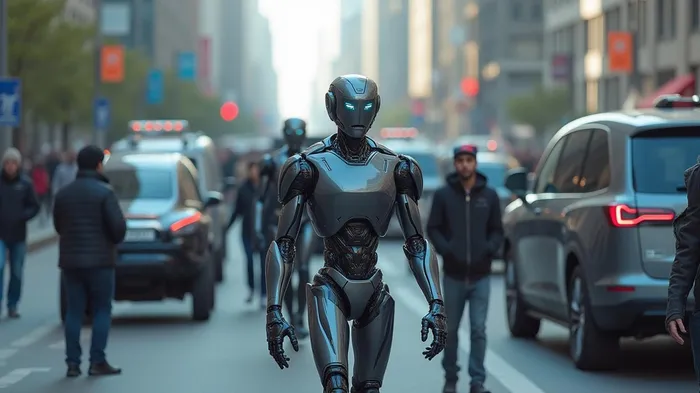
Optimus Bot Production: While not a near-term profit driver, humanoid robots could unlock $50 billion/year in industrial automation by 2030. Tesla’s lead in AI hardware (Dojo supercomputers) gives it an edge.
Valuation: Is 182x P/E a Fair Price for This Future?
Critics argue Tesla’s valuation ignores reality: its trailing P/E of 182x is nearly 30x higher than Ford’s 6x and 50x higher than GM’s 4x. However, Tesla’s growth trajectory differs fundamentally:
- Margin Expansion Potential: Once tariffs ease and the $30K Model Y scales, gross margins could rebound to 25%+ (vs. Q1’s ~15%).
- AI Monetization: FSD’s recurring revenue model could lift Tesla’s valuation multiples, akin to how Microsoft’s cloud business redefined its P/E.
- Global Manufacturing: With factories in Texas, Shanghai, and Berlin, Tesla can hedge against regional demand shocks—a luxury GM/Ford lack.
Even skeptics like Cantor acknowledge Tesla’s $425 PT implies a 70% upside, predicated on delivering 1.8 million deliveries in 2025 and achieving $12 billion in FSD revenue by 2026.
Why Buy Now? Contrarian Signals and Catalyst Timelines
While risks are real, three factors suggest now is the time to position:
Hedge Fund Accumulation: Cathie Wood’s ARK Invest added $180 million to TSLA positions in Q1, betting on AI’s transformative impact. Institutions often buy dips ahead of catalysts like the Q2 earnings report (July 2025).
Catalyst Clarity:
- Q2 2025: Robotaxi pilot data and FSD monetization plans.
- H2 2025: Cybertruck production ramp and $30K Model Y global rollout.
2026: Optimus Bot trials and tariff resolution talks.
AI-Driven Demand Surge: Autonomous tech is the next trillion-dollar market. Investors are primed to reward companies like Tesla that own the core IP.
Conclusion: A Risky, but Necessary Bet
Tesla’s valuation is a leap of faith—one that requires ignoring short-term noise (tariffs, Musk’s tweets) to focus on its AI-first vision. The $425 price target isn’t just a guess; it reflects a world where Tesla dominates autonomous mobility, industrial robotics, and software-as-a-service.
While risks are present, the contrarian case is clear:
- Buy on dips below $250.
- Hold for 3+ years to capture FSD and robotaxi milestones.
- Monitor catalysts: Q2 earnings, Cybertruck deliveries, and FSD pricing.
Tesla’s future isn’t about selling cars—it’s about selling autonomous intelligence. If that vision holds, the 182x P/E won’t look excessive for long.
Act now before the autonomous revolution lifts all boats.





Comentarios
Aún no hay comentarios