
Tesla's Crossroads: Navigating Political Risks and Tariff Headwinds in a Volatile Landscape
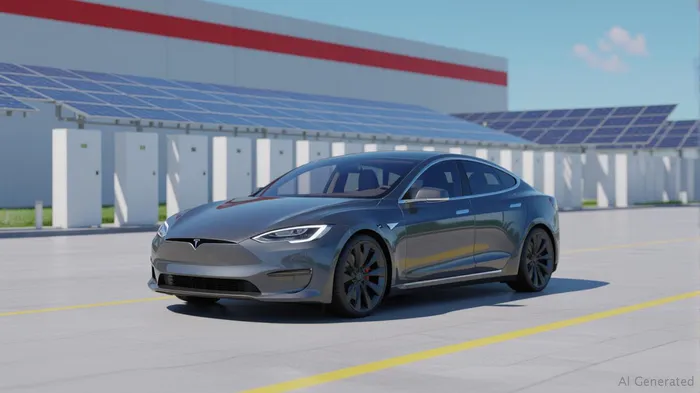
Tesla's stock has faced significant turbulence in 2025, plummeting by over 28% from its January peak to $290.59 by mid-July. While the company remains a leader in the electric vehicle (EV) revolution, near-term risks—including Elon Musk's political entanglements and escalating U.S.-China trade tensions—are clouding its short-term outlook. This article dissects how these challenges contrast with Tesla's long-term fundamentals, offering guidance for investors on when to act.
Near-Term Risks: Governance, Politics, and Tariffs
1. Musk's Political Gambits: A Governance Wildcard
Elon Musk's deepening involvement in U.S. politics—aligning with Donald Trump's 2024 campaign and endorsing far-right candidates—has sparked brand perception risks. Surveys indicate that 20% of Tesla buyers in key markets like California now view the brand unfavorably due to Musk's alignment with divisive figures. This sentiment is already impacting sales: Tesla's U.S. market share dipped to 38% in Q2 2025, down from 45% a year earlier, as competitors like Ford and RivianRIVN-- capitalize on neutral positioning.
The governance risk extends beyond marketing. Musk's dual role as TeslaTSLA-- CEO and political strategist raises concerns about distraction from core operations. For instance, delayed launches of the Model Q (a $25,000 EV) and the Cybertruck—both critical to expanding Tesla's addressable market—have been attributed to Musk's focus on political campaigns.
2. Tariffs and Supply Chain Vulnerabilities
The U.S.-China trade war has intensified, with 125% tariffs on Chinese goods threatening Tesla's cost structure. Key impacts include:
- Battery Costs: Tesla sources 40% of its battery materials from China, including rare earth metals like lithium and cobalt. The tariffs could add $1.34 billion to global battery costs in 2025, squeezing margins unless prices rise.
- Localization Challenges: While Tesla's Shanghai Gigafactory produces 90% of its components locally, its U.S. plants still rely on Chinese imports for semiconductors and battery components. A 25% tariff on these inputs could increase production costs by $750 per vehicle, per Benchmark Mineral Intelligence.
The July 3, 2025, U.S. removal of export bans on EDA software to China offers a glimmer of hope, but broader tariff resolution remains elusive. Investors must monitor the September 2025 deadline for U.S.-China trade talks to gauge whether supply chain costs will stabilize.
Long-Term Fundamentals: Why Tesla Remains a Growth Story
1. Dominance in EV and Energy Storage Markets
Tesla retains 70% of the U.S. EV market, with its Autopilot and FSD software creating high switching costs for competitors. Even as rivals like BYD gain ground in China, Tesla's $1 trillion+ energy storage pipeline—including its Texas and Nevada battery plants—positions it to dominate the $1.2 trillion global energy storage market by 2030.
2. Autonomous Driving as a Future Cash Cow
Musk's vision for robotaxis—now being tested in Austin—could unlock a $299-per-share valuation boost, per Benchmark analysts. If Tesla can monetize its AI-driven autonomous systems, it could command $275 billion in annual revenue by 2030, rivaling Alphabet's ad-driven business model.
3. Structural Tailwinds
Global EV adoption is surging, with 20% of new car sales in 2025 expected to be electric, up from 8% in 2020. Tesla's direct-to-consumer sales model and supercharger network create a moat against traditional automakers.
Investment Strategy: Wait for Clarity
While Tesla's long-term prospects are compelling, near-term risks demand caution:
- Hold Off on Buying: Wait until September 2025 for clarity on U.S.-China tariff negotiations and Musk's political engagement outcomes.
- Watch for Margin Pressures: Use the following metrics to gauge resilience:
-
- Battery cost trends (target: $100/kWh by 2025).
- Consider Short-Term Shorts: Investors with a speculative appetite might bet against Tesla until governance and tariff risks subside.
When to Re-Engage?
- Green Light: If tariffs drop to 30% or below and Musk scales back political activities, Tesla's stock could rebound to $350–$400 by early 2026.
- Red Light: A further escalation in trade wars or a 10% drop in U.S. deliveries would signal deeper structural issues.
Conclusion
Tesla's journey in 2025 mirrors its history of volatility: a visionary leader driving innovation while grappling with self-inflicted risks. While its $290.59 stock price reflects near-term headwinds, the company's dominance in EVs and energy storage remains unshaken. For now, investors should adopt a wait-and-see stance, prioritizing clarity on tariffs and governance over aggressive bets. Tesla's future hinges not just on Musk's next tweet, but on its ability to execute its $2 trillion vision in a world increasingly defined by clean energy and autonomy.
Final Note: Monitor Tesla's Q3 2025 earnings (November 2025) for updates on robotaxi progress, Model Q timelines, and margin resilience.





Comentarios
Aún no hay comentarios