
Is Tesla Still a Buy in a Slowing EV Market?
A Record Quarter, But at What Cost?
Tesla's Q3 2025 results underscored its enduring scale. The company delivered 497,099 vehicles, a 7% year-over-year increase, while energy storage deployments surged 81% to 12.5 GWh. Revenue hit $28.1 billion, up 12% from the prior year. Yet, these gains came at the expense of profitability. Operating margins contracted sharply to 5.8% from 10.8% in Q3 2024, reflecting margin pressures from production costs and pricing strategies.
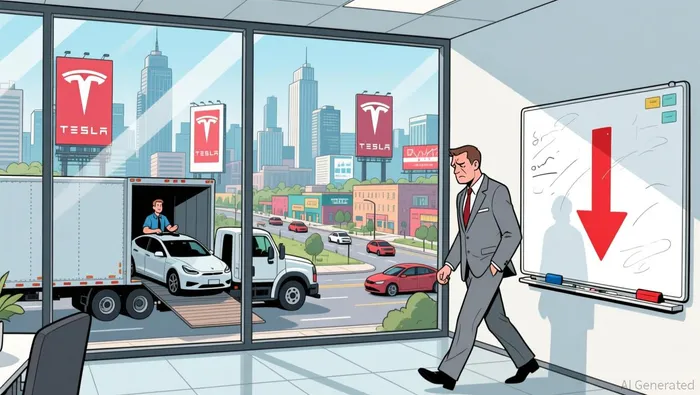
The decline in margins is emblematic of a broader industry trend. As EVs transition from novelty to commodity, competition intensifies, and price wars erode margins. Tesla's ability to maintain its premium pricing model is now in question, particularly in markets like China, where October 2025 sales plummeted 35.8% year-over-year to 26,006 units.
Regulatory and Geopolitical Storms
Tesla's challenges extend beyond the market. In the U.S., new "mega-tariffs" on imported automotive parts have added 25% to production costs, squeezing gross margins from 28% in 2022 to 13.6% in Q3 2025. Meanwhile, China's planned halving of EV tax exemptions in January 2026 threatens to further destabilize demand in the world's largest EV market.
Regulatory scrutiny is also intensifying. The loss of regulatory credits-once a financial lifeline for Tesla-has compounded its financial strain. These pressures are compounded by geopolitical tensions and supply chain vulnerabilities, which have forced Tesla to rely on costlier, less efficient production methods.
Investor Sentiment: A House Divided
Investor confidence in Tesla's long-term prospects is fracturing. Billionaire George Soros's fund sold its stakes in Tesla and Rivian, betting instead on legacy automakers like Ford. This move reflects a broader skepticism about the EV sector's growth trajectory, particularly as companies like Xiaomi gain market share with aggressive pricing.
Yet, not all signs are bearish. Renaissance Technologies increased its Tesla position by 424,490 shares in Q3 2025. This suggests some investors see value in Tesla's AI-driven innovations, such as the impending launch of its Full Self-Driving (FSD) system in early 2026.
Valuation Metrics: Overpriced or Undervalued?
Tesla's valuation remains a contentious topic. As of November 11, 2025, its price-to-book (P/B) ratio stands at 18.13, with a share price of $430.73 and a book value of $17.75 according to Macrotrends. While this suggests the market still values Tesla's intangible assets-such as its brand and AI roadmap-it also highlights a disconnect between fundamentals and expectations.
The company's earnings per share (EPS) in Q3 2025 fell short of estimates, at $0.50 versus the $0.56 consensus. With the $7,500 federal EV tax credit expiring at the end of Q3, demand could soften further in 2026. However, Tesla's valuation is increasingly tied to its AI ambitions rather than traditional automotive metrics according to Seeking Alpha.
Strategic Reassessment: A Buy or a Hold?
Tesla's future hinges on its ability to differentiate itself in a crowded market. While its scale and innovation pipeline remain formidable, the company must address margin erosion and regulatory risks. For investors, the key question is whether Tesla's AI-driven value proposition justifies its premium valuation.
In a slowing EV market, Tesla's stock may trade more like a tech company than an automaker. Those who believe in its FSD and Optimus projects might find the current valuation attractive. However, for risk-averse investors, the company's exposure to regulatory shifts and margin pressures could make it a speculative bet rather than a core holding.







Comentarios
Aún no hay comentarios