
Tesla's Bold Robotaxi Launch Amidst Regulatory Storm and Investor Jitters
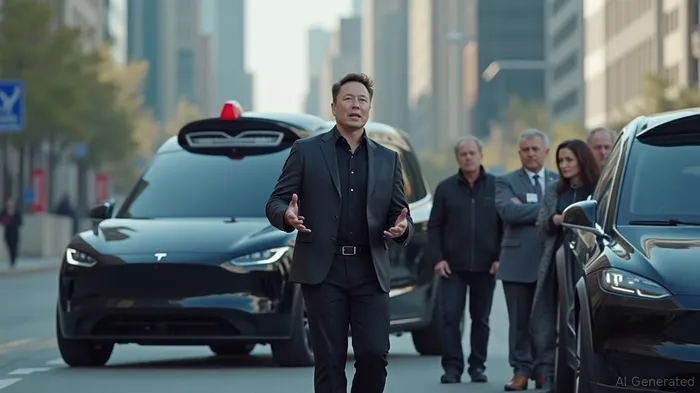
The recent unveiling of the TeslaTSLA-- Robotaxi in Austin marks another ambitious chapter in Elon Musk's vision for automated transportation. Test users have lauded the smooth, automatic navigation of the vehicle, which operates without traditional driving controls like steering wheels and pedals. Musk, with characteristic boldness, proclaimed the dawn of a transportation revolution during the event.
However, just days after this demonstration, the passage of the so-called "Big Beautiful Bill" by the U.S. Congress has significant implications for Tesla. The legislation eliminates electric vehicle tax credits and carbon emission trading, causing Tesla shares to plummet in after-hours trading, with the company's market value shrinking by $80 billion overnight. This legislative move challenges Tesla's previously advantageous policy landscape, reminding investors that Musk's bold initiatives often face unpredictable regulatory headwinds.
Wedbush analyst Dan Ives describes this moment as pivotal, urging a recalibration of expectations. Investors have been eager for tangible profitability rather than just promising concepts. Similarly, Ross Gerber emphasized on social media that Tesla's valuation should be grounded in concrete sales volumes and cash flows to avoid resembling a mere "bubble story." Such caution reflects a broader sentiment in the market, as Tesla's stock has historically been a volatile choice.
The passage of the bill symbolizes a profound shift in U.S. industrial policy, influenced by fossil fuel interests and the traditional automotive lobby. For years, Tesla thrived under policies that generously favored clean energy, contributing to the company's rapid expansion and tech-driven narrative. The removal of tax credits and carbon trading curbs these benefits significantly, potentially reducing Tesla's profits notably in the coming years.
Tesla's Q2 performance in 2025 reveals a tightening grip: global deliveries decreased year-over-year while secondhand EV market prices fell, further straining sales. Investor confidence has wavered, with Tesla shares declining steadily under the weight of new policy challenges. Analysts have adjusted Tesla's ratings accordingly, anticipating severe impacts on earnings due to the loss of financial incentives integral to Tesla's profitability.
Musk's leadership has repeatedly pulled Tesla back from the brink in past crises. During the 2008 financial crisis, Musk secured investments from major automakers to keep Tesla afloat. Similarly, the 2018 "420" privatization saga tested regulatory patience and investor trust. Each instance saw Musk capitalizing on Tesla's technological breakthroughs to regain market trust, culminating in a rebound supported by the success of models like the Model 3.
Nonetheless, Tesla now faces renewed competition as global EV giants such as BYD and Volkswagen push forward with aggressive sales strategies and diverse product lines. Tesla's aging lineup of vehicles and delayed Cybertruck deliveries are juxtaposed against swift innovations abroad. The Robotaxi and AI ventures offer potential but are still nascent and yet to deliver substantive commercial profitability.
Musk's AI ambitions, driven by Tesla's Dojo supercomputer, aim to position the company as a leader not only in automotive manufacturing but also in AI services. While this vision holds promise, achieving substantial revenue from AI initiatives remains a future prospect, contingent upon overcoming substantial regulatory, safety, and technological hurdles.
Concurrent to automotive endeavors, Tesla is quietly growing a robust energy business, integrating solar and battery solutions into a cohesive market strategy. As global energy paradigms shift, these avenues offer Tesla financial stability beyond vehicle sales, supporting its broader ecological vision.
Ultimately, Musk's ability to navigate the upcoming challenges depends on how technology, investor patience, and regulatory landscapes converge. Tesla's trajectory appears at a crossroads, compelling stakeholders to evaluate the company's position within a rapidly evolving market and confirm whether innovation under Musk's guidance can continue to defy conventional limitations.





Comentarios
Aún no hay comentarios