
Tesla's Autonomous Vehicle Milestone in Arizona: A Catalyst for Mass Adoption and Valuation Upside
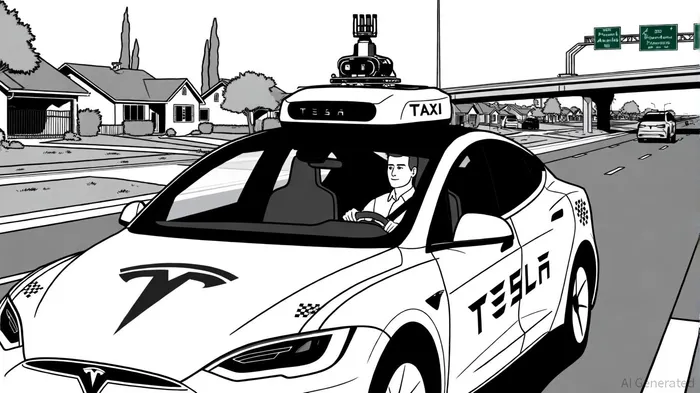
Tesla's recent regulatory approval in Arizona represents a pivotal step in its autonomous vehicle (AV) strategy, offering both a strategic foothold for scaling its robotaxi network and a significant valuation catalyst for investors. By securing clearance from the Arizona Department of Transportation (ADOT) to test self-driving vehicles with safety drivers in the Phoenix metro area, TeslaRACE-- has expanded its AV testing footprint to a fourth U.S. state, following Texas, California, and Nevada [1]. This approval, confirmed on September 20, 2025, underscores the company's accelerating progress toward commercializing its robotaxi service and aligns with CEO Elon Musk's ambitious goal to reach half the U.S. population by year-end [2].
Regulatory Momentum and Strategic Expansion
Arizona's permissive regulatory environment has long made it a testing ground for AV innovation, and Tesla's approval here reflects broader industry trends favoring rapid deployment. According to a report by Bloomberg, Tesla is now permitted to operate its autonomous vehicles on public roads under strict conditions, including the presence of safety drivers and compliance with federal and state insurance requirements [3]. While the company has not yet secured a transportation network company (TNC) license to offer commercial ride-sharing, this approval is a critical precursor. By establishing a testing hub in Phoenix—a city with diverse driving conditions and high solar exposure, which challenges sensor reliability—Tesla can refine its software in a real-world setting, a process essential for achieving mass adoption [4].
The approval also positions Arizona as a strategic bridge to other markets. With Texas, California, and Nevada already under its belt, Tesla is leveraging geographic diversity to optimize its AV systems for varying climates, traffic patterns, and regulatory frameworks. As noted by Reuters, this multi-state approach allows Tesla to gather heterogeneous data, a key requirement for training robust autonomous driving algorithms [5]. Investors should note that Arizona's role in this strategy is not merely symbolic: it represents a tangible step toward Musk's stated objective of deploying robotaxis to 50% of the U.S. population by 2025 [6].
Valuation Implications: From Regulatory Hurdles to Market Confidence
The financial markets have historically priced in regulatory risk for AV companies, but Tesla's Arizona approval mitigates such concerns. By demonstrating its ability to navigate state-level approvals, Tesla reduces the perceived uncertainty around its robotaxi timeline, a factor that could drive institutional investor interest. According to a Bloomberg analysis, AV startups with multi-state testing programs have historically commanded higher valuations due to their perceived scalability and regulatory agility [7]. For Tesla, this approval reinforces its narrative as a leader in the AV space, potentially attracting capital from investors seeking exposure to the autonomous mobility revolution.
Moreover, the approval aligns with Tesla's broader financial strategy. The company's recent hardware upgrades, including the Optimus G1 chip and 4680 battery cells, are designed to reduce the cost of AV deployment, making robotaxis economically viable at scale [8]. Arizona's approval validates these efforts by providing a real-world testing ground to demonstrate cost efficiency and safety—two critical factors for attracting both consumers and regulators.
Challenges and the Road Ahead
Despite the progress, hurdles remain. Tesla must still secure a TNC license in Arizona to launch a commercial service, a process that could face scrutiny from traditional ride-hailing competitors and local governments. Additionally, public trust in AV technology remains a barrier, as evidenced by recent surveys indicating that only 35% of U.S. consumers would feel comfortable using a robotaxi [9]. However, Tesla's brand strength and iterative software updates—such as its recent V12.3.1 release, which improved intersection navigation—position it to overcome these challenges more effectively than many peers [10].
For investors, the key takeaway is clear: Arizona's approval is not an isolated event but a milestone in Tesla's systematic approach to AV commercialization. By treating each state as a stepping stone, Tesla is building a scalable infrastructure that could unlock billions in revenue from ride-hailing and subscription services. With the company's stock already trading at a premium to traditional automakers, this regulatory progress may further justify its valuation, particularly if it achieves its 2025 targets.
Conclusion
Tesla's Arizona approval is a testament to its ability to balance innovation with regulatory pragmatism. As the company moves closer to launching a nationwide robotaxi network, investors should monitor its progress in securing TNC licenses and refining its autonomous systems. The path to mass adoption is fraught with challenges, but Tesla's strategic expansion and technological edge make it a compelling long-term investment for those willing to bet on the future of mobility.





Comentarios
Aún no hay comentarios