
Tesla's Autonomous Ascent: Can Robotaxis and AI Leadership Secure Long-Term Dominance?
The race to dominate autonomous mobility is intensifying, and TeslaTSLA-- is betting its future on full self-driving technology. With the June 2025 launch of its Model Y robotaxi service in Austin, Texas, and the hiring of former Cruise autonomy leader Henry Kuang, the company is staking its claim as a pioneer in autonomous systems. Yet, as competitors like BYD and GM (through its ADAS advancements) close in, Tesla's ability to differentiate itself hinges on its vertical integration, AI prowess, and execution of its vision-only autonomy strategy.
The Austin Robotaxi Rollout: A Pivotal Milestone
Tesla's June 2025 Robotaxi launch in Austin marked its first public deployment of unsupervised Full Self-Driving (FSD) technology. The service began with a fleet of 10–20 Model Y vehicles operating within a geofenced zone, offering rides priced at a symbolic $4.20. While the rollout faced regulatory pushback—Texas lawmakers urged delays until September 2025—the launch underscored Tesla's ambition to transform from an EV manufacturer into a mobility-as-a-service provider.
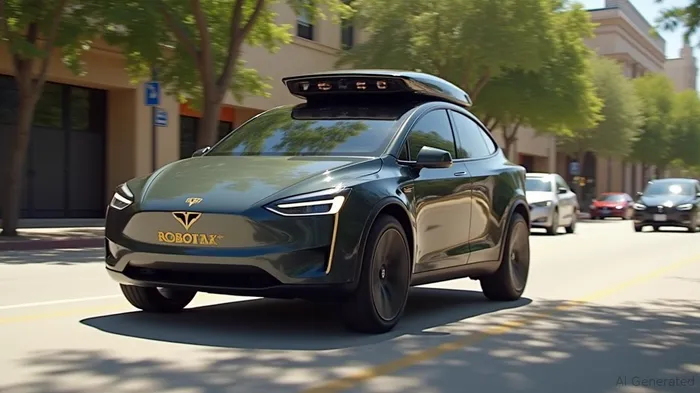
The service's early days revealed both promise and challenges. While Tesla's vision-only approach (using cameras instead of lidar) reduces costs, incidents like near-misses captured on video have raised safety concerns. Regulatory scrutiny remains a hurdle, but Musk's bold declaration of “hundreds of thousands of Robotaxis in the U.S. by late 2026” signals confidence.
The Henry Kuang Hire: Bolstering Tesla's AI Ambitions
The confusion surrounding Tesla's alleged hiring of Henry Kuang—former Head of Autonomy at GM's Cruise—highlighted the stakes in talent acquisition. While initial reports were retracted due to a fraudulent LinkedIn profile, Electrek later confirmed Kuang's role as Director of AI and Deep Learning for Autonomous Driving. His arrival is critical: Kuang's expertise in perception systems and fleet autonomy could address Tesla's long-standing leadership gaps.
Tesla's Autopilot division has seen key departures, including Andrej Karpathy (2022) and Omead Afshar (2025), creating instability. Kuang's experience—particularly in refining perception algorithms—aligns with Tesla's vision to improve FSD's reliability in complex scenarios, such as detecting school buses or navigating adverse weather.
Competitive Pressures: BYD and GM's ADAS Play
Tesla faces formidable rivals. BYD's rapid global expansion, fueled by cost-efficient EVs and government partnerships, threatens Tesla's market share. Meanwhile, GM, after shuttering Cruise's autonomous fleet ambitions, is pivoting to advanced driver-assistance systems (ADAS) to compete.
Tesla's differentiation lies in its pursuit of full autonomy, contrasting with competitors' ADAS-centric strategies. While GM's Super Cruise and BYD's ADAS systems aim for incremental safety gains, Tesla's Robotaxi vision targets a leap to driverless mobility. This plays to Tesla's strengths: its massive in-car software fleet (over 2 million FSD-enabled vehicles) provides unmatched real-world data for training AI models.
Vertical Integration: Tesla's Secret Weapon
Tesla's vertically integrated ecosystem—controlling hardware, software, batteries, and energy storage—gives it an edge. The Optimus humanoid robot, now using Grok AI for enhanced interaction, and Redwood Materials' battery recycling ventures further solidify its dominance in the EV and robotics value chain.
This integration reduces costs and accelerates innovation. For instance, Tesla's vision-only FSD avoids the expense of lidar, while its in-house neural network training infrastructure (using Grok) ensures control over AI development.
Near-Term Challenges vs. Long-Term Vision
Despite its ambitions, Tesla faces headwinds:
- Regulatory Risks: Texas lawmakers' calls for delayed Robotaxi rollouts signal caution in a nascent market.
- Safety Concerns: Incidents like the Dawn Project's school bus test highlight FSD's limitations.
- Manufacturing Costs: Scaling Robotaxis to 1,000 vehicles in Austin by 2026 requires capital efficiency.
However, Musk's track record of turning long-term visions into reality—from Gigafactories to Mars missions—suggests Tesla can navigate these hurdles.
Investment Thesis: Buy the Long-Term Play, Mind the Volatility
Tesla's Robotaxi rollout and AI advancements position it as a leader in autonomous mobility. Its vertically integrated model, data advantage, and talent like Kuang create barriers to entry. While near-term risks include regulatory delays and margin pressures, the company's potential to capture $200 billion+ in autonomous ride-hailing revenue by 2030 justifies a buy-and-hold strategy.
Investment Advice:
- Buy: For long-term investors, Tesla's autonomous ambitions and ecosystem dominance warrant a position.
- Wait: Short-term traders may pause due to execution risks and market volatility.
- Monitor: Key catalysts include Robotaxi expansion timelines, FSD software updates, and regulatory approvals.
In the battle for autonomous mobility, Tesla's bet on full autonomy and vertical integration may prove decisive. While the path is fraught with obstacles, its vision—and the $4.20 rides in Austin—are early signals of a future where Tesla drives the rules.





Comentarios
Aún no hay comentarios