
Tesla's 2026 EV Sales Recovery: A Scalability and Market Reset Play
Tesla's 2026 sales recovery isn't a sudden turnaround; it's a calculated rebound from a necessary reset. The company delivered 1,636,129 vehicles in 2025, a 9% year-over-year decline and its second straight yearly drop. This marked a pivotal moment, allowing Chinese rival BYD to surpass it in total deliveries for the first time. The decline was driven by two major, interconnected headwinds that created a temporary sales vacuum.
The first was a strategic product shift. The launch of the new Tesla Model Y, or "Juniper," in March 2025 as a 2026 model caused significant disruption. This refresh, while positioning the vehicle for the future, created a period of decline in deliveries during the first half of 2025 as production lines adjusted and consumer focus turned to the new offering. It was a classic case of a company pausing to upgrade its core product, a move that inevitably pressures near-term volume.
The second headwind was a policy-driven demand shock. The expiry of the U.S. federal EV tax credit at the end of September 2025 pulled forward purchases in the third quarter, followed by a sharp slowdown in the fourth. This created a volatile, choppy sales pattern that masked underlying demand and made the full-year decline more pronounced. As one analyst noted, this weakness reflects a pause typical of major technology transitions rather than a structural reversal in EV adoption.
Viewed together, these factors created a reset. The Model Y Juniper rollout was a necessary investment in the product cycle, and the tax credit expiry forced a market normalization. Both events contributed to the second straight decline in annual sales, but they also cleared the path for a more scalable rebound. By absorbing these headwinds in 2025, TeslaTSLA-- shed a year of weak comps and positioned itself for a recovery built on a refreshed model and a more fundamentals-driven market. The reset is complete.
The Scalability Catalysts: Product, Market, and Competition
The path to 2026 scalability hinges on three converging catalysts: a completed product cycle, a normalized market, and a competitive landscape that favors Tesla's global scale. Together, they create a setup where the company can leverage its technology leadership to capture share in both mature and emerging markets.
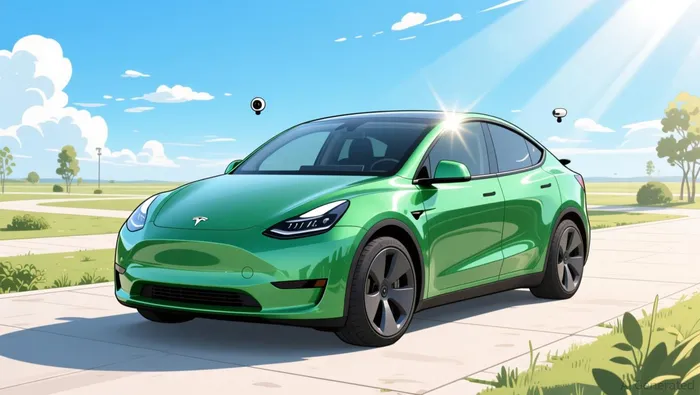
The most immediate catalyst is the completion of the Model Y Juniper rollout. This refresh was the primary driver of the decline in deliveries during the first half of 2025, as production lines adjusted and buyers waited. The phased global launch, which began in China in late 2024 and reached the U.S. in March 2025 as a 2026 model, has now been absorbed. With the new model fully integrated, Tesla faces an easier year-over-year comparison. This sets the stage for the second-half sales recovery to carry into a full-year volume rebound, providing the foundational volume needed for scale.
Simultaneously, the market is undergoing a necessary normalization. The expiry of the U.S. federal EV tax credit at the end of September 2025 pulled forward demand and created a post-credit slump. Yet, as analyst George Gianarikas notes, this is forcing a healthier, more fundamentals-driven phase. EV demand, previously boosted by generous tax credits, is resetting into a smaller but more durable market. In this environment, pricing and incentives are normalizing, weaker models are being phased out, and competition increasingly favors manufacturers with dedicated EV platforms and cost discipline. Tesla, with its fully scaled and integrated EV franchise, is uniquely positioned to thrive here.
This competitive shift is the third pillar. Tesla now faces direct, price-competitive pressure from multiple Chinese EV makers like Xiaomi and Geely, as noted in the broader market context. However, this isn't a headwind for scalability; it's a filter that validates Tesla's advantage. In emerging markets like Thailand, Vietnam, and Brazil, where Chinese brands are aggressively expanding, Tesla's global brand recognition and technological leadership provide a scalable advantage. The company can leverage its software ecosystem and manufacturing scale to compete effectively in these high-growth regions, turning competitive intensity into an opportunity for market penetration.
The bottom line is that 2026 is about executing on a reset. The product cycle is complete, the market is stabilizing, and the competitive landscape is clarifying. For a growth investor, this convergence of catalysts points to a year where Tesla can systematically rebuild volume and leverage its operational scale to capture a larger share of a more sustainable EV market.
Financial Impact and Valuation Implications
The sales recovery thesis now translates into concrete financial metrics. Analyst consensus, as published by Tesla on its investor website, forecasts 1.75 million deliveries in 2026. This represents a 7% year-over-year increase from the estimated 1.64 million vehicles delivered in 2025. For a growth investor, this is the crucial first step: a return to positive volume growth after two consecutive annual declines. It validates the 2025 reset as a necessary pause, not a permanent setback.
Yet this growth trajectory is a far cry from the company's stated long-term ambitions. Elon Musk has publicly targeted 4 million cars a year by the end of 2027. The 2026 forecast of 1.75 million deliveries implies a roughly 50% increase from the prior year, but it still leaves the company well behind its own production goal. The consensus also suggests the 3 million mark won't be reached until 2029. This gap between current forecasts and Musk's targets is a key tension. It underscores that the 2026 recovery is a foundational rebuild, not a sprint to the ultimate scale.
The financial impact is most stark when viewed against Tesla's market valuation. The company trades at a $1.4 trillion valuation, a figure that dwarfs its current output and implies a massive future growth trajectory. This valuation is built on shareholder hopes for leadership in self-driving technology and robotics, not just auto sales. For that premium to be justified, the company must demonstrate it can not only return to growth but sustain it at a high rate. A successful 2026 recovery is the essential first validation of that scalability. It proves the core business can rebound from a reset and provides the volume base needed to fund the more speculative, high-growth initiatives that underpin the current price.
In short, the 2026 forecast is a bridge. It's a modest but necessary step toward Musk's ambitious targets, and a critical proof point for a valuation that has priced in a much more aggressive future. For the growth investor, the setup is clear: the company needs to execute on this volume rebound to show it can scale, which is the prerequisite for justifying its premium.
Catalysts, Risks, and What to Watch
The 2026 sales recovery thesis now hinges on a clear set of near-term catalysts and long-term risks. For the growth investor, the setup is one of high potential but also high execution risk, with several key events and trends to monitor.
The primary growth catalyst is the strong sales execution of the refreshed Model Y Juniper. After the product shift caused a decline in deliveries during the first half of 2025, the full-year 2026 forecast of 1.75 million vehicles depends on this model regaining its position as the volume engine. Beyond that, the year is packed with new product catalysts. As analyst George Gianarikas notes, 2026 is shaping up to be a bountiful year for Tesla, with the anticipated scale-up of CyberCab and Optimus (Gen 3) production. The commercial launch timelines for these programs are critical. Success here would validate Tesla's long-term growth narrative beyond autos, justifying its premium valuation. Similarly, any acceleration in Semi truck production and continued expansion in energy storage, supported by the launch of Megapack 3, would demonstrate the scalability of its non-automotive businesses.
The major risk, however, is the continued erosion of market share if new products fail to gain traction against aggressive Chinese competitors. Tesla's car sales dropped by nearly 9% in 2025, allowing BYD to overtake it as the world's biggest EV seller. Chinese firms like Geely and MG are putting pressure on Western rivals by pricing vehicles below established brands. While Tesla has responded with lower-priced versions of its core models, the competitive intensity in both mature and emerging markets is intensifying. The risk is that even with a strong Model Y rebound, Tesla cannot outpace the sheer volume and pricing power of its Chinese rivals, capping its growth potential.
Other key factors to monitor include the pace of energy storage deployments and any shifts in regulatory policy. The energy storage business, a high-margin growth area, needs to keep expanding to diversify revenue and fund future bets. More broadly, any changes in U.S. or EU EV policy could alter the competitive landscape. While the expiry of the U.S. federal tax credit has forced a market reset into a healthier and more durable phase, new incentives or tariffs could either help or hinder Tesla's global scaling efforts. For now, the company's ability to leverage its fully scaled and integrated EV franchise against a more disciplined competitive field will be the ultimate test of its scalability.







Comentarios
Aún no hay comentarios