
Tesco's Valuation Shift and the Hunt for Undervalued UK Retailers in a Post-Discounting Era
The UK retail sector in 2025 is navigating a paradox: robust sales growth amid persistent cost pressures, and a surge in discounting that has left some legacy retailers undervalued despite their strategic resilience. At the center of this dynamic is Tesco, which has defied broader industry headwinds to secure a 28.4% market share in the UK grocery sector, its highest since 2016, according to Retail Gazette. Yet, as discounters like Aldi and Lidl gain traction and price wars intensify, investors are increasingly scrutinizing which legacy players offer the most compelling value propositions.
Tesco's Resilience: A Model for Value Creation
Tesco's recent performance underscores its ability to adapt to shifting consumer priorities. In the 2025/26 interim period, the company reported a 5.1% sales increase to £31.46 billion, driven by its Clubcard loyalty program and premium Finest range, according to an IG trading statement. Its profit outlook was upgraded to £2.9–3.1 billion for the fiscal year, reflecting confidence, Retail Times reported. However, this success is not without risks. Analysts warn that Asda's aggressive pricing strategies and inflationary pressures could erode margins, even as Tesco's online sales-up 14% to £7.5 billion-highlight its digital dominance, according to ABC Money.
From a valuation perspective, Tesco appears significantly undervalued. A discounted cash flow model from Simply Wall St estimates its fair value at £6.4 per share, yet the stock trades at £4.49, a 29.9% discount. While Simply Wall St also highlights that its trailing P/E ratio of 19x exceeds the peer average of 17.8x, the platform notes a forward P/E of 15.21 and a PEG ratio of 1.79 that suggest moderate growth potential. Analysts have set a 12-month target of £4.64, indicating a modest 3.2% undervaluation. This discrepancy between fundamentals and market price raises questions about whether investors are underestimating Tesco's long-term franchise value.
The Undervalued Contenders: Sainsbury's, Morrisons, and M&S
While Tesco dominates, other legacy retailers present intriguing opportunities for value hunters. J Sainsbury's, for instance, has a trailing P/E of 18.93 and a forward P/E of 14.70, with analyst price targets averaging 333.5p-a 1% upside from its current price, according to StockAnalysis. Its "Food First" strategy, which prioritizes quality and customer loyalty, positions it to compete with Tesco's value-driven approach, per YouGov rankings. However, StockAnalysis shows Sainsbury's EV/EBITDA of 5.58 lags behind Tesco's 8.27, suggesting a less favorable earnings multiple.
Morrisons, meanwhile, trades at an EV/EBITDA of 5.53, with a fair price estimate of £214.26 versus its current £286.40, implying a 25% downside risk, ValueInvesting estimates. This undervaluation may reflect investor skepticism about its ability to counter discounters, despite its focus on local sourcing and fresh produce (YouGov rankings). Conversely, Marks & Spencer (MKS) has seen its P/E ratio rise to 25.3x in 2025 from 12.7x in 2024, signaling improved earnings expectations, per MarketScreener. With an EV/EBITDA of 5.87 and a reference price of £3.705, M&S's strategic investments in food and omnichannel retailing could justify its premium valuation.
The Post-Discounting Dilemma: Opportunity or Overhang?
The rise of discounters like Aldi and Lidl-now capturing 17.2% of the UK grocery market combined-has reshaped consumer behavior, with price sensitivity outpacing brand loyalty (Retail Gazette). This trend has left some legacy retailers, such as B&M, struggling (IG). Yet, for investors, the discounting environment also creates asymmetries: while it pressures margins, it simultaneously highlights the value of retailers with strong cost controls and customer retention strategies.
Tesco's ability to balance value and quality-exemplified by its 51.2% own-label sales-provides a blueprint for navigating this landscape (ABC Money). Similarly, Sainsbury's and M&S's focus on differentiation (e.g., premium food offerings) could insulate them from pure price competition. However, Morrisons' reliance on traditional formats may leave it vulnerable unless it accelerates digital and supply-chain innovations (ValueInvesting).
Conclusion: A Call for Nuanced Value Investing
The UK retail sector in 2025 is a study in contrasts: high growth coexists with high risk, and undervaluation often masks operational challenges. Tesco's valuation discount, while tempting, must be weighed against its exposure to price wars and inflation. For investors seeking alternative opportunities, Sainsbury's and M&S offer compelling cases, provided their strategies align with evolving consumer preferences. Morrisons, however, remains a high-risk bet unless it can close its efficiency gap with rivals.
As the sector evolves, the key for investors will be to distinguish between temporary undervaluation and structural weaknesses. In a post-discounting world, the retailers that thrive will be those that blend value with innovation-a formula Tesco has mastered, but one that others are still striving to replicate.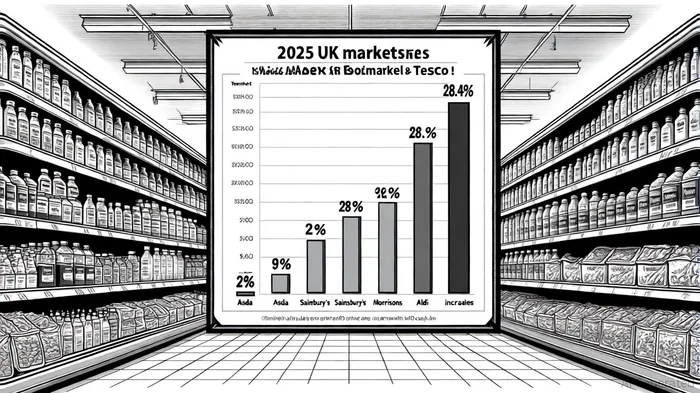







Comentarios
Aún no hay comentarios