
Tesco's Resilience in a Competitive UK Grocery Market: Why It Remains a Strategic Buy Despite Sector Intensification
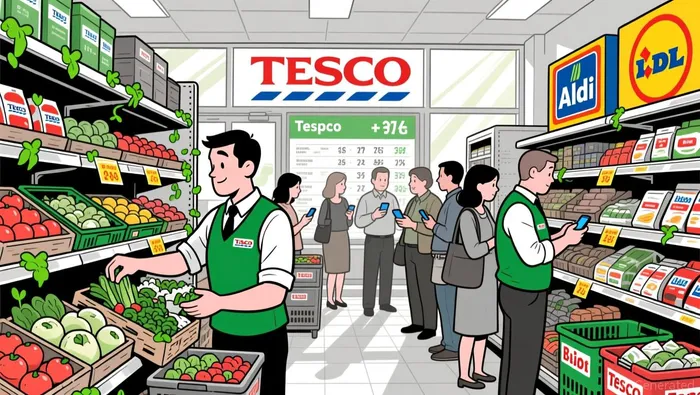
The UK grocery sector has long been a battleground of razor-thin margins and relentless competition. Yet, as discounters like Aldi and Lidl surge and traditional rivals like Asda falter, Tesco has not only defended its crown but expanded its lead. With a 29.1% market share in Q3 2025-up 0.5% year-over-year-Tesco's dominance is a testament to its strategic agility and operational discipline. For investors, the question isn't whether the market is competitive; it's whether Tesco's resilience and innovation justify its status as a strategic buy. The answer, as this analysis shows, is a resounding yes.
Market Leadership Amid Sector Turbulence
Tesco's ability to maintain its lead in a fragmented market is no accident. While discounters Aldi and Lidl have captured 7.8% and 7.4% of grocery spend respectively, growing at over 10% year-to-date, Tesco has countered with a dual strategy: value-driven pricing and premium differentiation. Its Clubcard loyalty program, which rewards frequent shoppers with personalized offers, has proven critical in retaining price-conscious consumers. Meanwhile, its premium "Finest" product line grew 15% in 2025, catering to evolving demand for quality and health-conscious options.
The rise of online grocery shopping has further tilted the playing field. Ocado's 14.3% value sales growth in Q3 2025 underscores the sector's shift toward convenience, but Tesco's partnership with Ocado and its own digital infrastructure have allowed it to scale efficiently. By contrast, Asda's -8.5% growth relative to the industry average highlights the risks of lagging in this space.
Financial Strength and Strategic Investments
Tesco's 2025 financial results underscore its operational prowess. Group sales rose 4.6% to £34.1 billion in the first half of the fiscal year, with retail operating profit surging 10.4% to £1.54 billion. This growth stems from a mix of cost control, private-label expansion, and strategic investments.
The company has poured resources into digital transformation, including an AI-powered pricing system that dynamically adjusts prices to optimize margins and customer retention. Robotic distribution centers and automation in logistics have further reduced labor costs while improving delivery times. These innovations are not just cost-saving measures-they're defensive plays against discounters, enabling Tesco to undercut rivals without sacrificing profitability.
Sustainability is another pillar of Tesco's long-term strategy. With a target to source 45% of its UK electricity from renewables by 2025, the company is aligning with consumer trends and regulatory expectations. This forward-looking approach mitigates future risks and enhances brand loyalty, particularly among younger, eco-conscious shoppers.
Operational Efficiency and Scale: Tesco's Core Advantages
Tesco's 2,965 UK stores- more than twice those of its nearest competitors-give it unparalleled convenience and supplier leverage. This scale allows it to negotiate better terms with vendors, pass savings to consumers, and maintain pricing flexibility in a sector where margins are razor-thin. Analysts note that Tesco's operational efficiency, particularly in supply chain management, is a key differentiator.
Moreover, its AI-driven pricing system and data analytics capabilities create a flywheel effect: the more customers engage with Clubcard, the more insights Tesco gains, enabling hyper-personalized promotions that deepen customer loyalty. This data advantage is hard for smaller rivals to replicate.
Analyst Endorsement and Shareholder Returns
Despite the sector's volatility, analysts remain bullish on Tesco. A long-term mean price target of 137.92 pence-just slightly below the current share price as of January 2026-reflects confidence in its ability to outperform. This optimism is grounded in tangible actions: a £1.45 billion share buyback and a 13.2% dividend increase signal management's commitment to shareholder returns.
Critics may argue that rising operating costs and economic uncertainty could erode margins. However, Tesco's 10.9% operating profit growth in 2024/2025 demonstrates its capacity to adapt. By balancing aggressive pricing with cost discipline, it has shown resilience even in downturns.
Conclusion: A Strategic Buy in a Shifting Landscape
Tesco's dominance in the UK grocery market is not a relic of the past but a product of continuous innovation. Its ability to blend operational efficiency, digital transformation, and strategic scale positions it to outmaneuver both discounters and traditional rivals. For investors, the company's robust financials, analyst endorsements, and proactive approach to sustainability and convenience make it a compelling long-term bet. In a sector defined by volatility, Tesco's resilience is its greatest asset-and its most persuasive argument for inclusion in a strategic portfolio.







Comentarios
Aún no hay comentarios