
Terreno Realty's Strategic Reallocation in Miami Industrial Real Estate: Pre-Leasing as a Leading Indicator of Long-Term Success
The industrial real estate sector has long been a cornerstone of resilient investment portfolios, and TerrenoTRNO-- Realty's recent activities in Miami underscore why this asset class remains compelling. As the Sunbelt's industrial corridor continues to attract demand driven by e-commerce and supply chain reconfiguration, Terreno's strategic reallocation of capital into pre-leased, high-quality developments like Countyline Corporate Park Phase IV exemplifies a disciplined approach to capitalizing on long-term trends.
Pre-Leasing Momentum: A Barometer of Market Confidence
Terreno's pre-leasing activity in Miami has been nothing short of robust. At Countyline Corporate Park Phase IV, Building 36-a 214,000-square-foot industrial distribution facility-is already 51% pre-leased to a global logistics company, with construction slated to begin and completion expected in early 2027, according to a Nasdaq expert outlook. This project is part of a $511.5 million investment in a 2.2 million-square-foot portfolio of LEED-certified buildings, 70% of which was stabilized by Q2 2025, according to a RealEstate.News report. The 100% pre-leasing rate for the broader portfolio highlights the market's appetite for sustainable, operationally efficient facilities, particularly as construction pipelines tighten and speculative development dwindles; the RealEstate.News coverage further emphasizes these trends.
Such pre-leasing success is not merely a short-term win. According to a report by Clarion Partners, industrial assets built since 2010 have delivered total returns of 6.3% over five years, nearly double that of older properties, as shown in Terreno investor materials. This underscores the value of pre-leasing as a leading indicator: securing tenants before construction begins reduces vacancy risk and locks in long-term cash flows, directly enhancing asset performance. For Terreno, this strategy aligns with its focus on high-barrier markets like Miami, where stabilized cap rates for its projects (5.8%–6.3%) outperform the regional average, a point also noted in the RealEstate.News analysis.
Management Execution: A Track Record of Value Creation
Terreno's ability to execute on its capital reallocation strategy is further validated by its management team's proven track record. The company's Q1 2025 results demonstrated a 96.6% leasing rate for operating assets, with strategic investments yielding internal rates of return (IRR) of 13.0% and 7.5%, as detailed in a GuruFocus report. Over the past decade, Terreno has sold 43 properties, achieving an unleveraged IRR of 12.6% and a 12.3% dividend compound annual growth rate (CAGR) since 2011, metrics summarized in its investor materials. These metrics reflect a disciplined approach to value creation, emphasizing development in high-demand coastal markets and leveraging its expertise in sustainable construction.
Analyst sentiment, while mixed, remains cautiously optimistic. As of April 2025, the average 12-month price target for Terreno's stock is $67.40, with estimates ranging from $57.00 to $78.00, according to the Nasdaq piece. This divergence in outlook highlights the market's recognition of both the company's strengths-such as its 98.2% same-store occupancy as of June 2025 reported in Terreno's investor materials-and the broader macroeconomic uncertainties, including interest rate volatility. However, Terreno's management structure, which includes no annual cash bonuses and significant insider ownership, aligns executive incentives with long-term shareholder value, as noted in the investor materials.
Industrial Real Estate's Long-Term Outlook: A Tailwind for Terreno
The industrial sector's fundamentals remain robust. Despite a 2022–2023 correction due to rising rates, property values have stabilized, with vacancy rates projected to fall to 4.4% by 2028 as new supply slows, according to Terreno's investor materials. Institutional allocations to industrial real estate have surged from 14% in 2017 to 35% in 2023, reflecting its outperformance against other property types. For Terreno, this environment amplifies the appeal of its Miami investments, where demand from third-party logistics (3PL) providers and e-commerce tenants is expected to drive sustained absorption, as discussed in the company's Q1 2025 reporting.
Conclusion: A Model for Capital Reallocation
Terreno Realty's strategic reallocation of capital into Miami's industrial market is a masterclass in aligning short-term execution with long-term value. By leveraging pre-leasing as a leading indicator, the company mitigates risks while securing premium returns in a sector poised for continued growth. As the industrial real estate landscape evolves, Terreno's focus on sustainable development, operational efficiency, and disciplined capital deployment positions it as a standout player in the Sunbelt's industrial boom.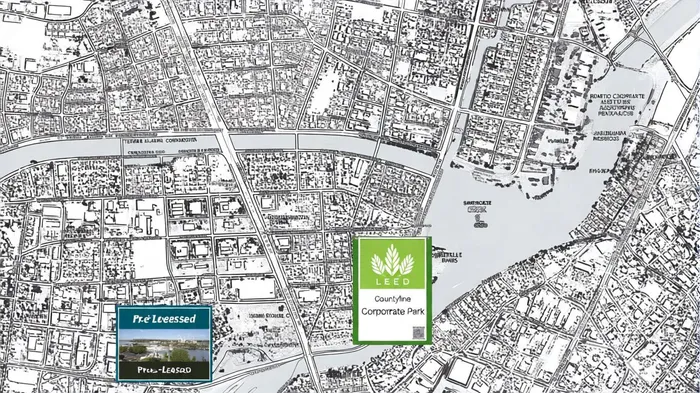





Comentarios
Aún no hay comentarios