
Terreno Realty's D.C. Lease Renewal: A Barometer for Industrial Real Estate Stability in the Nation's Capital
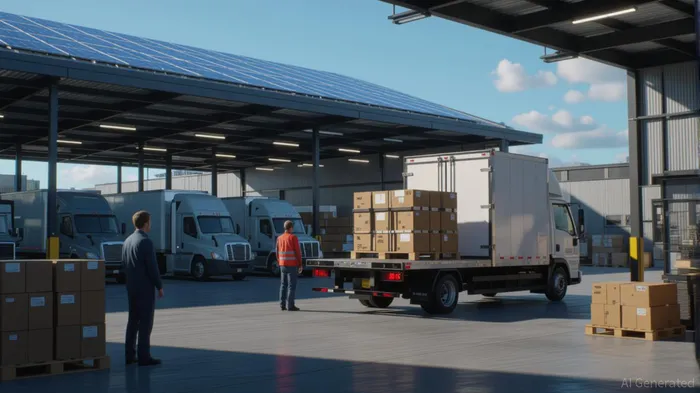
The industrial real estate market in Washington, D.C., has long been a bellwether for national economic trends, given its proximity to government activity, international trade hubs, and a thriving commercial corridor. Recent developments by Terreno Realty Corporation (NYSE: TRNO)—specifically, its early lease renewal with a wine and spirits distributor—underscore a compelling narrative: premium logistics and distribution spaces in D.C. are not just stable but increasingly sought after, even amid macroeconomic headwinds. For investors, this signals a strategic opportunity to capitalize on a sector that balances resilience with growth potential.
Strategic Leasing as a Confidence Indicator
Terreno's early renewal of a 52,000-square-foot lease with a wine and spirits distributor, set to commence in April 2026 and expire in March 2031, is more than a routine transaction. It reflects tenant confidence in long-term supply chain stability and Terreno's ability to secure high-credit-quality occupants. The wine and spirits industry, which relies heavily on temperature-controlled storage and efficient distribution networks, demands infrastructure that aligns with its operational rigor. By securing this lease five years in advance, the tenant—like many in the logistics sector—demonstrates a willingness to lock in prime real estate amid rising costs and supply chain volatility.
This move also aligns with Terreno's broader strategy of prioritizing coastal markets where demand for industrial space remains robust. Washington, D.C., as one of its six core markets, has seen consistent occupancy rates above 97% in recent quarters, per the company's Q2 2025 report. The lease renewal adds to a growing list of successes, including a 53,000-square-foot agreement with the U.S. Postal Service in the same quarter, which further solidifies Terreno's position as a dominant player in the region.
Market Fundamentals: Why D.C. Stands Out
Washington, D.C., is uniquely positioned to benefit from converging economic forces. Its role as a political and diplomatic hub drives demand for secure, high-quality logistics infrastructure to support government contracts, international trade, and e-commerce. Additionally, the city's proximity to major transportation networks—including the Port of Baltimore and the I-95 corridor—makes it an ideal distribution hub for both domestic and global markets.
The wine and spirits sector, in particular, has seen a surge in demand for climate-controlled storage and rapid fulfillment capabilities, driven by the growth of online retail and the need for compliance with federal and state regulations. Terreno's ability to cater to these niche requirements positions it to capture a segment of the market that is less susceptible to cyclical downturns.
Data-Driven Insights: Occupancy and Pricing Power
Terreno's Q2 2025 results highlight the strength of its leasing strategy. The company reported a 97.7% portfolio occupancy rate, up from 96.6% in Q1 and 96.0% in the same period of 2024. Cash rents on new and renewed leases increased by 22.6% year-to-date, a testament to the company's pricing power in a competitive market. These metrics are critical for investors, as they indicate sustainable cash flow generation and resistance to economic slowdowns.
Moreover, the early lease renewal with the wine and spirits distributor provides operational flexibility. By securing the tenant's commitment ahead of the lease commencement date, TerrenoTRNO-- can allocate resources to property upgrades or tenant-specific improvements, enhancing the asset's value and long-term profitability.
Investment Implications: A Sector of Stability and Growth
For investors, the industrial real estate sector—particularly in high-demand markets like D.C.—offers a diversified hedge against inflation and interest rate uncertainty. REITs like Terreno, which focus on long-term, triple-net leases with creditworthy tenants, are well-positioned to deliver consistent dividends and capital appreciation.
However, risks remain. Rising interest rates could dampen broader real estate valuations, and geopolitical tensions may disrupt supply chains. Yet, Terreno's focus on coastal markets with inelastic demand—such as D.C.—mitigates these risks. The company's recent acquisitions and dispositions, including a $139.4 million sale of four properties in Q2 2025, also demonstrate its agility in optimizing its portfolio for maximum returns.
Conclusion: A Case for Strategic Allocation
Terreno Realty's early lease renewal in Washington, D.C., is a microcosm of a broader trend: industrial real estate is evolving into a premium asset class, driven by the need for resilient infrastructure in a digital-first economy. For investors seeking stability and growth, the company's strategic focus on high-occupancy coastal markets, coupled with its ability to secure long-term tenants in critical sectors, makes it a compelling addition to a diversified portfolio.
As the nation's capital continues to solidify its role as a logistics and distribution nexus, industrial real estate in D.C. is poised to outperform, offering a rare combination of defensive characteristics and growth potential. Terreno's proactive approach to leasing and portfolio management positions it as a leader in this transformation—a signal that investors would be wise to heed.
"""





Comentarios
Aún no hay comentarios