
The Terra Collapse: Reckoning with Systemic Risks in Crypto Trading
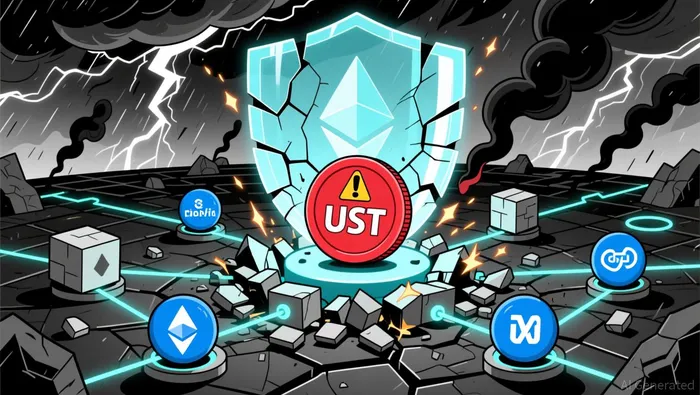
The collapse of TerraUSD (UST) and its native token LunaLUNA-- in May 2022 marked a watershed moment for decentralized finance (DeFi). The event exposed the fragility of algorithmic stablecoins and the systemic risks inherent in protocols reliant on speculative incentives rather than traditional collateral. As the crypto market reeled from a $40 billion loss, the crisis sparked urgent debates about institutional accountability and market integrity in DeFi. Two years later, the industry and regulators remain locked in a complex balancing act: preserving the innovation that defines DeFi while mitigating risks that threaten broader financial stability.
Systemic Risks in DeFi: A Network of Interdependence
The TerraLUNA-- collapse revealed how interconnected DeFi ecosystems can amplify crises. According to a study, tokens like EthereumETH-- (ETH), ChainlinkLINK-- (LINK), and UniswapUNI-- (UNI) act as key transmitters of systemic risk during downturns, while stablecoins like DAIDAI-- often serve as buffers. This dynamic underscores the dual-edged nature of DeFi's design: its open, interoperable architecture fosters innovation but also creates cascading vulnerabilities when protocols fail.
The Anchor ProtocolANC--, which promised unrealistic yields on UST deposits, exemplifies this fragility. By incentivizing mass participation without robust liquidity safeguards, the protocol created a self-reinforcing cycle that collapsed when redemptions outpaced reserves. Such failures highlight the need for protocol-level transparency and liquidity stress-testing-measures that remain underdeveloped in many DeFi projects.
Institutional Accountability: A Regulatory Vacuum Filled
Post-Terra, institutional accountability has become a focal point for regulators. U.S. Treasury Secretary Janet Yellen and SEC Chair Gary Gensler have repeatedly emphasized the risks posed by stablecoins and the lack of consumer protections in DeFi. In July 2025, the U.S. enacted the Guiding and Establishing National Innovation for US Stablecoins (GENIUS) Act, mandating par redemption rights, high-quality liquid reserves, and Bank Secrecy Act compliance for stablecoin issuers. These measures aim to prevent future runs on algorithmic stablecoins by aligning them with traditional banking standards.
Internationally, countries like Canada, Singapore, and Hong Kong have introduced frameworks requiring stablecoin issuers to maintain asset reserves and implement risk management policies. As noted by Duke Law scholars, the decentralized nature of DeFi complicates accountability, as protocols often lack centralized entities to hold responsible.
Market Integrity: Technical Reforms and Hybrid Models
In response to systemic risks, DeFi protocols have begun adopting technical reforms. Hybrid stablecoins, which blend algorithmic mechanisms with partial backing from traditional assets like USDTUSDT-- and BTCBTC--, have emerged as a more resilient alternative. Simulation studies suggest these models reduce collapse probabilities by up to 95.8% under extreme stress scenarios. Additionally, governance frameworks now prioritize transparency, with protocols mandating regular smart contract audits and decentralized governance participation. According to Elliptic's 2025 assessment, protocols must demonstrate robust risk management practices.
Despite these advancements, challenges persist. The absence of universal standards for collateralization and redemption rights leaves room for innovation but also exposes users to opaque risks. As one expert put it, "The lesson of Terra is that DeFi cannot outsource accountability to code alone."
The Path Forward: Balancing Innovation and Oversight
The Terra collapse has forced a reckoning with the limitations of DeFi's current model. While regulatory frameworks like the GENIUS Act and hybrid stablecoin designs represent progress, they also risk stifling the innovation that drew investors to crypto in the first place. The key lies in fostering a regulatory environment that encourages robust risk management without overreach.
For institutional investors, the takeaway is clear: DeFi's systemic risks demand rigorous due diligence. Protocols lacking transparent governance, diversified collateral, or stress-tested liquidity models remain high-risk bets. Meanwhile, policymakers must continue refining oversight to address the unique challenges of decentralized systems, ensuring market integrity without undermining the decentralized ethos that defines the space.







Comentarios
Aún no hay comentarios