
Terra Clean Energy's Uranium Exploration in Utah: Strategic Positioning in the Nuclear Renaissance and Energy Transition
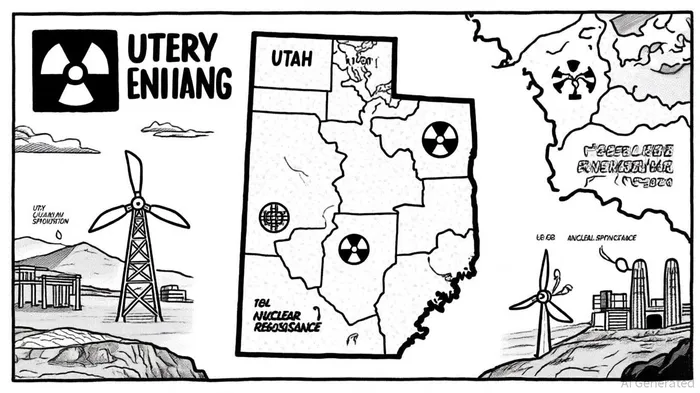
The global energy landscape is undergoing a profound transformation, driven by the urgent need to decarbonize economies while ensuring energy security. At the heart of this transition lies nuclear energy, a low-carbon power source poised for resurgence. Uranium, the lifeblood of nuclear reactors, is emerging as a critical commodity, with demand projected to surge as 31 countries commit to tripling their nuclear capacity by 2050 [1]. In this context, companies engaged in uranium exploration—particularly in resource-rich regions like Utah—stand to play a pivotal role. While specific details on Terra Clean Energy's uranium projects in Utah remain opaque, the broader industry trends and geological potential of the state offer a compelling case for strategic investment.
The Nuclear Renaissance and Uranium Demand
The International Atomic Energy Agency (IAEA) and the Nuclear Energy Agency (NEA) have underscored that global recoverable uranium resources total 7.9 million tonnes, sufficient to meet demand through 2050 and beyond—even under high-growth scenarios [2]. However, this supply depends on timely investments in exploration and innovation. Between 2020 and 2022, uranium mine production rose by 4%, and exploration expenditures rebounded, reaching $800 million in 2022, with projections of $840 million in 2023 [3]. These figures signal a nascent but accelerating revival of the uranium sector, driven by policy shifts and the growing economic viability of nuclear energy.
Utah, with its history of uranium mining and favorable geology, is uniquely positioned to benefit. The state's uranium deposits, primarily in the Uravan Mineral Belt and the Paradox Basin, have long been a cornerstone of U.S. production. While recent exploration activity has waned due to market volatility, the current push for energy transition could reignite interest. For companies like Terra Clean Energy, leveraging Utah's established infrastructure and geological expertise could offer a competitive edge.
Strategic Challenges and Opportunities
Despite the promise, uranium exploration faces hurdles. Geopolitical tensions, regulatory complexity, and the long lead times required to bring new mines online pose risks. For instance, the average time from discovery to production for a uranium mine is 15–20 years [4], necessitating forward-looking strategies. Terra Clean Energy, if operationalizing projects in Utah, would need to address these challenges through partnerships, technological innovation, and community engagement.
One potential avenue is collaboration with federal agencies like the U.S. Department of Energy (DOE), which has prioritized domestic uranium supply chains to reduce reliance on imports. The DOE's 2023 investments in advanced nuclear technologies and mining efficiency could indirectly benefit explorers in Utah by creating a more supportive policy environment [5]. Additionally, integrating environmental, social, and governance (ESG) principles—such as minimizing water usage and restoring mined lands—could enhance a company's appeal to impact investors.
Investment Considerations
For investors, the uranium sector presents a paradox: long-term fundamentals are robust, yet short-term volatility persists. The price of uranium has fluctuated dramatically in recent years, influenced by factors such as reactor closures in Europe and geopolitical disruptions. However, the IAEA's assertion that “uranium resources are sufficient, but investments are necessary” [2] highlights the sector's resilience. Companies with a strong geological position, like those operating in Utah, could capitalize on this duality.
Terra Clean Energy's hypothetical entry into Utah's uranium market would need to align with broader energy transition goals. For example, pairing uranium exploration with renewable energy projects—such as solar or wind farms to power mining operations—could create synergies that reduce costs and carbon footprints. Such hybrid models are gaining traction as investors seek diversified, low-emission portfolios.
Conclusion
While Terra Clean Energy's specific projects in Utah remain unverified, the strategic case for uranium exploration in the region is undeniable. As the nuclear renaissance gains momentum, companies that secure high-grade deposits, adopt innovative technologies, and align with decarbonization goals will be well-positioned to thrive. Utah's geological endowment and the global push for energy security make it a focal point for investors seeking exposure to this critical sector. The challenge lies not in the availability of resources, but in the courage to invest in a future where nuclear energy plays a central role.







Comentarios
Aún no hay comentarios