
TeraWulf's $3.2B Debt Financing: Strategic Leverage for Bitcoin Infrastructure Expansion
In a bold move to cement its dominance in the high-performance computing (HPC) and artificial intelligence (AI) infrastructure sectors, TeraWulf Inc.WULF-- (Nasdaq: WULF) has announced a $3.2 billion senior secured notes offering, a transaction that underscores the company's aggressive growth strategy and its alignment with the surging demand for BitcoinBTC-- infrastructure, according to a GlobeNewswire filing. The offering, led by Morgan Stanley as sole bookrunner, reflects a calculated approach to financing a critical phase of TeraWulf's Lake Mariner data center expansion in Western New York-a project poised to redefine the economics of scalable, sustainable computing power.
Strategic Debt Financing: Securing Assets, Mitigating Risk
The $3.2 billion in senior secured notes, due 2030, will be issued by TeraWulf's wholly owned subsidiary, WULFWULF-- Compute LLC, and backed by first-priority liens on the majority of its assets, excluding specified properties, the filing says. A key differentiator in this offering is the inclusion of a pledge of warrants to purchase TeraWulfWULF-- common stock held by Google LLC, a stake that has grown to 14% following Google's expanded financial commitment to the project, the filing notes. This collateral structure not only enhances investor confidence but also aligns the interests of TeraWulf's major stakeholders, including Google, which has become a de facto partner in the company's long-term vision.
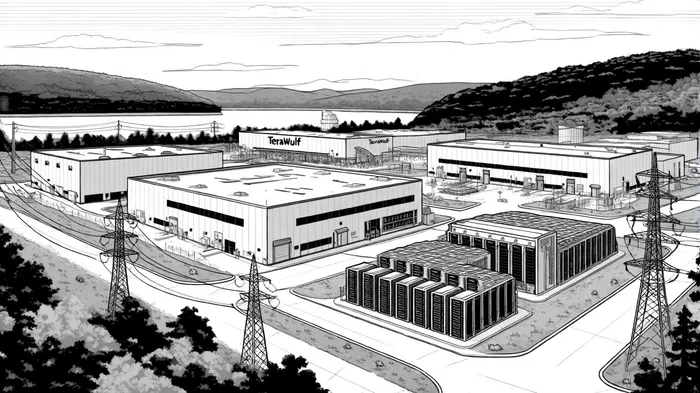
The proceeds will directly fund the Lake Mariner expansion, which includes the construction of CB-5, a 160 MW data center building that will push the campus's total contracted capacity with Fluidstack to over 360 MW, the filing adds. By securing debt against its core assets and leveraging Google's warrants, TeraWulf minimizes the risk of overleveraging while ensuring the project's completion-a critical factor in an industry where delayed infrastructure can erode competitive advantage.
Long-Term Growth: Bitcoin Infrastructure as a Catalyst
The Lake Mariner expansion is not merely a bet on AI and HPC; it is a strategic pivot toward Bitcoin infrastructure, a sector that has seen exponential demand as institutional investors and miners seek reliable, low-cost computing power. According to a Bloomberg report, Bitcoin mining operations require approximately 150 TWh of electricity annually, a figure expected to rise as the network's hash rate increases. TeraWulf's data center, with its dual 345 kV transmission lines and direct-liquid-cooled GPU servers, is uniquely positioned to meet this demand while maintaining energy efficiency-a critical consideration in an era of heightened environmental scrutiny, the filing observes.
The financial implications are equally compelling. Fluidstack's agreements with TeraWulf represent $6.7 billion in contracted revenue, with the potential to reach $16 billion through lease extensions. This revenue visibility, combined with Core42's 10-year lease for 70 MW of capacity and Ramboll's role as a project delivery partner, creates a diversified revenue stream that insulates TeraWulf from tenant concentration risk, according to a Ramboll announcement. For investors, this diversification is a hedge against the volatility inherent in both the Bitcoin market and the AI sector.
Risks and Market Realities
Despite the strategic advantages, the offering is not without risks. The notes are subject to market conditions, and delays in the Lake Mariner expansion could trigger covenant breaches or force TeraWulf to seek alternative financing at less favorable terms, the GlobeNewswire filing warns. Additionally, the Bitcoin infrastructure market remains nascent, with regulatory uncertainties in key jurisdictions like the U.S. and EU. However, TeraWulf's completion guarantees and its partnerships with industry leaders like Google and Ramboll mitigate these risks, offering a level of operational and financial discipline rare in the sector.
Conclusion: A Calculated Bet on the Future
TeraWulf's $3.2 billion offering is a masterclass in strategic debt financing. By securing its assets, leveraging Google's equity stake, and aligning with industry leaders, the company has created a blueprint for sustainable growth in a sector poised for disruption. For investors, the Lake Mariner expansion represents not just a play on AI and HPC but a forward-looking investment in the infrastructure underpinning Bitcoin's next phase of adoption. As the world grapples with the energy and computational demands of decentralized finance, TeraWulf's ability to deliver scalable, green solutions may well determine its place at the forefront of this technological revolution.





Comentarios
Aún no hay comentarios