
Tequila's Water Footprint vs. U.S. Demand: A Flow Analysis
The United States is the dominant engine for Mexican tequila production, with imports hitting $13.14 billion in 2024. This massive trade flow underscores the scale of the U.S. market as the key export destination for Mexico's spirit. The global market is forecast to grow at a 6.5% compound annual rate, but this expansion is now colliding with a severe oversupply.
The current imbalance is stark. Mexico is sitting on a 525 million liter surplus of tequila, a volume that dwarfs annual exports. This glut is the direct result of a classic commodity cycle: a past shortage and price spike triggered a massive supply build-up, which now arrives as global demand growth slows. The flow of capital into new production has outpaced the flow of consumer demand.
This creates a clear risk. While the U.S. market remains the largest buyer, the sheer size of the surplus means producers face intense pressure to sell at lower prices. The oversupply acts as a ceiling on the market, making it difficult for premiumization trends to fully lift prices. The flow of money is being strained by a flood of product.
The Water Stress Reality and Supply Chain Risk
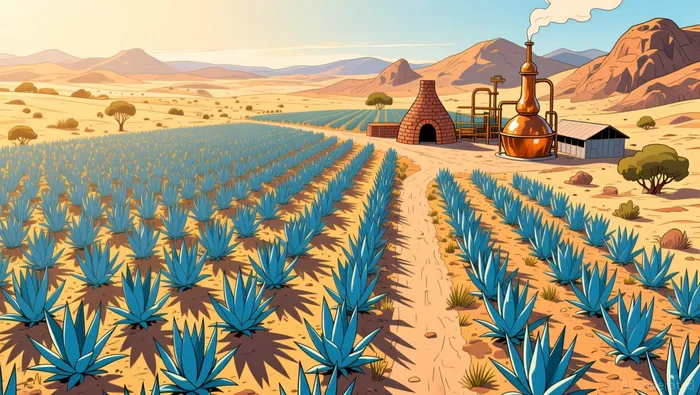
Over half of Mexico faces severe water stress, a condition that is now in direct conflict with the country's largest export industries. This acute crisis is highlighted by the fact that subterranean water is legally prioritized for human consumption, yet some tequila producers irrigate their agave fields with it, creating local tensions. The scale of the demand flow is staggering: the U.S. imports 316 million liters of tequila annually, a volume that requires a massive water footprint.
The production process itself is highly water-intensive. It takes an average of 14.9 liters of water to produce one liter of tequila. For the entire U.S.-bound export volume, this translates to roughly 4.7 billion liters of water consumed each year. This strain is particularly acute in key production regions like Jalisco, where booming agave cultivation has driven up local water consumption and led to conflicts over dwindling aquifers.
The situation was temporarily eased last year when Hurricane Alberto brought much-needed rain to drought-stricken areas, filling reservoirs and highlighting the fragility of the water supply. Yet the long-term outlook remains one of pressure. The industry's sustainability strategy aims to reduce usage by 15% by 2030, but the current oversupply of tequila and the ongoing water crisis create a dual vulnerability. The flow of capital into production risks being disrupted by the physical scarcity of the resource it depends on.
Market Maturity and Future Flow Scenarios
The agave spirits category is entering a mature phase, with volume growth slowing in its core market. According to industry data, the category rose by just 1% last year by volume, a clear sign of market saturation in North America. This natural recalibration is compounded by a global oversupply, creating a headwind for producers reliant on volume expansion.
The future growth flow is shifting geographically. Producers are actively looking overseas, with Europe and Asia demonstrating growing readiness for agave spirits. This international expansion is the primary catalyst for the sector's continued relevance, as it moves beyond the key North American market. However, this growth remains underdeveloped, presenting opportunities but also requiring significant investment in consumer education.
On the sustainability front, water-harvest projects are emerging as a community-driven response to scarcity. Initiatives like rain-harvest systems in Oaxaca are being funded by brands to secure local water supplies. Yet these efforts remain small-scale and localized, addressing symptoms rather than the systemic water stress affecting the industry's largest production regions. For now, they are a niche buffer, not a scalable solution to the looming resource constraint.







Comentarios
Aún no hay comentarios