
Tenneco's Credit Downgrade: Implications for the Auto Supply Chain in a Turbulent Macroeconomic Environment
A Sector Under Pressure: Macroeconomic Headwinds and Strategic Vulnerabilities
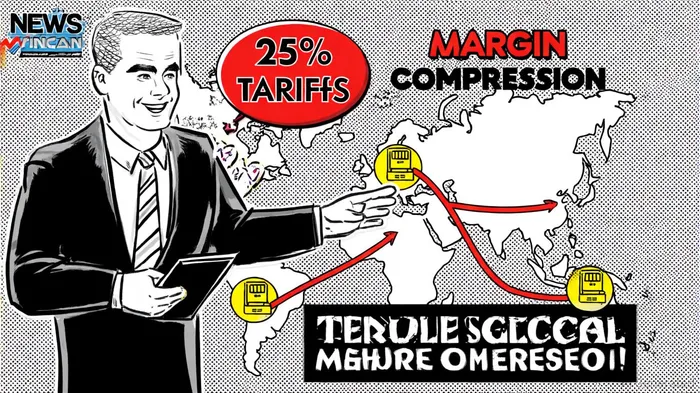
The automotive supply chain is uniquely exposed to macroeconomic shocks. U.S. tariffs of 25% on Chinese vehicles, for instance, have added $2,000 to $12,000 in costs per vehicle for original equipment manufacturers (OEMs), forcing companies like General MotorsGM-- and Volvo to rethink sourcing strategies, according to a RandTech analysis. These pressures are compounded by supply chain bottlenecks and the rapid transition to electrification, which require significant capital expenditures while traditional internal combustion engine (ICE) markets contract. For suppliers like Tenneco, the challenge lies in balancing short-term liquidity constraints with long-term strategic investments in technologies such as hybrid systems and lightweight materials.
Strategic Risk Management: Lessons from Industry Resilience
In response to these challenges, automakers and suppliers are adopting agile risk management frameworks. Valeo, for example, has realigned its Mexican operations under the USMCA trade agreement, ensuring 90% of its output qualifies for preferential tariffs, according to the RandTech analysis. Similarly, Volkswagen Group is tailoring models for Indian markets while hedging against regulatory uncertainties in Europe, as noted in Volkswagen's annual report. These strategies emphasize geographic diversification, modular production, and scenario-based planning-practices that could serve as blueprints for Tenneco and its peers.
However, Tenneco's situation highlights the limits of such approaches when leverage ratios are already stretched. With $13.4 billion in value-add revenue and nearly $16 billion in reported revenue for the twelve months ending June 30, the company's financial flexibility is constrained. Moody's analysts noted that Tenneco's strong customer base and geographic footprint provide some buffer, but these advantages may not offset the compounding risks of a prolonged industry downturn (per the Moody's report).
Investment Implications: Navigating Cyclical Volatility
For investors, Tenneco's downgrade underscores the importance of scrutinizing balance sheet strength in cyclical sectors. While the company's core competencies remain intact, its ability to weather prolonged macroeconomic stress will depend on its capacity to reduce debt and adapt to shifting demand patterns. This aligns with broader industry trends: automakers are increasingly prioritizing resilience over efficiency, with quarterly reviews of strategic risks becoming standard practice, according to a McKinsey analysis.
The auto supply chain's vulnerability also extends to emerging markets. Chinese automakers, for instance, are pivoting to plug-in hybrid and ICE vehicles in Europe to circumvent trade barriers (as discussed in Volkswagen's annual report), while Indian markets present both growth opportunities and regulatory hurdles. Investors must weigh these dynamics carefully, as geopolitical shifts can rapidly alter the risk-reward profile of even the most diversified portfolios.
Conclusion
Tenneco's credit downgrade is a microcosm of the broader struggles facing the auto industry. As trade barriers and macroeconomic volatility persist, strategic risk management will be the defining factor separating resilient players from those that falter. For investors, the lesson is clear: in cyclical sectors, financial discipline and adaptive strategies are not just competitive advantages-they are survival imperatives.







Comentarios
Aún no hay comentarios