
TELUS's Indigenous Reconciliation and Gender-Based Violence Initiatives: A Strategic Pathway to Long-Term Shareholder Value
Corporate social responsibility (CSR) has evolved from a peripheral corporate activity to a core driver of long-term value creation. For investors, the materiality of CSR lies in its ability to shape brand loyalty, ensure regulatory alignment, and build operational resilience-factors that directly influence a company's competitive positioning and financial sustainability. TELUSTU--, Canada's second-largest telecommunications provider, exemplifies this shift through its Indigenous Reconciliation and gender-based violence (GBV) initiatives. By embedding these programs into its corporate DNA, TELUS is not only addressing systemic inequities but also cultivating a business model that aligns with evolving societal expectations and regulatory frameworks.
Brand Loyalty: Trust as a Competitive Advantage
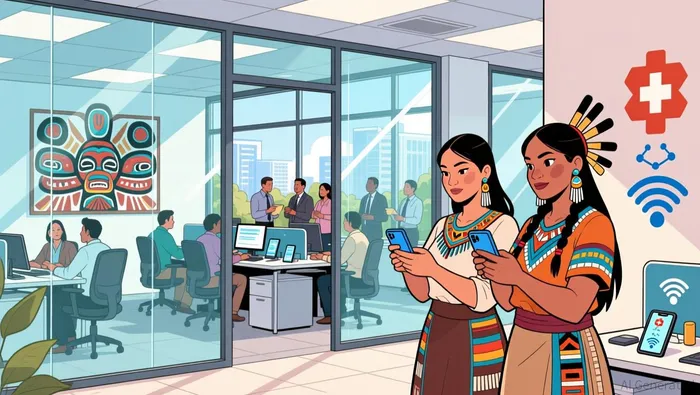 TELUS's Mobility for Good for Indigenous Women at Risk program, launched in 2021, provides free smartphones and wireless services to Indigenous women, girls, and 2SLGBTQQIA+ individuals facing gender-based violence. This initiative, implemented in partnership with Indigenous-led organizations like the Assembly of Manitoba Chiefs - First Nations Family Advocate Office (AMC-FNFAO) and Ka Ni Kanichihk, has supported over 6,000 individuals through 39 partner organizations as of 2025 according to the 2025 Indigenous Reconciliation and Connectivity Report. By offering a lifeline to emergency services, virtual healthcare, and support networks, TELUS is fostering trust with Indigenous communities-a critical asset in a sector where customer retention is paramount.
This trust extends beyond demographics. TELUS's broader Indigenous Reconciliation Action Plan, which includes commitments like connecting 50 Indigenous lands to advanced broadband and investing $1.3 million in 87 Indigenous youth programs, has earned the company PAIR Silver certification from the Canadian Council for Indigenous Business-a national benchmark for reconciliation efforts. Such recognition enhances TELUS's reputation among socially conscious consumers and investors, reinforcing brand loyalty in an era where ESG (Environmental, Social, and Governance) criteria increasingly dictate market success.
Regulatory Alignment: Proactive Engagement with Systemic Challenges
TELUS's initiatives are strategically aligned with Canada's 231 Calls for Justice from the Final Report on Missing and Murdered Indigenous Women and the National Action Plan to End Gender-Based Violence. For instance, the Mobility for Good program directly addresses Call for Justice 15, which emphasizes Indigenous women's safety and wellness according to TELUS's social impact page. By collaborating with Indigenous-led organizations, TELUS is not only complying with regulatory expectations but also positioning itself as a proactive partner in national reconciliation efforts.
This alignment mitigates legal and reputational risks. For example, TELUS's Moose Hide Campaign-a multi-year sponsorship of an Indigenous-led movement to end GBV-has engaged over 30,000 employees and customers, distributing 5 million moose hide pins to spark conversations about healthy masculinity. Such initiatives demonstrate TELUS's commitment to addressing systemic issues like technology-facilitated abuse, a growing regulatory concern for telecom providers. By staying ahead of policy trends, TELUS reduces the likelihood of costly compliance failures while enhancing its license to operate in Indigenous communities.
Operational Resilience: Technology as a Tool for Inclusive Growth
TELUS's investments in Indigenous communities also bolster operational resilience. The company has allocated $122 million to connect 278 Indigenous lands to its TELUS PureFibre network, enabling access to telehealth, remote education, and economic opportunities. This infrastructure not only supports social outcomes but also opens new markets, as connected Indigenous communities become hubs for digital innovation and entrepreneurship.
Moreover, TELUS's focus on economic reconciliation-such as dedicating 22% of its Local Content production budget to Indigenous creators-strengthens supply chain diversity and fosters long-term partnerships according to a 2024 press release. These efforts align with global trends toward inclusive capitalism, where companies that integrate marginalized voices into their operations are better positioned to navigate geopolitical and social uncertainties.
Conclusion: A Model for Sustainable Value Creation
While direct financial metrics linking TELUS's CSR initiatives to shareholder returns remain limited, the indirect benefits are clear. Enhanced brand loyalty, regulatory alignment, and operational resilience create a flywheel effect: trust drives customer retention, proactive engagement reduces compliance costs, and inclusive growth expands market reach. For investors, TELUS's approach underscores a critical insight: CSR is not a cost center but a strategic lever for long-term value. As ESG criteria gain prominence, companies that prioritize reconciliation and social equity-like TELUS-are likely to outperform peers in both ethical and financial terms.







Comentarios
Aún no hay comentarios