
Telos's $151B MDA SHIELD IDIQ Contract: A Strategic Catalyst for Cybersecurity Growth
The defense sector is undergoing a seismic shift as the United States accelerates its investment in multi-layered missile defense systems and cybersecurity infrastructure. At the center of this transformation is Telos CorporationTLS--, a mid-cap defense contractor that has secured a pivotal role in the Missile Defense Agency's (MDA) SHIELD IDIQ contract-a $151 billion, 10-year vehicle designed to modernize the nation's homeland defense capabilities. For investors, the question is no longer whether TelosTLS-- can capitalize on this opportunity, but how aggressively it might scale its cybersecurity and enterprise solutions to dominate a rapidly expanding market.
A $151 Billion Bet on Open Systems and AI-Driven Defense
The SHIELD IDIQ contract, awarded in December 2025, represents a paradigm shift in how the Department of Defense (DoD) acquires and deploys advanced technologies. According to a report, the contract emphasizes "open systems design, model-based systems engineering, and the use of artificial intelligence and machine learning" to create a "multi-domain defense architecture" capable of countering ballistic, hypersonic, and cruise missile threats. This approach prioritizes agility and interoperability, allowing the DoD to rapidly integrate cutting-edge solutions from multiple vendors.
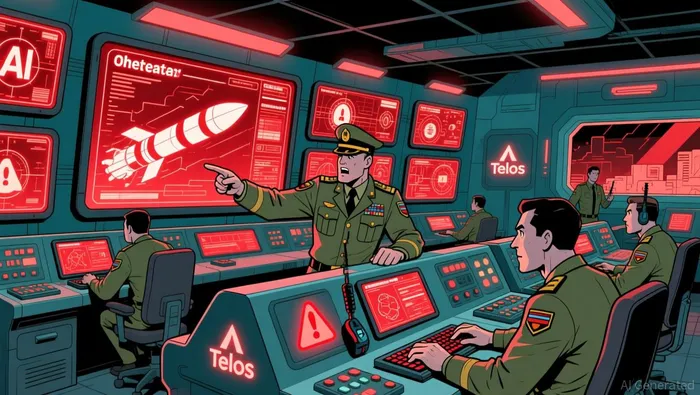
Telos, alongside industry giants like BAE Systems and Google Public Sector, has been positioned as a key player in this ecosystem. The company's three-year base period, extendable through three optional ordering periods until 2035, provides a decade-long runway to demonstrate its value. As stated by Telos in a press release, the SHIELD contract "enables the rapid delivery of innovative capabilities to support national defense objectives, including cyberCYBER--, cloud, and enterprise security solutions." This alignment with the DoD's strategic priorities-particularly in cybersecurity-positions Telos to benefit disproportionately from the contract's scale.
Telos's Cybersecurity Playbook: Proven Capabilities, Strategic Depth
Telos's recent performance in defense contracts underscores its ability to deliver mission-critical solutions. In 2025 alone, the company secured a $2.2 million contract to deploy its Xacta® cyber governance, risk, and compliance (GRC) platform for a U.S. federal agency, enhancing security oversight in the FedRAMP High environment. Separately, it was awarded a $14 million, five-year contract by the Defense Information Systems Agency (DISA) to support the Organizational Messaging Service (OMS) using its Automated Message Handling System (AMHS), a platform critical for secure military communications.
These wins highlight Telos's dual strength: a robust portfolio of cybersecurity tools and deep operational expertise in defense-specific environments. The company's $5.8 million contract to support the DoD's Microwave Line of Sight (MLoS) program further demonstrates its capacity to deliver secure, scalable communication solutions in high-stakes scenarios. Such capabilities are not just complementary to the SHIELD contract-they are foundational to its success.
Strategic Implications: From Awardee to Market Leader
The SHIELD IDIQ's structure, however, is not without complexity. Task orders will be competitively awarded among the 1,014 awardees, with order competitions delayed until all offerors in the competitive range have participated in "meaningful discussions." This creates both a challenge and an opportunity for Telos. On one hand, the company must prove its ability to outcompete larger, more established firms in task order bidding. On the other, the contract's emphasis on open systems and modular design favors companies like Telos that can offer specialized, interoperable solutions.
Moreover, the SHIELD contract's focus on AI and machine learning aligns with Telos's strategic investments in automation and data analytics. As the DoD seeks to integrate AI-driven threat detection and predictive modeling into its defense architecture, Telos's existing expertise in cyber GRC and secure messaging could position it as a go-to partner for niche but high-value components of the Golden Dome system.
Risks and Realities
No investment thesis is complete without acknowledging the risks. The SHIELD IDIQ's sheer scale-$151 billion-means that no single awardee, including Telos, will capture a majority of the work. Competition is fierce, and the company's relatively smaller size compared to primes like Lockheed Martin or Northrop Grumman could limit its share of high-dollar task orders. Additionally, the contract's success hinges on the DoD's ability to execute its modernization agenda, which remains subject to budgetary and political headwinds.
Yet, Telos's track record in securing niche, high-margin contracts suggests it is well-equipped to navigate these challenges. Its recent wins in cyber GRC, secure messaging, and microwave communications illustrate a pattern of leveraging specialized capabilities to capture value in underserved segments of the defense market.
Conclusion: A Catalyst for Long-Term Growth
For investors, the SHIELD IDIQ represents more than a single contract-it is a strategic inflection point for Telos. By aligning its cybersecurity and enterprise solutions with the DoD's push for open, AI-driven systems, the company has positioned itself to benefit from a decade-long tailwind in defense spending. While execution risks remain, Telos's proven ability to deliver mission-critical capabilities in high-stakes environments suggests it is well-positioned to turn this $151 billion opportunity into a durable growth engine.
As the DoD moves to defend against an increasingly complex threat landscape, Telos's role in the SHIELD ecosystem could prove as vital as it is lucrative.







Comentarios
Aún no hay comentarios