
Telefônica Brasil’s Q1 2025 Results: A Triple Play for Growth, Margins, and Dividends
The telecom giant is rewriting Brazil’s connectivity future—and rewarding investors handsomely along the way.
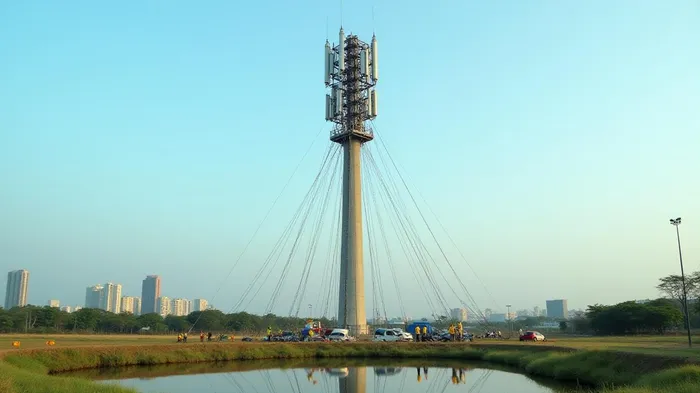
Telefônica Brasil (VIV) delivered a standout Q1 2025 performance, proving that its strategic investments in 5G and fiber infrastructure are not just about future-proofing its network—they’re fueling today’s profitability and shareholder returns. With revenue rising 6.2% year-over-year to R$14.39 billion, EBITDA expanding 8.1% to R$5.70 billion, and a relentless focus on capital discipline, this is a company primed to deliver both growth and income in a volatile market.
Infrastructure Dominance: 5G and Fiber Are the New Oil
Telefônica Brasil’s quarter was defined by its relentless push to modernize Brazil’s telecom landscape. The company now covers 62% of Brazil’s population with 5G, having expanded its network to 519 cities, while its fiber-to-the-home (FTTH) network reached 29.6 million homes passed, with 7.2 million connected—up 12.9% year-over-year. These investments aren’t just about coverage; they’re driving revenue growth:
- Postpaid mobile revenue jumped 10.3% as the customer base grew to 67.4 million, with ARPU rising 2.0% to R$52.2.
- Fiber revenue surged 10.6% as the company captures demand for high-speed broadband in higher-income households.
The payoff? A 39.6% EBITDA margin, up 0.7 percentage points year-over-year, as scale and efficiency gains offset CapEx.
Margin Expansion: Discipline in a High-CapEx World
While many telecoms are battling rising costs, TelefônicaTEF-- Brasil is proving that smart capital allocation can fuel margins. Despite investing R$1.87 billion in CapEx (13.0% of revenue), the company’s focus on 5G and fiber efficiency is bearing fruit:
- CapEx intensity is falling: The CapEx-to-revenue ratio dropped 0.9 percentage points year-over-year, signaling better resource utilization.
- Free cash flow remains robust: At R$2.12 billion, it’s a testament to the company’s ability to balance growth and returns.
CEO Christian Gebara’s strategy is clear: prioritize high-impact infrastructure while avoiding wasteful spending. The result? A 15.8% surge in corporate data and digital services revenue, as businesses and consumers increasingly rely on Telefônica’s network.
Dividend Dominance: The Ultimate Income Play
For income investors, Telefônica Brasil’s shareholder policy is a masterclass in generosity. The company has committed to distributing at least 100% of net income annually through 2026, and it’s already exceeding that pledge:
- 2024 payout ratio: 105.3%, with R$2.576 billion distributed to shareholders by April 2025.
- Additional returns: R$2.0 billion in capital reductions and R$1.12 billion in interest on equity approved this year alone.
With a low leverage ratio (net debt/EBITDAaL of 0.6x) and a five-year track record of increasing dividends, VIV offers stability in a market hungry for yield.
Why Now? The Perfect Storm for VIV
- Moats widening: 5G and fiber create barriers to entry, while Brazil’s urbanization and digital adoption ensure long-term demand.
- ESG credibility: Joining the Dow Jones Sustainability Index and tripling its recycling program (Vivo Recicle) adds to its brand value.
- Valuation upside: At just 6.5x 2025E EBITDA, VIV trades at a discount to peers, offering room for multiple expansion as margins climb.
Final Word: Buy the Infrastructure, Collect the Dividends
Telefônica Brasil’s Q1 results are a blueprint for telecom success: invest aggressively in future-proof infrastructure, optimize costs, and return cash to shareholders. With Brazil’s telecom sector set to grow 6-8% annually through 2027—and VIV’s 5G/fiber lead unassailable—this is a rare opportunity to own a low-risk, high-yield stock with secular growth tailwinds.
For income investors, the calculus is simple: VIV combines the safety of a 62% population-covered 5G network with the thrill of double-digit dividend growth. Don’t miss the train—board now before the market catches on.
Action: Buy VIV. Target: 15% upside in 12 months. Risk: Low.





Comentarios
Aún no hay comentarios