
Tel Aviv's Public Sentiment and the Shifting Investment Landscape in Defense and Humanitarian Sectors Amid 2025 Geopolitical Tensions
In 2025, Tel Aviv's public sentiment has emerged as a pivotal force shaping investment dynamics in both defense and humanitarian sectors, reflecting the city's role as a microcosm of Israel's broader geopolitical and economic challenges. As regional conflicts intensify and global donor priorities shift, investor behavior is increasingly aligned with public perceptions of risk, innovation, and ethical responsibility. This analysis explores how skepticism toward peace prospects, surging defense-tech innovation, and growing humanitarian concerns are redefining market trajectories.
Defense Sector: Skepticism Fuels Innovation and Investment
Public sentiment in Tel Aviv has grown increasingly skeptical about the feasibility of a lasting peace with Palestinians. A 2025 Pew Research Center survey reveals that only 21% of Israeli adults believe coexistence is possible, with Jewish Israelis even less optimistic at 16%. This distrust, compounded by the ongoing Israel-Hamas war and military actions against Iran, has redirected economic activity toward defense. The Tel Aviv Stock Exchange (TASE) has surged to record highs, driven by investor confidence in the sector's resilience and technological edge, according to an Archyde report.
Startup Nation Central's 2025 map highlights a 30% year-on-year expansion in the sector, with 312 companies now operating in areas like cyber defense, autonomous systems, and AI-driven logistics. Government spending has nearly doubled, while private investors are capitalizing on global trends, such as Europe and the U.S. prioritizing defense modernization, a Morningstar report finds. However, structural challenges-rising public debt, labor shortages, and geopolitical volatility-pose long-term risks to sustainability, a point the Archyde piece also highlights.
Humanitarian Sector: Funding Crises and Politicized Priorities
While the defense sector thrives, the humanitarian landscape faces a crisis. Global humanitarian aid funding has contracted sharply, with OECD data showing a 9.6% decline in 2024 and projections of a further 9–17% drop in 2025, as an analysis by The New Humanitarian explains. In Tel Aviv, public discontent with the government's Gaza policies has intensified, exemplified by mass protests in August 2025 demanding a ceasefire and unimpeded aid, as reported by the New York Times. These demonstrations, led by hostage families and anti-war activists, have pressured policymakers to adopt measures like reopening humanitarian corridors and resuming air-drop operations, according to an FDD analysis.
Yet, humanitarian aid remains entangled with geopolitical priorities. Donor nations like the U.S. and EU are increasingly aligning funding with foreign policy goals, as seen in the EU's threat to freeze Israeli research grants over Gaza conditions, the Athens-Times reported. This politicization has forced humanitarian agencies to emphasize "value for money" and efficiency, often at the expense of impartiality, according to Harvard HHI. For Tel Aviv, this means navigating a fragmented aid landscape where neutrality is compromised by strategic alliances.
Investor Behavior: Diverging Paths in Defense and Humanitarian Sectors
Investor behavior in Tel Aviv reflects a stark divergence between the two sectors. Defense-tech startups attract record venture capital and government contracts, buoyed by public support for innovation amid perceived existential threats. Conversely, humanitarian-focused initiatives struggle to secure funding, with private donors wary of political backlash and declining public trust in traditional aid models, according to Alnap's GHA report.
The OECD Economic Survey of Israel 2025 notes that while the economy remains resilient, the war's fiscal costs-exacerbated by a large deficit-necessitate careful balancing of defense spending with long-term growth objectives. Investors are thus hedging bets: prioritizing defense while cautiously exploring hybrid models that integrate humanitarian-tech solutions, such as AI-driven aid distribution systems.
Conclusion: A Tenuous Balance in a Fractured Landscape
Tel Aviv's public sentiment in 2025 underscores a paradox: optimism about defense innovation coexists with growing unease over humanitarian neglect. As geopolitical risks evolve, investors must navigate a landscape where market opportunities in defense are tempered by ethical dilemmas and funding crises in humanitarian sectors. The coming months will test whether Tel Aviv can reconcile these dual imperatives-or if the fractures in public sentiment will deepen into systemic market shifts.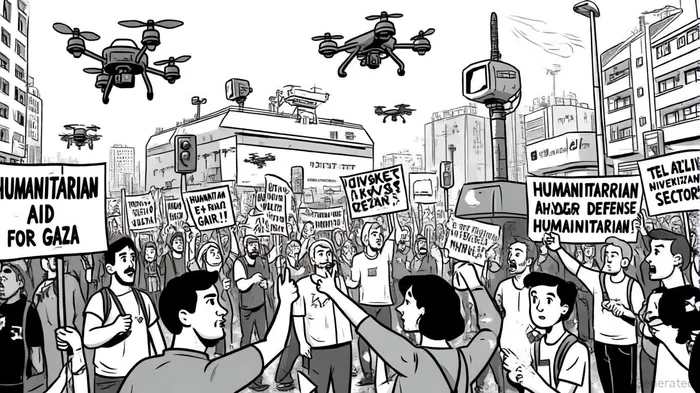







Comentarios
Aún no hay comentarios