
Teck Resources: Balancing Copper Growth and Shareholder Value in a Decarbonizing World
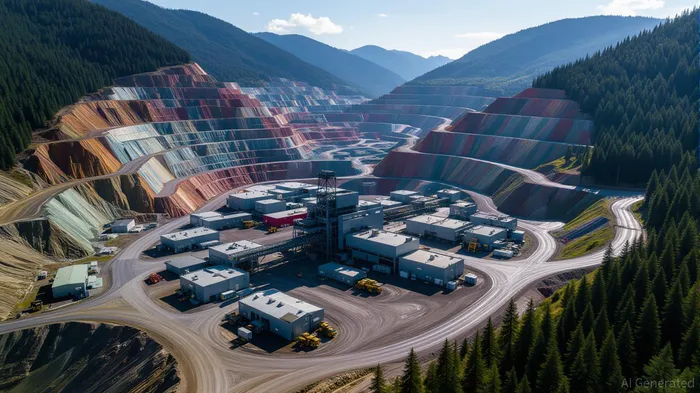
In the race to decarbonize the global economy, copper has emerged as a critical enabler of the energy transition. From electric vehicles (EVs) to renewable energy infrastructure and smart grids, the demand for copper is poised to surge as nations pivot toward low-carbon technologies. Teck ResourcesTECK--, one of the world's largest diversified resource companies, is strategically positioning itself to capitalize on this shift while maintaining a disciplined approach to capital allocation and shareholder returns.
Capital Allocation: Growth Projects and Shareholder Returns
Teck's 2025 capital allocation strategy is a masterclass in balancing long-term value creation with near-term profitability. The company's Highland Valley Copper Mine Life Extension (HVC MLE) project, approved in 2025, is a cornerstone of this strategy. With an estimated cost of $2.1–$2.4 billion over three years, the project will extend the mine's operational life from 2028 to 2046, boosting annual copper production to 132,000 tonnes. This not only secures a stable supply of copper for decades but also aligns with the decarbonization timeline, where demand for copper is projected to grow at a 2.6% compound annual growth rate (CAGR) through 2035.
Equally impressive is Teck's commitment to returning capital to shareholders. By mid-2025, the company had spent $1.0 billion on share buybacks, with $487 million allocated in Q2 alone. The $3.25 billion buyback program, of which $2.2 billion has been executed, reflects confidence in its strong liquidity position—$8.9 billion in cash and equivalents—as of July 2025. This dual focus on growth and returns is a hallmark of Teck's disciplined capital framework, ensuring that projects meet stringent risk-adjusted return criteria while maintaining flexibility to navigate market volatility.
Copper Demand in a Decarbonizing World
The energy transition is the most significant driver of copper demand. According to the International Energy Agency (IEA), copper demand could outstrip supply by 30% by 2035 if current production rates remain unchanged. Teck's strategic investments are directly aligned with this megatrend. For instance, the HVC MLE project will supply copper for EVs, which use three times more copper than internal combustion engines, and for renewable energy systems, where wind turbines and solar panels require substantial copper for conductivity and durability.
Beyond traditional sectors, digitalization is another catalyst. Data centers, essential for AI and cloud computing, are expected to consume six times more copper by 2050 compared to 2025. Teck's 2025 guidance—revised to 470,000–525,000 tonnes of copper production—reflects its ability to scale operations in response to these evolving demands. The company's Zafranal and San Nicolás projects, with combined production potential of 189,000 tonnes of copper annually, further underscore its readiness to meet the surging global appetite for the metal.
Operational Resilience: Sustainability and Risk Mitigation
Teck's operational resilience is anchored in its 2025 sustainability goals, which address environmental, social, and governance (ESG) risks while enhancing long-term stability. The company aims to achieve net-zero Scope 2 emissions by 2025 and reduce carbon intensity by 33% by 2030. These targets are supported by investments in low-emissions supply chain corridors and partnerships with transportation providers to cut shipping emissions by 40% by 2030.
Environmental stewardship is also a priority. The HVC MLE project includes engineering upgrades to reduce water consumption and enhance tailings management, with plans to expand seawater use in water-stressed regions by 2040. Teck's biodiversity initiatives, such as net-positive impact (NPI) plans for all operating sites, further demonstrate its commitment to responsible mining. By 2025, the company aims to accelerate land rehabilitation efforts, ensuring that its operations leave a regenerative footprint.
Socially, TeckTECK-- is investing in communities and Indigenous partnerships. The company plans to allocate $100 million to community programs by 2025, including health initiatives and local employment opportunities. This approach not only mitigates reputational risks but also fosters long-term social license to operate in key jurisdictions like Chile, Peru, and Canada.
Investment Implications
Teck's strategic alignment with decarbonization trends, coupled with its robust balance sheet and disciplined capital allocation, positions it as a compelling long-term investment. The company's ability to grow copper production to 800,000 tonnes by the end of the decade—backed by $3.2–$3.9 billion in targeted investments—directly addresses the looming supply deficit. Meanwhile, its $5.3 billion shareholder returns since 2019 highlight a management team that prioritizes both growth and investor value.
For investors, the key risks include regulatory delays for projects like Zafranal and San Nicolás, as well as potential volatility in copper prices due to macroeconomic shifts. However, Teck's diversified portfolio, strong liquidity, and proactive risk management—such as its $1.8 billion net cash position—provide a buffer against these uncertainties.
Conclusion
Teck Resources is a prime example of how a resource company can thrive in a decarbonizing world by balancing strategic growth, operational resilience, and shareholder returns. Its focus on copper—the “new oil” of the energy transition—positions it to benefit from structural demand trends while maintaining financial discipline. For investors seeking exposure to the green economy, Teck offers a compelling combination of scale, sustainability, and profitability.
In a world where copper is as vital as silicon, Teck's strategy is not just about mining metal—it's about mining the future.





Comentarios
Aún no hay comentarios