
TechnipFMC Insider Selling: A Signal of Weak Confidence or Normal Portfolio Rebalancing?
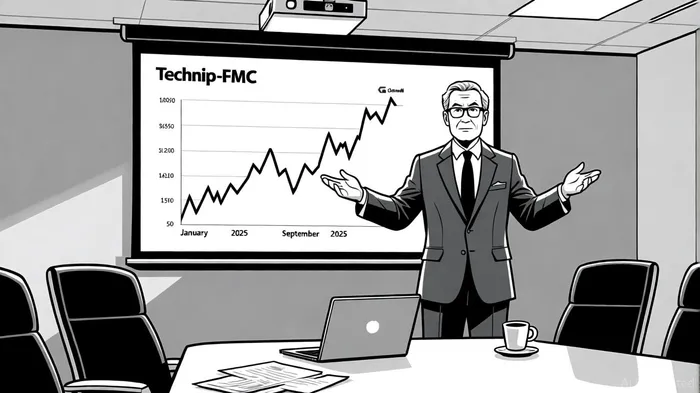
The recent insider selling activity at TechnipFMCFTI-- (FTI) has sparked a critical question for investors: Is this a red flag signaling weak confidence in the company's future, or simply a routine portfolio rebalancing? To answer this, we must dissect the context of these transactions, the company's financial health, and the broader academic and market insights on insider trading.
The Facts: Who Sold, How Much, and Why?
On September 22, 2025, TechnipFMC CEO Douglas J. , structured program designed to comply with insider trading regulations [1]. This sale, while substantial, does not inherently reflect negative sentiment. Rule 10b5-1 plans are often used by executives to diversify their wealth or meet personal financial goals, as noted in SEC filings [2].
Other insiders, including board member , have also sold shares this year. , , . Meanwhile, executives like and Jonathan Landes have collectively sold millions in shares over the past 24 months [4]. These transactions, while notable, must be evaluated alongside TechnipFMC's broader financial performance.
The Bigger Picture: Strong Fundamentals and Analyst Optimism
Despite the selling, TechnipFMC's fundamentals remain robust. , reflecting solid profitability [5]. Analysts remain bullish, . .
This contrast between insider selling and strong fundamentals is not uncommon. A 2025 study in the found that insiders often sell shares during periods of heightened retail investor attention, capitalizing on short-term volatility rather than signaling distress [6]. In TechnipFMC's case, the selling appears to align with personal financial planning rather than a lack of confidence in the company's trajectory.
Academic Insights: Distinguishing Between “Normal” and “Red Flag” Selling
Insider selling is a nuanced signal. While “cluster selling”—large-scale sales by multiple insiders—can indicate trouble, as seen in Tesla's 2022 slump, routine sales under structured plans are typically benign [7]. For example, Pferdehirt's September 22 sale was part of a pre-scheduled plan adopted in June 2025, underscoring its planned nature [1].
Moreover, academic research highlights that insider selling is often influenced by external factors. A Virginia Tech study revealed that insiders frequently time their sales to exploit retail-driven hype, particularly in speculative stocks [8]. While TechnipFMC is not a “lottery stock,” this dynamic illustrates how insider activity can reflect broader market sentiment rather than internal pessimism.
Investor Takeaway: Look Beyond the Headlines
For investors, the key takeaway is to avoid overreacting to isolated insider sales. TechnipFMC's insider selling must be viewed through the lens of its strong financials, favorable analyst ratings, and the regulatory context of Rule 10b5-1 plans. While the CEO's sale of 632,539 shares is significant, .
However, vigilance is warranted. If insider selling accelerates without a clear rationale or coincides with deteriorating fundamentals, it could signal deeper issues. For now, the data suggests this is a case of normal portfolio rebalancing rather than a warning shot.
As always, investors should combine insider activity with a thorough analysis of earnings, cash flow, and industry trends. In TechnipFMC's case, the fundamentals remain compelling—even as insiders take some chips off the table.





Comentarios
Aún no hay comentarios