
US Tech Stocks: A Looming Bubble or a Promising Future?
Generado por agente de IATheodore Quinn
sábado, 22 de febrero de 2025, 1:05 pm ET2 min de lectura
AMZN--
The tech sector has been the driving force behind the U.S. stock market's impressive rally in recent years. However, a renowned market strategist who called the dot-com bubble has warned that U.S. stocks are at 'erious risk' as tech analyst optimism starts to sour. As investors grapple with the potential implications, it's crucial to examine the underlying factors contributing to this warning and assess the future prospects of tech stocks.
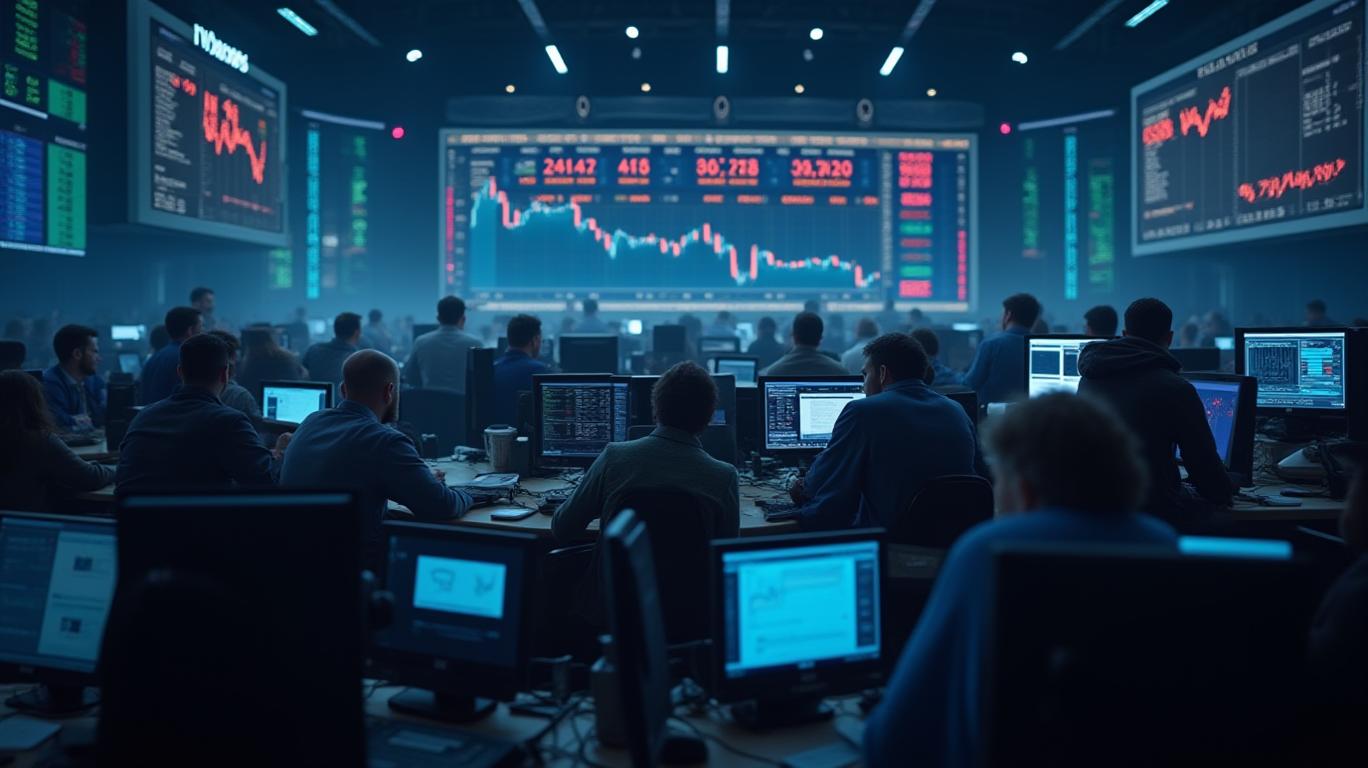
Societe Generale strategist Albert Edwards, known for his bearish takes on markets and the economy, has raised concerns about the growing bubble in U.S. stocks driven by AI enthusiasm. Edwards believes that the current market conditions bear striking similarities to the dot-com bubble of the late 1990s. Here are the specific factors that contribute to the "serious risk" warning and their relation to the dot-com bubble:
1. High concentration in US stocks: Edwards points out that U.S. stocks now represent 75% of global market cap, which is a high concentration in one country. This is reminiscent of the Nifty Fifty bubble in the U.S. that ended in the 1970s, or the Japanese bubble in the late 1980s. In the dot-com bubble era, the U.S. market was also heavily concentrated in technology stocks.
2. Tech sector dominance: The tech sector makes up 35% of the U.S. market's value, exceeding levels seen during the dot-com bubble peak in 2000. This is similar to the late 1990s when technology stocks dominated the market, leading to a bubble.
3. Investor exuberance: Investor optimism is at its highest levels in at least the last 40 years, according to the Conference Board's gauge on investor optimism. This is similar to the late 1990s when investor enthusiasm for tech stocks was extremely high, leading to irrational exuberance.
4. AI hype: The current market enthusiasm is driven by the hype surrounding artificial intelligence. Edwards is skeptical about the ability of AI to live up to investors' high expectations, as he has heard similar beguiling stories in the past, such as the Asian economic "miracle" of the mid-1990s and the Nasdaq bubble in the late 1990s.
5. Bubble narratives: Edwards argues that each bubble has a compelling narrative that only in retrospect is exposed as nonsense. He believes that the current AI-driven market rally is no different and will eventually end badly, just like the dot-com bubble.
These factors, when considered together, contribute to the "serious risk" warning by Albert Edwards. The high concentration in U.S. stocks, tech sector dominance, investor exuberance, AI hype, and bubble narratives are all reminiscent of the dot-com bubble and suggest that the current market conditions may be unsustainable.
However, it's essential to consider that the tech sector's dominance is not solely driven by hype but also by its strong fundamentals and growth prospects. Tech stocks have been the primary driver of the S&P 500's gains in recent years, with the Magnificent Seven stocks (NVIDIA, Alphabet, Microsoft, Amazon, Tesla, Apple, and Meta) accounting for more than 24% of the S&P 500's total return in 2023. This suggests that the tech sector's outperformance is not merely a result of investor enthusiasm but also a reflection of its underlying strength.
As investors navigate the volatile tech landscape, it's crucial to maintain a balanced perspective. While the warnings from market strategists like Albert Edwards should not be dismissed, it's essential to consider the underlying fundamentals and growth prospects of the tech sector. By diversifying their portfolios and remaining vigilant, investors can position themselves to capitalize on the tech sector's potential while mitigating the risks associated with a potential market correction.
In conclusion, the warnings from market strategists like Albert Edwards serve as a reminder of the volatile nature of the stock market and the importance of maintaining a balanced perspective. While the tech sector's dominance and investor enthusiasm may raise concerns about a potential bubble, the underlying fundamentals and growth prospects of tech stocks should not be overlooked. By remaining vigilant and diversifying their portfolios, investors can navigate the complex tech landscape and position themselves for long-term success.
GOOG--
MSFT--
NVDA--
TSLA--
The tech sector has been the driving force behind the U.S. stock market's impressive rally in recent years. However, a renowned market strategist who called the dot-com bubble has warned that U.S. stocks are at 'erious risk' as tech analyst optimism starts to sour. As investors grapple with the potential implications, it's crucial to examine the underlying factors contributing to this warning and assess the future prospects of tech stocks.
Societe Generale strategist Albert Edwards, known for his bearish takes on markets and the economy, has raised concerns about the growing bubble in U.S. stocks driven by AI enthusiasm. Edwards believes that the current market conditions bear striking similarities to the dot-com bubble of the late 1990s. Here are the specific factors that contribute to the "serious risk" warning and their relation to the dot-com bubble:
1. High concentration in US stocks: Edwards points out that U.S. stocks now represent 75% of global market cap, which is a high concentration in one country. This is reminiscent of the Nifty Fifty bubble in the U.S. that ended in the 1970s, or the Japanese bubble in the late 1980s. In the dot-com bubble era, the U.S. market was also heavily concentrated in technology stocks.
2. Tech sector dominance: The tech sector makes up 35% of the U.S. market's value, exceeding levels seen during the dot-com bubble peak in 2000. This is similar to the late 1990s when technology stocks dominated the market, leading to a bubble.
3. Investor exuberance: Investor optimism is at its highest levels in at least the last 40 years, according to the Conference Board's gauge on investor optimism. This is similar to the late 1990s when investor enthusiasm for tech stocks was extremely high, leading to irrational exuberance.
4. AI hype: The current market enthusiasm is driven by the hype surrounding artificial intelligence. Edwards is skeptical about the ability of AI to live up to investors' high expectations, as he has heard similar beguiling stories in the past, such as the Asian economic "miracle" of the mid-1990s and the Nasdaq bubble in the late 1990s.
5. Bubble narratives: Edwards argues that each bubble has a compelling narrative that only in retrospect is exposed as nonsense. He believes that the current AI-driven market rally is no different and will eventually end badly, just like the dot-com bubble.
These factors, when considered together, contribute to the "serious risk" warning by Albert Edwards. The high concentration in U.S. stocks, tech sector dominance, investor exuberance, AI hype, and bubble narratives are all reminiscent of the dot-com bubble and suggest that the current market conditions may be unsustainable.
However, it's essential to consider that the tech sector's dominance is not solely driven by hype but also by its strong fundamentals and growth prospects. Tech stocks have been the primary driver of the S&P 500's gains in recent years, with the Magnificent Seven stocks (NVIDIA, Alphabet, Microsoft, Amazon, Tesla, Apple, and Meta) accounting for more than 24% of the S&P 500's total return in 2023. This suggests that the tech sector's outperformance is not merely a result of investor enthusiasm but also a reflection of its underlying strength.
As investors navigate the volatile tech landscape, it's crucial to maintain a balanced perspective. While the warnings from market strategists like Albert Edwards should not be dismissed, it's essential to consider the underlying fundamentals and growth prospects of the tech sector. By diversifying their portfolios and remaining vigilant, investors can position themselves to capitalize on the tech sector's potential while mitigating the risks associated with a potential market correction.
In conclusion, the warnings from market strategists like Albert Edwards serve as a reminder of the volatile nature of the stock market and the importance of maintaining a balanced perspective. While the tech sector's dominance and investor enthusiasm may raise concerns about a potential bubble, the underlying fundamentals and growth prospects of tech stocks should not be overlooked. By remaining vigilant and diversifying their portfolios, investors can navigate the complex tech landscape and position themselves for long-term success.

Divulgación editorial y transparencia de la IA: Ainvest News utiliza tecnología avanzada de Modelos de Lenguaje Largo (LLM) para sintetizar y analizar datos de mercado en tiempo real. Para garantizar los más altos estándares de integridad, cada artículo se somete a un riguroso proceso de verificación con participación humana.
Mientras la IA asiste en el procesamiento de datos y la redacción inicial, un miembro editorial profesional de Ainvest revisa, verifica y aprueba de forma independiente todo el contenido para garantizar su precisión y cumplimiento con los estándares editoriales de Ainvest Fintech Inc. Esta supervisión humana está diseñada para mitigar las alucinaciones de la IA y garantizar el contexto financiero.
Advertencia sobre inversiones: Este contenido se proporciona únicamente con fines informativos y no constituye asesoramiento profesional de inversión, legal o financiero. Los mercados conllevan riesgos inherentes. Se recomienda a los usuarios que realicen una investigación independiente o consulten a un asesor financiero certificado antes de tomar cualquier decisión. Ainvest Fintech Inc. se exime de toda responsabilidad por las acciones tomadas con base en esta información. ¿Encontró un error? Reportar un problema




Comentarios
Aún no hay comentarios