
Tech Sector Breathing Easy: How Trump’s Tariff Exemptions Reshape Global Electronics Markets

The Trump administration’s decision to exempt smartphones, computers, and critical electronic components from its sweeping reciprocal tariffs marks a pivotal shift in U.S. trade policy—one that has sent ripples of relief through global supply chains and stock markets. Effective April 2025, the U.S. Customs and Border Protection (CBP) confirmed exemptions for goods including smartphones, semiconductors, and flat-panel displays, shielding these sectors from tariffs that could have raised consumer prices and destabilized tech giants like AppleAAPL-- and Samsung. Yet beneath the surface of this tactical retreat lie deeper questions about the sustainability of U.S. trade strategy and the future of global manufacturing.
A Strategic carve-out for Tech’s Vulnerabilities
The exemptions, detailed in a CBP notice on April 11, 2025, exempt smartphones, computers, and components such as semiconductors from the 10% baseline tariff imposed on most countries and the 145% levy on Chinese imports. This 145% rate combines a new 125% “reciprocal” tariff with existing duties targeting China’s fentanyl-related practices. The move was a direct response to industry warnings that higher tariffs would disrupt supply chains and force price hikes. For instance, Apple, which sources 80% of its U.S.-bound iPhones from China, faced immediate risks of a “skyrocketing” cost burden.
The exemption’s timing coincided with a 1.8% surge in the S&P 500 on April 11, buoyed by Federal Reserve assurances of financial stability. Yet, the policy also highlights a paradox: while tariffs aim to “bring jobs back,” many excluded electronics—such as semiconductors—remain reliant on foreign production. “The U.S. can’t tariff its way to self-sufficiency overnight,” noted Dan Ives of Wedbush, underscoring the long-term challenges of reshoring manufacturing.
A Delicate Balance Between Pressure and Pragmatism
The exemptions reflect a strategic balancing act. By sparing consumer electronics, Trump’s administration avoids backlash from voters and corporations while maintaining punitive pressure on China. The 145% tariff on Chinese imports—now the highest in the trade conflict—signals a hardline stance, even as the 90-day tariff pause for non-Chinese countries hints at diplomatic flexibility.
However, the policy’s efficacy hinges on global supply chain realities. While Apple has accelerated production in India (accounting for 20% of U.S. iPhone supply), analysts estimate full diversification from China would take years. Meanwhile, China’s retaliatory 84% tariff hike on U.S. goods risks deepening trade tensions, creating a “tit-for-tat” cycle that could harm both economies.
Sector-Specific Nuances: Semiconductors and Supply Chain Risks
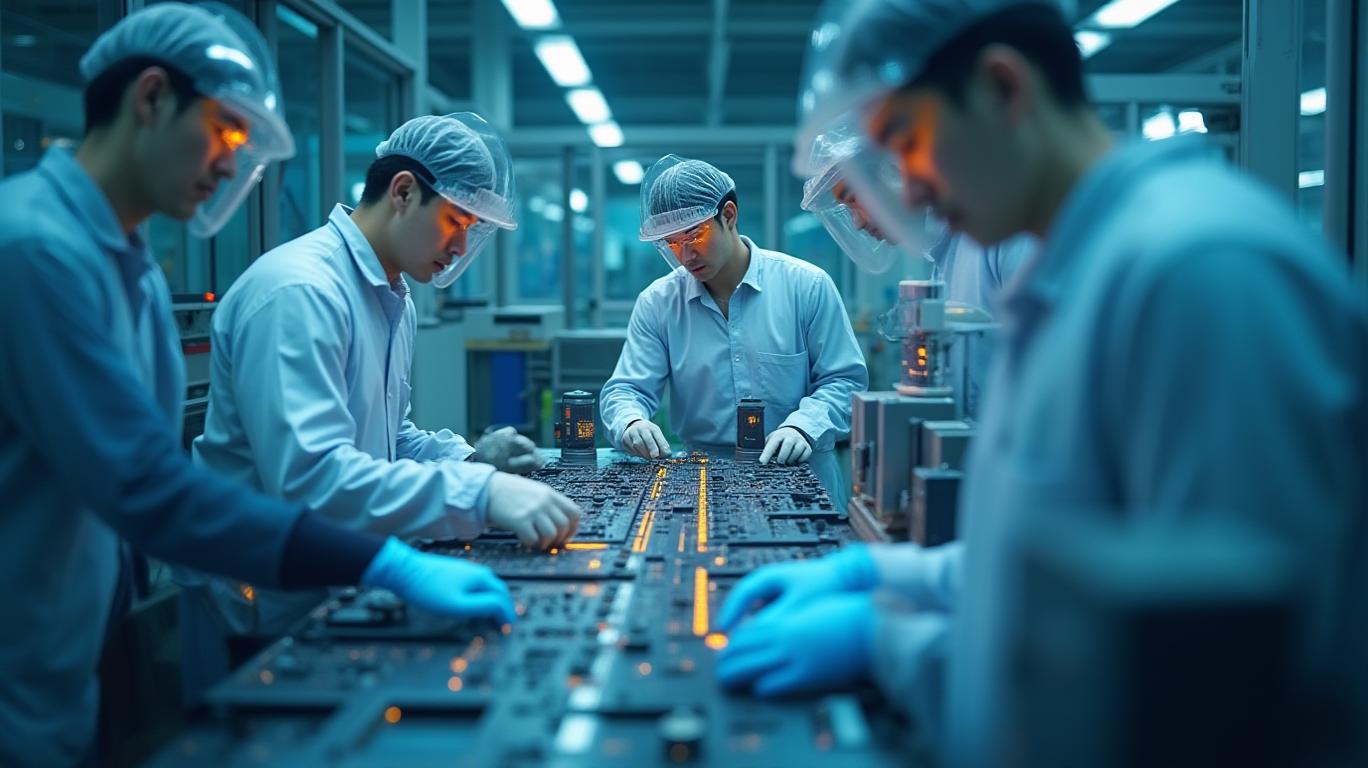
Semiconductors, though excluded from the new 10% tariff, remain under a 25% duty—a rate the administration has hinted could rise. This leaves chipmakers like Nvidia (NVDA) and AMD (AMD) in a precarious position. While the exemptions protect finished goods, component-level tariffs could still strain margins.
“The semiconductor sector is the Achilles’ heel of this policy,” said a Wall Street analyst. “Even a 25% tariff on chips could ripple into higher costs for everything from laptops to electric vehicles.” The U.S. produces less than 12% of global semiconductors, relying heavily on Taiwan and South Korea—a vulnerability the tariffs do little to resolve.
Market Reactions: A Temporary Rally, Not a Resolution
Stock markets initially cheered the exemptions, with tech-heavy indices like the Nasdaq Composite rising 2.5% in early April. Yet volatility persists. Treasury yields retreated from peaks, but bond markets remain wary of broader economic impacts. Trump’s dismissal of market concerns as “transient” contrasts with analysts’ warnings of prolonged uncertainty.
For investors, the exemptions offer short-term relief but no guarantees. Companies like Samsung (005930.KS) and Apple may benefit from stabilized costs, but their long-term profitability depends on navigating geopolitical risks. Meanwhile, sectors like solar energy—exempted alongside electronics—could see accelerated adoption as tariffs on panels are lifted, though supply chain bottlenecks may linger.
Conclusion: A Fragile Equilibrium
The April 2025 exemptions underscore the Trump administration’s willingness to prioritize economic pragmatism over ideological trade hardline-ism—temporarily. By shielding smartphones and computers, policymakers avoided a consumer backlash while keeping pressure on Beijing. However, the policy’s sustainability is questionable.
Key data points reinforce this duality:
- Consumer Electronics: Apple’s India production ramp-up (20% of U.S. iPhones) has reduced, but not eliminated, China dependency.
- Trade Dynamics: China’s 84% retaliatory tariffs threaten $120 billion in U.S. exports annually, per Peterson Institute estimates.
- Semiconductor Costs: A 25% tariff on chips adds ~$40 to the cost of an average smartphone—a burden companies may absorb or pass on.
The exemptions are a tactical win for Big Tech, but they paper over systemic issues: U.S. manufacturing gaps, China’s entrenched role in global supply chains, and the fragility of trade diplomacy. Investors should treat this reprieve as a pause—not a victory. The real test will come in July 2025, when tariffs on non-Chinese goods resume, and as companies like Apple bet billions on reshoring. Until then, the tech sector will tread a path between relief and risk, navigating a world where tariffs are as much a weapon as a deterrent.






Comentarios
Aún no hay comentarios