
Tech Giants Under Pressure: Assessing the Impact of Powell's Hawkish Stance and U.S.-China Tensions on Big Tech Stocks
Federal Reserve Policy: A Double-Edged Sword for Big Tech
The Federal Reserve's October 2025 rate cut-lowering the benchmark rate to 3.75–4.00%-has injected liquidity into markets, temporarily buoying high-growth tech stocks, according to a Hindustan Times report. Lower borrowing costs reduce the discount rate for future cash flows, a critical factor for companies like AmazonAMZN-- and AlphabetGOOGL--, which rely on long-term capital for AI infrastructure and cloud expansion, the Hindustan Times noted. However, the Fed's cautious approach to inflation and its search for a successor to Powell introduce uncertainty. A shift toward tighter monetary policy in 2026 could reverse these gains, particularly for companies with high debt loads or capital-intensive projects, as highlighted in a Bitget report.
The Fed's rate cuts also intersect with broader economic risks, such as the prolonged U.S. government shutdown and Trump-era tariffs. For instance, Microsoft's Azure cloud division faces higher operational costs due to supply chain bottlenecks exacerbated by trade restrictions, according to a Yahoo Finance article. While rate cuts may offset some of these pressures, the sector's reliance on global markets means that geopolitical volatility remains a wildcard.
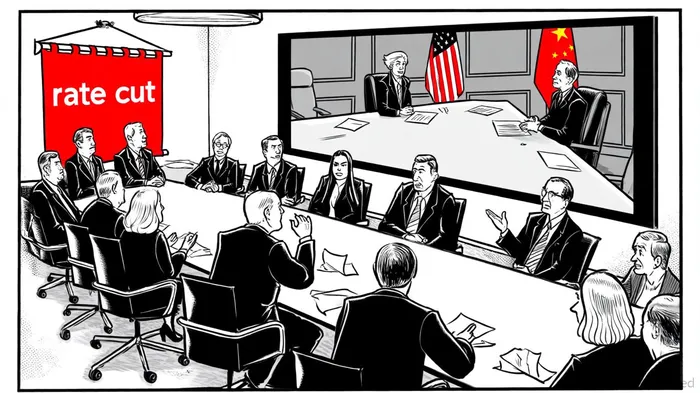
U.S.-China Tensions: A Catalyst for Strategic Reconfiguration
The U.S.-China tech rivalry has forced Big Tech to adopt a dual strategy: hedging against geopolitical risks while capitalizing on emerging opportunities. The anticipated Trump-Xi trade agreement, which includes reduced tariffs and AI chip collaborations, has already driven optimism in markets, according to a Reuters report. Nvidia's pre-market surge following news of its Blackwell AI processors being discussed with Chinese officials underscores the sector's sensitivity to diplomatic developments, Reuters reported.
However, the long-term risks persist. French lawmakers' proposed 6% tax on U.S. tech giants and China's push for self-reliance in AI infrastructure (e.g., Telegram's Cocoon network) signal a fragmented global tech ecosystem, according to a Politico report. Companies like Apple are diversifying manufacturing away from China, increasing reliance on Vietnam and India, but these shifts come with short-term costs and operational complexities, as discussed in a Meyka blog post.
Strategic Responses: AI, Supply Chains, and Geopolitical Positioning
Big Tech's resilience in 2025 hinges on its ability to innovate and adapt. Microsoft and GoogleGOOGL-- have deepened partnerships with AI startups, while Amazon has invested in blockchain-based supply chain solutions to mitigate disruptions, as noted in a Morningstar piece. Notably, Palantir's collaboration with NVIDIA to create digital twins of logistics networks exemplifies how operational AI is becoming a core infrastructure layer, according to a Logistics Viewpoints article.
Apple's Q4 2025 earnings report, set for October 30, will be a litmus test for the sector. With revenue forecasts at $101 billion and supply chain adjustments in focus, the company's guidance on holiday demand and China market dynamics will shape investor sentiment, according to a Seeking Alpha item. Meanwhile, Meta's pivot to decentralized AI platforms (e.g., open-source models) reflects a broader industry trend toward reducing reliance on centralized cloud providers, as covered in The Outpost article.
Conclusion: Navigating Uncertainty with Strategic Agility
The interplay of Fed policy and U.S.-China tensions has created a bifurcated landscape for Big Tech. While rate cuts and trade truces offer short-term relief, the sector must prioritize long-term resilience through diversified supply chains, AI-driven efficiency, and geopolitical agility. Investors should monitor key indicators: the Fed's December rate decision, the Trump-Xi meeting outcomes, and earnings reports from tech leaders. In this environment, companies that balance innovation with risk mitigation will emerge as the sector's new titans.





Comentarios
Aún no hay comentarios