
U.S. Tech Giants Halt India Data Center Expansions: Assessing Global Cloud Investment Risks and Alternative Opportunities
The global cloud infrastructure sector is facing a pivotal moment as U.S. tech giants like AmazonAMZN--, MicrosoftMSFT--, and GoogleGOOGL-- delay their India data center expansions amid escalating trade tensions and regulatory uncertainties. These pauses, driven by U.S. tariffs on Indian goods and a new $100,000 H-1B visa fee, are reshaping asset valuations, regional market dynamics, and investment strategies. For investors, the interplay of geopolitical risks and technological demand presents both challenges and opportunities in a rapidly evolving landscape.
Trade Tensions and Financial Implications
The U.S.-India trade friction has introduced significant volatility into the cloud infrastructure sector. Tariffs on Indian exports-ranging from 25% to 50%-have disrupted supply chains and inflated costs for equipment and construction materials, according to a CNBC report. Hyperscalers are now incorporating risk-mitigation clauses into contracts, such as tariff pass-throughs and phased capacity agreements, to hedge against future policy shifts, according to a Capwolf analysis. These measures, while prudent, signal a broader caution that could dampen long-term asset valuations.
The financial impact is already evident: Indian IT stocks, including Infosys and Tata Consultancy Services, lost $10 billion in market value following the H-1B fee announcement, as reported by Yahoo Finance. For U.S. tech giants, delayed projects translate to deferred revenue and higher capital costs. A typical 60MW data center delay can cost developers up to $14 million per month in lost returns, according to a DataCenterDynamics analysis. While India's data center market remains projected to triple in capacity by 2030, the current uncertainty has slowed deal closures and increased legal complexities, according to a Communications Today report.
Regional Market Dynamics and Strategic Reallocations
India's data center industry, valued at $10 billion in 2025, is a critical growth outlier in a global landscape marked by project cancellations, according to Business Standard. Hyperscalers account for 30% of current demand, with projections of a 35% share by 2030 as AI workloads surge. However, trade tensions have prompted a strategic reallocation of capital. Microsoft and AWS, for instance, have paused expansions in other regions due to oversupply concerns, while India remains a focal point for its cost advantages and digital demand, according to the CNBC report.
This duality underscores the sector's fragility. While India's market is resilient, its reliance on imported infrastructure-HVAC systems, electrical components-makes it vulnerable to tariff-driven cost shocks, as highlighted in a LinkedIn post. For investors, the key lies in balancing exposure to India's long-term potential with hedging against short-term geopolitical risks.
Alternative Cloud Markets: A New Frontier
The delays in India have accelerated interest in alternative cloud markets, where specialized providers are addressing niche demands. Regional clouds like OVHcloud (Europe) and SCCC (Middle East) are gaining traction by offering localized infrastructure and compliance with national data laws, according to a LevelAct analysis. Edge clouds, such as Zenlayer and NodeWeaver, cater to latency-sensitive applications, while vertical-specific clouds like Cleardata (healthcare) and Aptible (finance) provide prebuilt compliance frameworks, according to a Yahoo Finance roundup.
Hybrid and multicloud strategies are also rising in prominence. Enterprises are adopting these models to balance scalability with regulatory compliance, with hybrid cloud spending projected to reach $311.75 billion by 2030, per Mordor Intelligence. The shift is driven by data sovereignty mandates, green computing initiatives, and the need for AI workloads to operate closer to data sources, according to a McKinsey report.
Investment Opportunities and Risk Mitigation
For investors, the cloud ecosystem offers fragmented yet high-growth opportunities. Partnerships with hyperscalers-resellers, system integrators, and managed service providers-are generating returns through recurring revenue streams, as noted by McKinsey. In 2025, these partners captured $2–$5 in professional services revenue for every $1 of cloud consumption by end customers, according to a GlobeNewswire forecast.
Geographic and industry-specific champions are particularly attractive. Southeast Asia's data center market, for example, is expanding rapidly due to digital transformation and lower regulatory barriers. Similarly, sovereign clouds in the EU and Middle East are capitalizing on data localization laws, per a BusinessWorld report. Investors should prioritize regions with stable trade policies and robust digital infrastructure to mitigate the risks observed in India.
Conclusion
The delays in India's data center expansions highlight the growing interdependence of geopolitics and technology investment. While U.S. tech giants navigate trade tensions, the global cloud sector is diversifying into alternative markets that prioritize compliance, sustainability, and specialization. For investors, the path forward lies in strategic diversification-leveraging India's long-term potential while capitalizing on the agility of regional and vertical cloud providers. As the sector evolves, adaptability to regulatory shifts and technological innovation will remain paramount.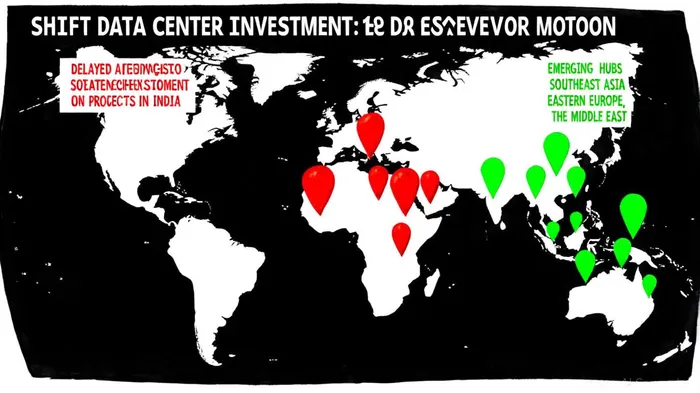





Comentarios
Aún no hay comentarios