
Tech Advances Amid Mixed Earnings: A Strategic Roundup for Investors
The tech sector is navigating a pivotal moment. While Q1 2025 earnings reports revealed uneven performance—some companies faced headwinds, others surged—the industry’s long-term trajectory remains anchored in innovation. From AI-driven semiconductors to strategic pivots toward profitability, the sector’s resilience is being tested by cost discipline and technological ambition. Here’s what investors need to know.
TSMC: The Semiconductor Superpower Double-Downs on AI
Taiwan Semiconductor Manufacturing Company (TSM) delivered a standout quarter, with revenue soaring 42% year-over-year to NT$839.25 billion ($25.85 billion). This growth underscores its dominance in advanced chip production, particularly for AI and high-performance computing. The company reaffirmed its 2025 revenue forecast, signaling confidence in its 3-nanometer (3nm) process technology, which is critical for next-gen AI chips and data centers.

The shows a consistent upward trajectory, but investors should note that TSMC’s success hinges on sustaining demand for cutting-edge silicon. With AI adoption accelerating, the company’s R&D bets on 3nm and beyond are likely to pay off—but only if global chip shortages ease and geopolitical tensions don’t disrupt supply chains.
Netflix: Profits Over Subscribers, AI Over Growth
Netflix’s Q1 results marked a milestone: its first earnings report without subscriber growth metrics. Revenue rose 13% to $10.5 billion, while EPS jumped 25% to $6.61, surpassing expectations. The shift reflects CEO Ted Sarandos’s strategy to prioritize profitability over expansion—a move that has pleased investors weary of content-cost inflation.
The company is doubling down on AI-driven recommendations and localized content, such as its Spanish-language hit Élite, to boost retention. Netflix’s decision to drop subscriber metrics altogether suggests it’s betting on higher ad revenue and subscription pricing to fuel growth.
The data paints a clear picture: Netflix is trading short-term subscriber gains for long-term financial health. Investors should watch whether this pivot can sustain margins as competition from Disney+, Paramount+, and Apple TV+ intensifies.
ASML: The Lithography Leader Feeding the Chip Hunger
ASML Holding NV’s Q1 net income hit €9.332 billion ($9.33 billion), driven by surging demand for its extreme ultraviolet (EUV) lithography systems. These machines are indispensable for manufacturing advanced semiconductors, including TSMC’s 3nm chips. ASML’s R&D focus on EUV technology has positioned it as a linchpin of the global chip industry.
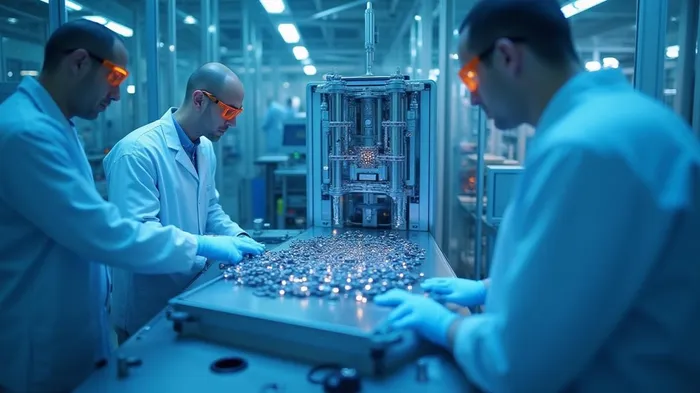
The reveals steady investment in next-gen tools. With Intel, Samsung, and TSMCTSM-- all racing to scale AI chips, ASML’s dominance in critical semiconductor equipment ensures its place as a must-own stock for tech investors.
Infosys: Riding the Cloud and AI Wave
Infosys’s Q1 revenue rose 1.14% to ₹20,000 crore ($24.6 billion), fueled by demand for AI-driven solutions and cloud services. The company highlighted partnerships with AWS and Microsoft, as well as its own AI tools for clients, as key growth drivers. While its R&D spending wasn’t detailed, Infosys’s focus on client-centric innovation aligns with the sector’s AI-first ethos.
Infosys’s story is emblematic of the broader tech shift: companies are prioritizing software and AI to stay relevant. Investors should track its progress in monetizing AI partnerships, which could unlock new revenue streams.
Intel: Restructuring to Survive, Innovating to Thrive
Intel’s Q1 results were bleak: flat revenue ($12.7 billion) and a $0.8 billion net loss highlighted struggles in a competitive CPU market. However, the company’s strategic moves—cutting R&D and marketing expenses by 19% and 15% YoY, respectively—signal a renewed focus on core strengths.
The shows a clear trade-off: reduced spending may cut near-term losses but risks long-term competitiveness. Intel’s 18A process node (1.8nm equivalent) and AI-optimized Xeon 6 chips, due by late 2025, are its best hope to regain market share.
Market Context: AI as the Great Equalizer
Across the sector, AI is the common thread. TSMC’s 3nm chips, ASML’s EUV tools, and Intel’s Xeon processors are all designed to power AI workloads. Netflix’s AI recommendations and Infosys’s AI tools highlight software’s role in driving adoption.
The data is clear: AI is both a cost challenge and a revenue opportunity. Companies investing in it now—like TSMC and ASML—will likely outperform those lagging behind.
Conclusion: Innovate or Perish
The Q1 earnings reveal a tech sector in transition. Winners are those willing to cut costs while doubling down on R&D:
- TSMC’s 3nm chips (32% of revenue in 2024) are already powering AI systems, and its 2025 revenue forecast suggests sustained demand.
- ASML’s EUV sales grew 30% YoY in 2023, and its backlog remains robust.
- Netflix’s ad revenue rose 20% YoY in 2024, proving its monetization pivot works.
Laggards like Intel must balance restructuring with innovation. Its 18A process could revive its fortunes—if executed.
Investors should favor companies with AI-first roadmaps and cash flow discipline. TSMC, ASML, and Infosys fit this profile, while Netflix’s shift to profitability adds a defensive layer. Intel’s survival hinges on execution—a gamble worth taking for risk-tolerant investors.
The tech sector isn’t just surviving—it’s evolving. Those who invest in its future will reap the rewards.





Comentarios
Aún no hay comentarios