
Tax-Efficient Retirement Strategies in 2025: Navigating IRA Conversions and Long-Term Wealth Preservation
The 2025 tax landscape presents a pivotal moment for retirees and pre-retirees seeking to optimize their retirement savings. With the passage of the One Big Beautiful Bill Act (OBBBA), the tax rate reductions from the 2017 Tax Cuts and Jobs Act have been made permanent, offering a stable framework for long-term planning. However, this stability also introduces new complexities, particularly for those considering IRA conversions. While Roth IRA conversions remain a powerful tool for tax-free growth and flexibility, improper execution can trigger unintended consequences, including elevated tax brackets, Medicare surcharges, and long-term wealth erosion. This article examines the critical tax implications of 2025's legislative changes, the strategic benefits of Roth conversions, and the risks of missteps-along with actionable strategies to mitigate them.
The 2025 Tax Law Landscape: Opportunities and Challenges
The OBBBA's permanence of TCJA rates creates a favorable environment for Roth conversions, as lower and extended tax brackets reduce the immediate tax burden of converting traditional IRAs to Roth accounts. Additionally, the increased SALT (State and Local Tax) deduction cap-from $10,000 to $40,000 for 2025–2028-provides relief to high earners in high-tax states, while a new $6,000 annual deduction for seniors aged 65 and older further cushions retirees from tax liabilities. These changes amplify the appeal of Roth conversions, which allow tax-free growth and no required minimum distributions (RMDs), making them ideal for those anticipating higher future tax rates or seeking greater retirement income flexibility.
However, the same legislative shifts also heighten the stakes of improper conversions. A surge in adjusted gross income (AGI) from a Roth conversion can trigger phaseouts of tax credits, deductions, and Medicare premium increases via the Income-Related Monthly Adjustment Amount (IRMAA). For example, a large conversion could push retirees into higher marginal tax brackets or subject a portion of their Social Security benefits to taxation. These risks are compounded by the post-2017 rule eliminating recharacterizations, which means ill-timed conversions cannot be reversed.
Strategic Benefits of Roth Conversions in 2025
Roth conversions remain a cornerstone of tax-efficient retirement planning, particularly under 2025's tax environment. By converting traditional IRAs to Roth accounts, retirees lock in lower tax rates while avoiding future RMDs, which could become more burdensome as life spans increase. For individuals with low current income-such as those early in retirement or during a sabbatical- converting at a lower tax rate can significantly reduce future tax liabilities. 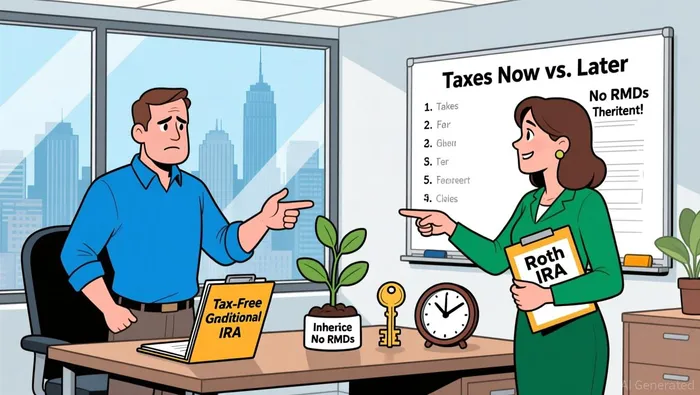
Moreover, Roth IRAs offer legacy advantages. Under the post-SECURE Act rules, non-spouse beneficiaries must empty inherited IRAs within 10 years. Roth conversions eliminate this tax drag for heirs, enabling tax-free inheritance. For self-employed individuals, the combination of Solo 401(k) contributions and Roth conversions further amplifies retirement savings potential, with deadlines aligned to business tax filings.
Risks of Improper IRA Conversions and Mitigation Strategies
Despite their benefits, Roth conversions require careful execution to avoid pitfalls. A single large conversion can spike AGI, triggering IRMAA surcharges or additional taxation of Social Security benefits. For instance, a retiree converting $50,000 in a single year might inadvertently push their income into a higher tax bracket, negating the intended savings. Additionally, underpayment penalties may arise if conversions occur late in the year without proper withholding or estimated tax payments.
To mitigate these risks, retirees should adopt a phased approach. Spreading conversions over multiple years allows for gradual "filling" of lower tax brackets while avoiding IRMAA tiers. Coordination with other income sources-such as delaying Social Security benefits until age 70-can further optimize tax outcomes. For those converting late in the year, annualized income installments (via IRS Form 2210 Schedule A1) or temporary traditional IRA distributions with 100% federal withholding can prevent underpayment penalties.
Another critical strategy involves leveraging qualified charitable distributions (QCDs) to offset taxable income. Retirees subject to RMDs can direct funds to charities, reducing AGI and preserving the benefits of Roth conversions. Tax-loss harvesting and maximizing contributions to HSAs and IRAs before year-end deadlines also enhance tax efficiency.
The Role of Professional Guidance in Long-Term Wealth Preservation
Given the complexity of 2025's tax rules, consulting a tax professional is essential. Advisors can model scenarios to identify optimal conversion amounts, coordinate with estate planning goals, and navigate state-specific implications. For example, high earners in states with elevated income thresholds may benefit from timing conversions to align with SALT deduction caps.
Conclusion
The 2025 tax environment offers both opportunities and challenges for retirees. While Roth conversions remain a potent tool for tax-free growth and legacy planning, their success hinges on meticulous execution. By spreading conversions, coordinating with other income streams, and leveraging QCDs, retirees can minimize tax liabilities and preserve wealth. As legislative changes continue to shape retirement planning, proactive strategies-and professional expertise-will be indispensable in navigating the evolving landscape.







Comentarios
Aún no hay comentarios