
Tata Steel's Strategic Move into Energy Vertical Integration: Assessing the Investment Implications of Vertical Control on Green Steel Transition and Operational Efficiency
Vertical Integration and Operational Efficiency: A Dual-Edged Sword
Tata Steel's capital expenditures in Q2 FY26-Rs 3,250 crores for the quarter and Rs 7,079 crores for the half year-underscore its commitment to vertical integration according to financial reports. These investments are directed toward expanding production capacity in India, particularly at Neelachal Ispat Nigam, where output is set to surge from 1.1 million tonnes to 6.2 million tonnes according to industry analysis. Such scale enables the company to reduce per-unit costs and buffer against volatile raw material prices.
Cost transformation programs have further amplified efficiency gains. Tata Steel reported savings of Rs 2,561 crores in Q2 FY26 alone, driven by stringent cost controls and operational streamlining. These savings, coupled with a 15.28% operating margin-the highest in eight quarters-highlight the financial discipline underpinning its vertical integration strategy. By internalizing energy and production processes, Tata Steel minimizes reliance on external suppliers, a critical advantage in an industry where energy costs account for over 30% of total expenses.
Green Steel Transition: From Ambition to Execution
Tata Steel's green steel initiatives are anchored in its Net Zero 2045 target and a suite of technology-driven projects. In India, the company is scaling modular scrap-based EAF plants, which emit 60% less CO₂ compared to traditional blast furnaces. The Ludhiana EAF project, slated for commissioning in 2026, exemplifies this shift, aligning with global sustainability benchmarks.
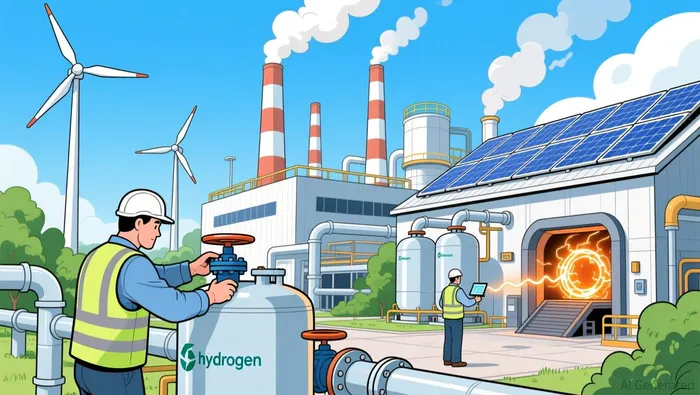
Hydrogen and renewable energy are central to its decarbonization roadmap. A groundbreaking trial at Jamshedpur saw hydrogen injected into blast furnaces at 40% capacity, a first in the industry. Meanwhile, partnerships like the 379 MW captive renewable power agreement with Tata Power are projected to cut 50 million tonnes of carbon emissions over 25 years. In the Netherlands, Tata Steel's plan to replace blast furnaces with DRI-EAF systems-initially gas-based but hydrogen-ready-positions it to meet stringent European emissions standards.
Investment Implications: Balancing Risks and Rewards
The financial metrics of Tata Steel's vertical integration strategy are compelling. Its Q2 FY26 net profit surged 272% year-on-year to Rs 3,101.75 crores, driven by domestic demand and cost discipline. With a target of 40 million tonnes of domestic crude steel capacity by 2030, the company is poised to capitalize on India's growing infrastructure needs while maintaining margins above 15%.
However, challenges persist. The UK operations, despite a 400-million-euro cost-cutting plan, remain a drag on profitability, necessitating policy support for cash neutrality. Similarly, the transition to green hydrogen and DRI technologies requires sustained capital outlays and regulatory alignment. Investors must weigh these risks against the long-term value of a diversified, low-carbon portfolio.
Challenges and the Road Ahead
Tata Steel's vertical integration is not without hurdles. The UK's cash-burn situation and global steel price pressures highlight the need for geopolitical and policy stability. Additionally, the high upfront costs of green hydrogen infrastructure-estimated at billions of dollars-demand careful capital allocation.
Yet, the company's proactive approach to mitigating these risks-through partnerships, government collaborations, and phased technology adoption-demonstrates strategic foresight. For instance, its £500 million UK government-backed EAF transition at Port Talbot aims to slash emissions by 90% by 2027, a move that could attract green financing and regulatory incentives.
Conclusion: A Model for Industrial Resilience
Tata Steel's energy vertical integration strategy is a masterclass in aligning operational efficiency with sustainability. By internalizing energy costs, adopting cutting-edge technologies, and securing policy support, the company is not only future-proofing its operations but also enhancing shareholder value. For investors, the key takeaway is clear: Tata Steel's dual focus on cost optimization and green innovation positions it as a leader in the next phase of global steelmaking. However, success will depend on navigating short-term challenges in its international markets and maintaining the pace of technological adoption.







Comentarios
Aún no hay comentarios