
Tata Steel's Strategic Bet on Energy Assets: Risk Defense Perspective on EUR140M Vattenfall Acquisition
The steel industry's relentless pursuit of margin improvement is increasingly tied to controlling the biggest cost variable: energy. Tata Steel's strategic move to acquire three Dutch power plants exemplifies a growing trend where steelmakers directly integrate energy assets to slash costs and accelerate decarbonization. , Tata secures a stable, low-cost energy supply generated from its own steelmaking gases – a clever circular economy solution that directly tackles volatile utility prices affecting production margins. 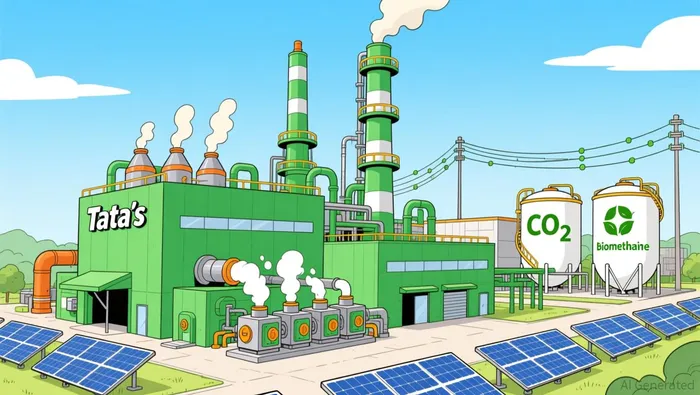 The plants, , , , demonstrating significant scale. This integration fundamentally stabilizes Tata's energy cost structure, shielding the business from market price swings and creating a predictable cost base crucial for long-term planning and competitive pricing. Furthermore, by recycling blast furnace gas otherwise wasted, Tata significantly reduces its net greenhouse gas emissions, aligning with stringent European environmental regulations and enhancing its green credentials. While natural gas serves as a necessary backup during peak demand or gas supply fluctuations, the primary reliance on internal gas streams drastically cuts both operating costs and the plant's carbon footprint. The Dutch government's agreement to support CO₂ capture and biomethane integration further accelerates the decarbonization trajectory, turning a potential constraint (gas dependency) into a transitional opportunity with clear sustainability pathways. This move signals a major shift: steelmakers are no longer just energy consumers but becoming integrated energy producers, directly boosting operational efficiency and margin resilience in a capital-intensive industry.
Tata Steel has just pulled off a significant strategic move in its green steel transformation: securing control of three Vattenfall power plants in the Netherlands. This acquisition, slated for completion by January 1, 2026, is designed to lock in a crucial energy source-using residual gases from its own steelmaking process-while providing a backup via natural gas. , , a cost the company is absorbing to gain greater energy stability and cost predictability. More importantly, this integration creates a powerful competitive moat. By recycling its own industrial gases for power generation, Tata Steel Nederland significantly reduces reliance on volatile external electricity markets and fossil fuel price swings, directly boosting near-term margin resilience. Long-term, this vertically integrated energy model positions Tata for potential valuation premiums as sustainable manufacturing practices become increasingly valued, offering a tangible hedge against the biggest risk facing steelmakers: unpredictable commodity energy costs.







Comentarios
Aún no hay comentarios