
Taseko Mines' 2026 Growth Potential Amid Commodity Booms and Project Advancements
The global copper market is entering a pivotal phase in 2026, driven by surging demand from the energy transition, artificial intelligence (AI), and defense spending, while supply constraints persist due to mine limitations and geopolitical tensions. Against this backdrop, Taseko Mines LimitedTGB-- emerges as a compelling case study in strategic positioning and operational resilience. With two flagship projects-Gibraltar in British Columbia and Florence Copper in Arizona-the company is navigating both challenges and opportunities to capitalize on the tightening copper market.
Market Dynamics: A Structural Imbalance Favors Producers
The copper market is experiencing a structural imbalance, with demand outpacing supply. According to a report by S&P Global, global copper demand is projected to reach 42 million metric tons by 2040, a 50% increase from current levels, driven by AI-driven data centers and green energy infrastructure. Meanwhile, primary copper production is expected to peak at 27 million metric tons in 2030 before declining, creating a projected deficit of 10 million metric tons by 2040.
Price volatility has intensified in late 2025 and early 2026, with J.P. Morgan forecasting an average of $12,075 per metric ton in 2026, citing supply disruptions such as the Grasberg mine mudslide and U.S. tariff policies. While Goldman Sachs anticipates a slight pullback to $10,710 per ton in the first half of 2026, the broader trend remains bullish, with London Metal Exchange (LME) prices hitting record highs of $13,387.50 per tonne in January 2026. For TasekoTGB--, these dynamics underscore the urgency of scaling production to meet demand while managing operational risks.
Operational Momentum: Florence Drives, Gibraltar Stabilizes
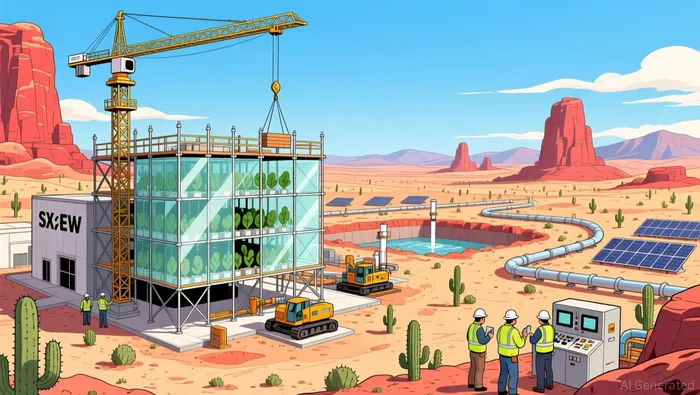
Taseko's Florence Copper project in Arizona is a cornerstone of its 2026 growth strategy. Construction of the solvent extraction/electrowinning (SX/EW) plant reached 90% completion by June 2025, with wellfield operations commencing in October 2025. First copper cathode production is now expected in early 2026, with drilling activities resuming to accelerate output. This project, utilizing low-carbon in-situ recovery (ISCR) technology, is projected to increase Taseko's total copper production by over 60%.
Meanwhile, the Gibraltar Mine, though facing geological challenges, has shown signs of stabilization. Unstable ground conditions and secondary mineralisation zones in 2025 forced a 19% reduction in production guidance to 100–105 million pounds of copper. However, Q3 2025 saw a rebound, with 27.6 million pounds of copper produced and mill throughput reaching design capacity. Copper recoveries improved to 77% for the quarter, with September hitting 83%. These gains, though partial, demonstrate Taseko's ability to adapt to operational headwinds.
Strategic Positioning: Partnerships, Finance, and ESG
Taseko's financial and strategic moves in 2025 have fortified its position for 2026. A $173 million equity financing in October 2025 strengthened its balance sheet, enabling debt repayment and funding for Florence's wellfield development. The company also leveraged a long-term partnership with Mitsui & Co., which invested $50 million in 2022 and holds an option for an additional $50 million to secure a 10% stake in Florence. This collaboration validates the project's technical and economic viability.
ESG initiatives further enhance Taseko's appeal. Florence's low-carbon ISCR method aligns with global sustainability goals, addressing investor and consumer demand for responsible mining. Additionally, the Yellowhead project in British Columbia, with a 25-year mine life and operating costs of $1.90 per pound, positions Taseko to benefit from long-term copper price trends.
Risks and Mitigation
Despite its momentum, Taseko faces risks. Gibraltar's geological challenges could persist, and U.S. tariffs may fragment pricing dynamics. However, the company's diversified portfolio-spanning two North American jurisdictions-and its focus on low-cost, high-margin projects like Florence mitigate these risks. Moreover, Taseko's improved financial flexibility, evidenced by its Q3 2025 Adjusted EBITDA of $62 million, provides a buffer against volatility.
Conclusion: A 2026 Growth Story
Taseko Mines is well-positioned to capitalize on the copper market's structural shift in 2026. With Florence nearing commercial production, Gibraltar stabilizing, and a robust financial strategy in place, the company is poised to deliver growth amid a backdrop of rising prices and tightening supply. For investors, Taseko represents a blend of operational execution, strategic foresight, and alignment with global megatrends-a rare trifecta in the mining sector.





Comentarios
Aún no hay comentarios