
Tariffs and Tech: Navigating the New Trade Volatility
The U.S. tariff landscape is undergoing seismic shifts. As of July 2025, President Trump's “reciprocal” trade policies have introduced sweeping tariffs on tech and manufacturing imports from Japan, South Korea, Malaysia, Thailand, and others—rates as high as 40%. These tariffs, delayed until August 2025 for most countries, threaten to reshape global supply chains, consumer costs, and corporate strategies. For investors, the question is clear: How do these policies create sector-specific risks and opportunities?
The Current Tariff Regime: A Sector-by-Sector Breakdown
The tariffs are not uniform. Japan and South Korea face 25% levies, while Thailand's auto parts and Cambodia's textiles are hit with 36%. Malaysia's tech components are taxed at 25%, and South Africa's exports face 30% duties over disputed trade data. Crucially, exemptions exist for sectors like aerospace (25% for UK aluminum) and automotive parts, creating uneven impacts.
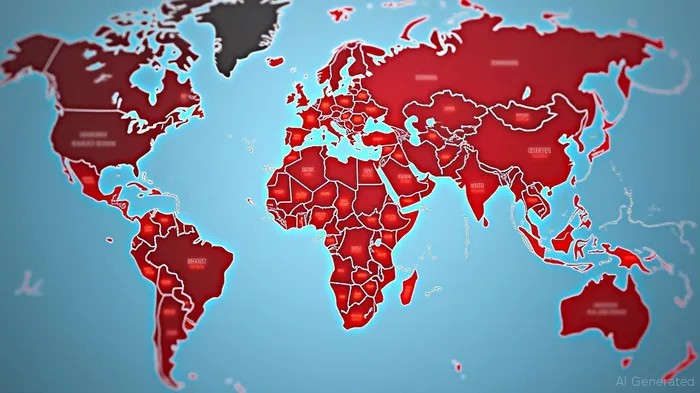
The immediate risks lie in industries reliant on imported components. Semiconductors, for instance, face dual pressures: tariffs on chips from Taiwan and higher costs for rare earth minerals used in advanced manufacturing. Meanwhile, automakers like ToyotaTM-- and Honda—whose U.S. sales depend on Japanese parts—see their margins squeezed.
Historical Precedent: How Tariffs Have Shaped Industries Since 2018
The 2018 steel and aluminum tariffs offered a blueprint for today's chaos. Those 25% and 10% levies, respectively, drove up domestic production costs, forced automakers to pass expenses to consumers, and triggered retaliatory tariffs from trading partners. The result? A 40% drop in U.S. steel imports from Canada and Mexico by 2020 and a 10% spike in global inflation for steel-intensive goods.
The tech sector's experience is instructive. During the 2018–2020 China trade war, tariffs on Chinese-made electronics forced companies like AppleAAPL-- to shift production to Vietnam and India. This “China+1” strategy became a survival tactic, but it also exposed vulnerabilities: disruptions in rare earth supply chains and delays in chip fabrication.
Sector-Specific Risks and Opportunities
- Semiconductors: A High-Stakes Balancing Act
The CHIPS Act, which aims to subsidize domestic chip production, faces delays. While U.S. firms like IntelINTC-- and MicronMU-- (MU) stand to benefit from subsidies, the sector remains exposed to tariffs on Taiwanese chips. For investors, companies with diversified supply chains—such as AMDAMD--, which sources from multiple foundries—may outperform.
Automotive: Navigating Quotas and Exceptions
The UK's tariff-rate quota for cars (lower rates for vehicles under certain volumes) offers a lifeline for companies like Jaguar Land Rover. But broader sector risks remain: J.P. Morgan estimates tariffs could raise U.S. light vehicle prices by 11.4%. Automakers with U.S.-based assembly lines (e.g., Tesla's Gigafactory) may have an edge over import-reliant peers.Defense and Infrastructure: A Safe Harbor?
Tariffs on foreign steel and aluminum could boost demand for domestic suppliers like NucorNUE-- (NUE) and U.S. Steel (X). Meanwhile, defense contractors (e.g., Lockheed MartinLMT-- (LMT)) may benefit from “Buy American” provisions tied to infrastructure spending.
Investment Strategy: Sector Rotation and Hedging
1. Rotate into Defensive Sectors:
With recession risks at 40% (per J.P. Morgan), consider shifting into utilities (XLU), healthcare (XLV), or consumer staples (XLP), which are less exposed to trade volatility.
Short Vulnerable Tech Stocks:
Semiconductor firms reliant on Taiwan (e.g., Advanced Micro DevicesAMD-- (AMD)) or consumer tech companies with high China exposure (e.g., Apple) could be prime shorts if tariffs escalate.Hedge with ETFs:
The iShares U.S. Steel ETF (SLX) or SPDR S&P Aerospace & Defense ETF (XAR) could profit from sector-specific tailwinds. Conversely, inverse ETFs like the ProShares Short Technology (CSDK) might mitigate tech losses.Monitor Legal Battles:
The court injunction on tariffs is temporarily lifted, but prolonged litigation could delay enforcement. Investors should track deadlines like August 1 and August 12 (for China) for potential pullbacks in volatility.
Conclusion: Prepare for a Prolonged Trade War
The 2025 tariffs are not a temporary storm but a new normal. Companies that can insulate themselves—through domestic production, diversified supply chains, or lobbying for exemptions—will thrive. Investors, meanwhile, must balance sector rotation with hedging to weather the volatility. The message is clear: In a world of escalating trade barriers, adaptability is the ultimate competitive advantage.
Stay nimble—and keep an eye on the tariffs.





Comentarios
Aún no hay comentarios