
Tariffs Already Shaking Up New Car Market!
Generado por agente de IAWesley Park
jueves, 10 de abril de 2025, 3:38 pm ET2 min de lectura
RACE--
Ladies and gentlemen, buckleBKE-- up! The new car market is already feeling the heat from those tariffs, and it's not pretty. We're talking about a seismic shift that's going to leave some automakers scrambling and others laughing all the way to the bank. Let's dive in and see what's happening!
First things first, the tariffs are already causing a stir. FerrariRACE--, the luxury sports car maker, has announced that most of its cars will see a price hike of up to 10% due to the new tariffs. That's a big deal, folks! And it's not just Ferrari. BMW is covering the inflated costs from the tariffs on its cars made in Mexico until at least May. But let's be real, that's just a band-aid solution. The market hates uncertainty, and these tariffs are causing a lot of it.
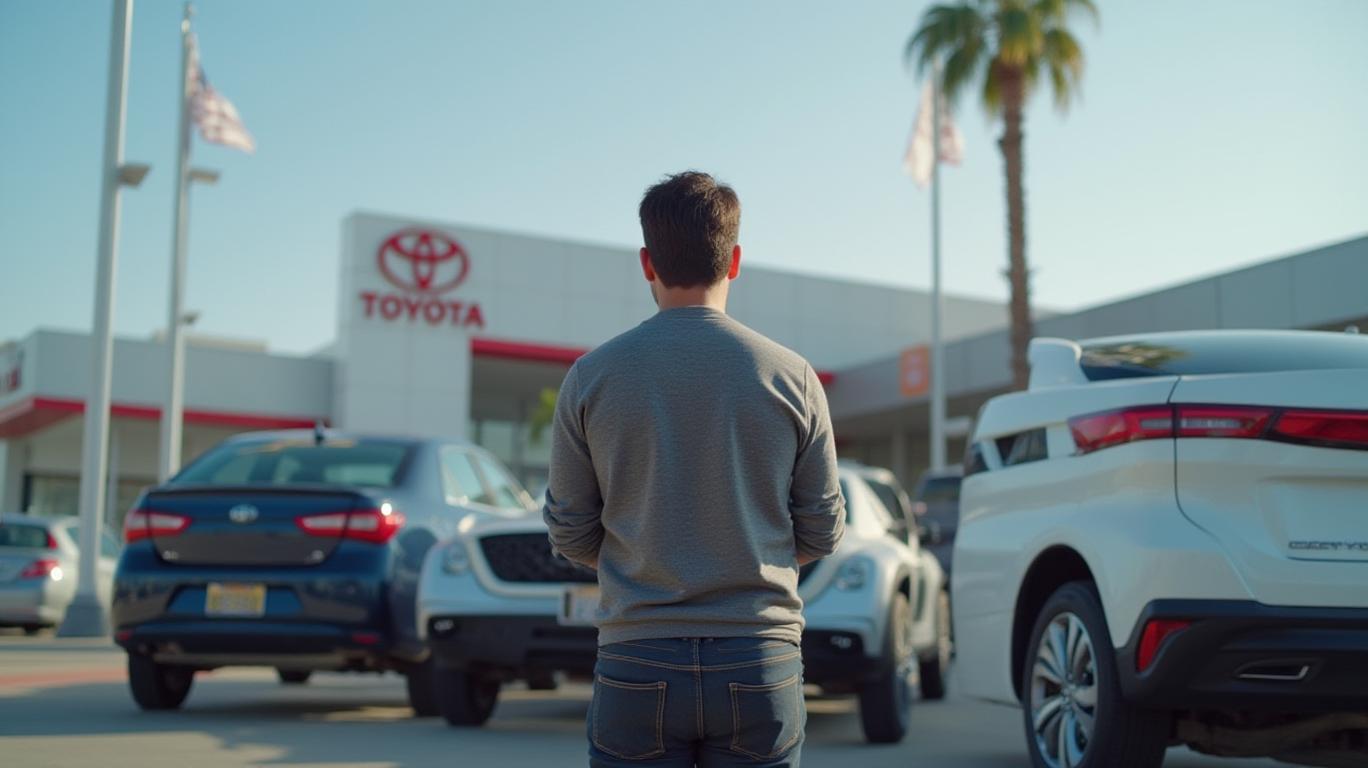
Now, let's talk about the big players. Hyundai reported record sales in March, and ToyotaTM-- saw a sales bump at the end of the month. Why? Because consumers are rushing to beat the tariffs and lock in pre-tariff pricing. A survey by AutoPacific found that 18% of new vehicle shoppers in the U.S. planned to make their planned car purchase sooner to dodge potentially higher prices resulting from tariffs. That's FOMO at its finest, folks!
But it's not all sunshine and roses. StellantisSTLA--, which makes Jeep, Dodge, RAM trucks, and Chrysler, announced a temporary halt in production at some of its assembly plants in Mexico and Canada. That's right, 900 people were temporarily laid off at several Stellantis factories in Michigan and Indiana. The company's North American Chief Operating Officer, Antonio Filosa, said that while the company continues to assess the medium- and long-term effects of the tariffs on its operations, the immediate layoffs and production pauses "are necessary given the current market dynamics." Ouch!
And let's not forget about the electric vehicle (EV) market. The global shift toward EVs has also been impacted by tariffs. Many EVs, as well as their key components like batteries, are produced in countries like China and South Korea. Tariffs on these imports can slow the adoption of EVs by raising their prices and making them less affordable for consumers. This is a big deal, folks, because the EV market is one of the fastest-growing sectors in the auto industry.
Now, let's talk about the long-term effects. Cox Automotive predicts that cars affected by the tariffs could see prices increase by 10-15%. Prices of cars not hit by the full 25% tariff could jump by 5%. That's a lot of money, folks, and it's going to impact consumer purchasing behavior. People are going to start looking for more affordable options, and that could mean a shift towards domestic brands.
But here's the thing, folks. The market is always changing, and those who can adapt will thrive. Automakers are already starting to adjust their sourcing and manufacturing strategies to mitigate these disruptions. Some are moving production to other countries to avoid tariffs, while others are increasing prices to cover the higher costs of imported components. It's a tough game, but it's the name of the game in the auto industry.
So, what's the bottom line? The tariffs are already shaking up the new car market, and it's going to be an interesting ride. But remember, folks, the market is always changing, and those who can adapt will thrive. Stay tuned, because this story is far from over!
STLA--
TM--
Ladies and gentlemen, buckleBKE-- up! The new car market is already feeling the heat from those tariffs, and it's not pretty. We're talking about a seismic shift that's going to leave some automakers scrambling and others laughing all the way to the bank. Let's dive in and see what's happening!
First things first, the tariffs are already causing a stir. FerrariRACE--, the luxury sports car maker, has announced that most of its cars will see a price hike of up to 10% due to the new tariffs. That's a big deal, folks! And it's not just Ferrari. BMW is covering the inflated costs from the tariffs on its cars made in Mexico until at least May. But let's be real, that's just a band-aid solution. The market hates uncertainty, and these tariffs are causing a lot of it.
Now, let's talk about the big players. Hyundai reported record sales in March, and ToyotaTM-- saw a sales bump at the end of the month. Why? Because consumers are rushing to beat the tariffs and lock in pre-tariff pricing. A survey by AutoPacific found that 18% of new vehicle shoppers in the U.S. planned to make their planned car purchase sooner to dodge potentially higher prices resulting from tariffs. That's FOMO at its finest, folks!
But it's not all sunshine and roses. StellantisSTLA--, which makes Jeep, Dodge, RAM trucks, and Chrysler, announced a temporary halt in production at some of its assembly plants in Mexico and Canada. That's right, 900 people were temporarily laid off at several Stellantis factories in Michigan and Indiana. The company's North American Chief Operating Officer, Antonio Filosa, said that while the company continues to assess the medium- and long-term effects of the tariffs on its operations, the immediate layoffs and production pauses "are necessary given the current market dynamics." Ouch!
And let's not forget about the electric vehicle (EV) market. The global shift toward EVs has also been impacted by tariffs. Many EVs, as well as their key components like batteries, are produced in countries like China and South Korea. Tariffs on these imports can slow the adoption of EVs by raising their prices and making them less affordable for consumers. This is a big deal, folks, because the EV market is one of the fastest-growing sectors in the auto industry.
Now, let's talk about the long-term effects. Cox Automotive predicts that cars affected by the tariffs could see prices increase by 10-15%. Prices of cars not hit by the full 25% tariff could jump by 5%. That's a lot of money, folks, and it's going to impact consumer purchasing behavior. People are going to start looking for more affordable options, and that could mean a shift towards domestic brands.
But here's the thing, folks. The market is always changing, and those who can adapt will thrive. Automakers are already starting to adjust their sourcing and manufacturing strategies to mitigate these disruptions. Some are moving production to other countries to avoid tariffs, while others are increasing prices to cover the higher costs of imported components. It's a tough game, but it's the name of the game in the auto industry.
So, what's the bottom line? The tariffs are already shaking up the new car market, and it's going to be an interesting ride. But remember, folks, the market is always changing, and those who can adapt will thrive. Stay tuned, because this story is far from over!

Divulgación editorial y transparencia de la IA: Ainvest News utiliza tecnología avanzada de Modelos de Lenguaje Largo (LLM) para sintetizar y analizar datos de mercado en tiempo real. Para garantizar los más altos estándares de integridad, cada artículo se somete a un riguroso proceso de verificación con participación humana.
Mientras la IA asiste en el procesamiento de datos y la redacción inicial, un miembro editorial profesional de Ainvest revisa, verifica y aprueba de forma independiente todo el contenido para garantizar su precisión y cumplimiento con los estándares editoriales de Ainvest Fintech Inc. Esta supervisión humana está diseñada para mitigar las alucinaciones de la IA y garantizar el contexto financiero.
Advertencia sobre inversiones: Este contenido se proporciona únicamente con fines informativos y no constituye asesoramiento profesional de inversión, legal o financiero. Los mercados conllevan riesgos inherentes. Se recomienda a los usuarios que realicen una investigación independiente o consulten a un asesor financiero certificado antes de tomar cualquier decisión. Ainvest Fintech Inc. se exime de toda responsabilidad por las acciones tomadas con base en esta información. ¿Encontró un error? Reportar un problema




Comentarios
Aún no hay comentarios