
"US Tariffs Prompt Criticism at Houston Energy Industry Gathering"
Generado por agente de IACyrus Cole
martes, 11 de marzo de 2025, 7:37 pm ET2 min de lectura
BKR--
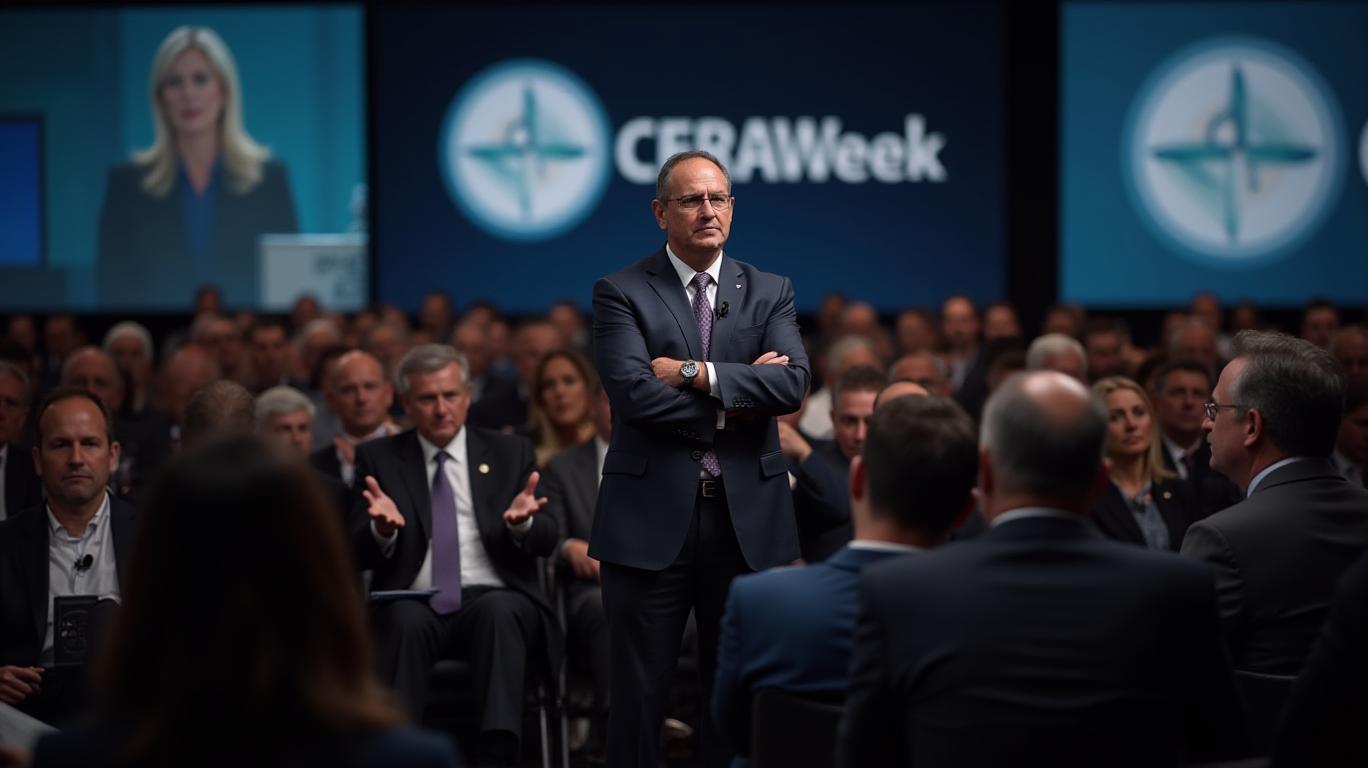
The energy industry is at a crossroads, and the recent CERAWeek gathering in Houston, Texas, highlighted the growing tensions and uncertainties facing the sector. The forum, which convened over 450 C-Suite executives, 80 ministers, and top officials, addressed pressing challenges related to energy security, supply, and climate ambitions. One of the most contentious topics was the impact of U.S. tariffs on global energy markets and investment landscapes.
The recent decline in oil prices, driven by uncertainty over U.S. tariffs, has prompted producers to scale back drilling efforts. Lorenzo Simonelli, chairman and CEO of Baker HughesBKR--, noted that while large producers have not yet signaled changes to their capital spending plans, smaller firms are likely to respond more quickly to price fluctuations. This shift in investment strategies could have significant implications for the energy sector, particularly for companies involved in fossilFOSL-- fuel production.
The Trump administration's focus on maximizing fossil fuel production and dismantling previous climate policies has also raised concerns about the long-term viability and attractiveness of investments in renewable energy sources. U.S. Energy Secretary Chris Wright reaffirmed the administration's commitment to this approach, stating that the Trump administration will treat climate change as a "global physical phenomenon that is a side effect of building the modern world." This perspective contrasts sharply with the policies of former President Joe Biden, which aimed to promote electric vehicles (EVs), and solar and wind power.
The debates around tariffs, trade, and competition at CERAWeek reflect broader geopolitical tensions and their potential to reshape global energy markets and investment landscapes. Experts are questioning whether a new nexus of "tariffs, trade, and competition" will shape energy markets and policy, potentially replacing the long-standing global priorities of "security, affordability, and sustainability." This shift indicates a growing concern over the impact of trade policies on energy security and market stability.
The uncertainty over U.S. tariffs and concerns that President Donald Trump's policies are disrupting global trade flows have already had a tangible impact on oil prices. Oil prices went down 1 percent on Monday after hitting a three-year low below 70 U.S. dollars a barrel last week, driven by these uncertainties. This price volatility underscores the interconnectedness of trade policies and energy markets, and how geopolitical tensions can directly influence investment decisions and market dynamics.
The recent decline in oil prices could prompt producers to scale back drilling efforts, as noted by Lorenzo Simonelli, chairman and CEO of Baker Hughes. This response to price fluctuations highlights the sensitivity of the energy industry to geopolitical and economic factors, and how these can influence investment decisions and market strategies. Some oil giants, including Chevron, have already announced workforce layoffs, indicating the immediate impact of these debates on the industry.
In summary, the debates around tariffs, trade, and competition at CERAWeek reflect broader geopolitical tensions and their potential to reshape global energy markets and investment landscapes. The recent decline in oil prices, driven by uncertainty over U.S. tariffs, has prompted producers to scale back drilling efforts and could have significant implications for the energy sector. The Trump administration's focus on maximizing fossil fuel production and dismantling previous climate policies has also raised concerns about the long-term viability and attractiveness of investments in renewable energy sources. As the energy industry navigates these challenges, it will be crucial for investors to stay informed and adapt their strategies accordingly.
ELPC--
FOSL--
The energy industry is at a crossroads, and the recent CERAWeek gathering in Houston, Texas, highlighted the growing tensions and uncertainties facing the sector. The forum, which convened over 450 C-Suite executives, 80 ministers, and top officials, addressed pressing challenges related to energy security, supply, and climate ambitions. One of the most contentious topics was the impact of U.S. tariffs on global energy markets and investment landscapes.
The recent decline in oil prices, driven by uncertainty over U.S. tariffs, has prompted producers to scale back drilling efforts. Lorenzo Simonelli, chairman and CEO of Baker HughesBKR--, noted that while large producers have not yet signaled changes to their capital spending plans, smaller firms are likely to respond more quickly to price fluctuations. This shift in investment strategies could have significant implications for the energy sector, particularly for companies involved in fossilFOSL-- fuel production.
The Trump administration's focus on maximizing fossil fuel production and dismantling previous climate policies has also raised concerns about the long-term viability and attractiveness of investments in renewable energy sources. U.S. Energy Secretary Chris Wright reaffirmed the administration's commitment to this approach, stating that the Trump administration will treat climate change as a "global physical phenomenon that is a side effect of building the modern world." This perspective contrasts sharply with the policies of former President Joe Biden, which aimed to promote electric vehicles (EVs), and solar and wind power.
The debates around tariffs, trade, and competition at CERAWeek reflect broader geopolitical tensions and their potential to reshape global energy markets and investment landscapes. Experts are questioning whether a new nexus of "tariffs, trade, and competition" will shape energy markets and policy, potentially replacing the long-standing global priorities of "security, affordability, and sustainability." This shift indicates a growing concern over the impact of trade policies on energy security and market stability.
The uncertainty over U.S. tariffs and concerns that President Donald Trump's policies are disrupting global trade flows have already had a tangible impact on oil prices. Oil prices went down 1 percent on Monday after hitting a three-year low below 70 U.S. dollars a barrel last week, driven by these uncertainties. This price volatility underscores the interconnectedness of trade policies and energy markets, and how geopolitical tensions can directly influence investment decisions and market dynamics.
The recent decline in oil prices could prompt producers to scale back drilling efforts, as noted by Lorenzo Simonelli, chairman and CEO of Baker Hughes. This response to price fluctuations highlights the sensitivity of the energy industry to geopolitical and economic factors, and how these can influence investment decisions and market strategies. Some oil giants, including Chevron, have already announced workforce layoffs, indicating the immediate impact of these debates on the industry.
In summary, the debates around tariffs, trade, and competition at CERAWeek reflect broader geopolitical tensions and their potential to reshape global energy markets and investment landscapes. The recent decline in oil prices, driven by uncertainty over U.S. tariffs, has prompted producers to scale back drilling efforts and could have significant implications for the energy sector. The Trump administration's focus on maximizing fossil fuel production and dismantling previous climate policies has also raised concerns about the long-term viability and attractiveness of investments in renewable energy sources. As the energy industry navigates these challenges, it will be crucial for investors to stay informed and adapt their strategies accordingly.

Divulgación editorial y transparencia de la IA: Ainvest News utiliza tecnología avanzada de Modelos de Lenguaje Largo (LLM) para sintetizar y analizar datos de mercado en tiempo real. Para garantizar los más altos estándares de integridad, cada artículo se somete a un riguroso proceso de verificación con participación humana.
Mientras la IA asiste en el procesamiento de datos y la redacción inicial, un miembro editorial profesional de Ainvest revisa, verifica y aprueba de forma independiente todo el contenido para garantizar su precisión y cumplimiento con los estándares editoriales de Ainvest Fintech Inc. Esta supervisión humana está diseñada para mitigar las alucinaciones de la IA y garantizar el contexto financiero.
Advertencia sobre inversiones: Este contenido se proporciona únicamente con fines informativos y no constituye asesoramiento profesional de inversión, legal o financiero. Los mercados conllevan riesgos inherentes. Se recomienda a los usuarios que realicen una investigación independiente o consulten a un asesor financiero certificado antes de tomar cualquier decisión. Ainvest Fintech Inc. se exime de toda responsabilidad por las acciones tomadas con base en esta información. ¿Encontró un error? Reportar un problema


SOBRE NOSOTROS
Nuestra historiaAutores de noticiasBase de conocimientosPolítica de privacidadTérmino de usoDescargo de responsabilidad de corretaje de tercerosTérminos de uso de AIMEDivulgaciones de riesgos de AInvest AICarrerasCONTÁCTENOS
Email: support@ainvest.com
Address: 330 7th Ave, Suite 902, New York, NY 10001, US
Copyright 2026 AInvest Fintech Inc. All rights reserved.


Comentarios
Aún no hay comentarios