
Tariffs and the Looming Inflation Surge in 2025–2026: Assessing the Delayed Impact on Consumer Sectors and Asset Allocation Strategies
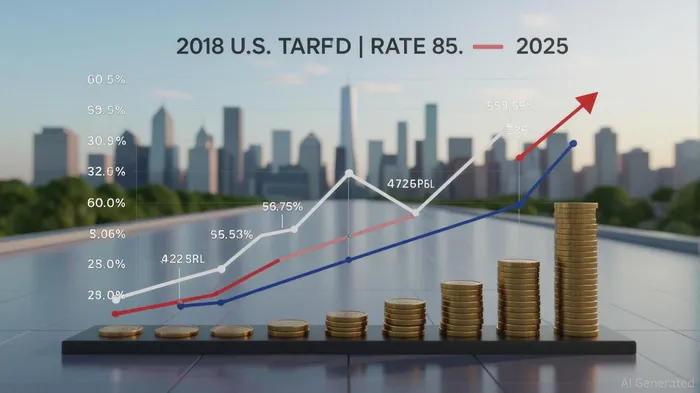
The U.S. tariff landscape has evolved into a structural inflationary force, with delayed effects now materializing across consumer sectors. By 2025, the average applied tariff rate on imports had surged to 19.5%, the highest since 1933, embedding persistent cost pressures into supply chains [1]. These tariffs, initially introduced to bolster domestic manufacturing, have instead created a ripple effect: automakers like FordF-- and General MotorsGM-- absorbed $1.1–$5 billion in annualized costs from 25% tariffs on vehicles and parts, with some expenses passed to consumers [3]. Similarly, the apparel sector saw prices spike by 37% in the short term, disproportionately impacting low-income households [4].
The delayed inflationary impact is not uniform. Sectors with strong pricing power, such as TeslaTSLA-- and RivianRIVN-- in automotive, have mitigated costs by raising prices, while others, like electronics, face partial relief from nearshoring efforts [3]. However, reshoring itself introduces new challenges: higher labor and logistics costs in domestic production have localized inflationary pressures, compounding the original tariff-driven surge [3].
For investors, the implications are clear. Asset allocation strategies must now account for sector-specific vulnerabilities. Defensive sectors like healthcare and consumer staples are gaining traction as inflation hedges, while gold and Treasury Inflation-Protected Securities (TIPS) are outperforming amid trade tensions [2]. Conversely, overhyped sectors such as consumer electronics and apparel face direct exposure to tariff-driven price volatility [2].
The Federal Reserve’s cautious approach to rate cuts—projecting 50 basis points of easing by year-end 2025—adds complexity. While core PCE inflation remains at 2.9%, the Dallas Fed warns that inflationary pressures typically peak 12 months after tariff implementation, suggesting a 3.2% core inflation rate by late 2025 [3]. This delayed lag means investors must prioritize long-duration assets like technology equities and renewable energy, which benefit from anticipated easing cycles [1].
Emerging markets and small-cap equities also present opportunities, albeit with heightened volatility. J.P. Morgan advises broadening equity exposure to capture cross-cycle gains, while Deutsche BankDB-- cautions that investors are underestimating the inflationary risks of tariffs, particularly as the effective average tariff rate nears 15% [2].
In fixed income, high-quality government bonds are emerging as safer havens, whereas long-duration and high-yield debt face risks from policy-driven uncertainties [1]. The yield curve’s steepening and potential Fed rate cuts have further tilted allocations toward duration-sensitive assets [3].
As the 2025–2026 period unfolds, the interplay between tariffs, inflation, and monetary policy will remain pivotal. Investors must adopt agile, diversified strategies to navigate this landscape, balancing sector-specific risks with inflation-hedging opportunities. The delayed but inevitable inflationary surge underscores the need for proactive asset allocation in an era of prolonged trade policy uncertainty.
**Source:[1] Trump Tariffs: The Economic Impact of the Trump Trade War [https://taxfoundation.org/research/all/federal/trump-tariffs-trade-war/][2] Navigating the Tariff-Driven Inflation Dilemma: Strategic Asset Allocation [https://www.ainvest.com/news/navigating-tariff-driven-inflation-dilemma-strategic-asset-allocation-policy-driven-environment-2508/][3] The Delayed Inflationary Impact of Trump Tariffs [https://www.ainvest.com/news/delayed-inflationary-impact-trump-tariffs-navigating-supply-chain-resilience-market-opportunities-2508/][4] State of U.S. Tariffs: August 7, 2025 | The Budget Lab at Yale [https://budgetlab.yale.edu/research/state-us-tariffs-august-7-2025]







Comentarios
Aún no hay comentarios