
Tariffs and Inflation: Rethinking Trump's Trade Policy as a Deflationary Tailwind
The economic landscape of 2025 has been reshaped by a paradox: while tariffs imposed under Trump's trade policies initially spiked inflation in goods sectors, their long-term effects-and the Federal Reserve's adaptive monetary policy-have created unexpected deflationary tailwinds in specific industries. For investors, this duality demands a nuanced approach, balancing the inflationary headwinds in durable goods with the cooling pressures in sectors where economic uncertainty and structural shifts are dampening price growth.
The Dual Impact of Tariffs: Inflationary Pressures vs. Deflationary Gains
The St. Louis Fed's analysis underscores that tariffs raised the average price level by 0.87% in 2025, with core goods inflation surging 1.9% above pre-2025 trends, particularly in electronics and appliances according to their analysis. However, the San Francisco Federal Reserve Bank's research reveals a counterintuitive dynamic: a 1% increase in tariffs historically correlates with a 0.6% decline in inflation, driven by reduced consumer and investor confidence and weaker demand as research indicates. This duality highlights the importance of sector-specific analysis.
For instance, manufacturing and agriculture face acute inflationary pressures. Tariffs on steel, aluminum, and automotive parts have raised input costs by 10-15% for U.S. producers, while retaliatory measures have slashed agricultural exports to Mexico and China by 12%. Yet, in AI-driven industries, competitive pressures and corporate cost-cutting have offset some tariff-related costs, moderating inflationary impacts. Similarly, sectors with strong domestic production, such as biopharma, remain insulated from tariff shocks.
Fed Policy: A Balancing Act
The Federal Reserve's response to these dynamics has been pivotal. By December 2025, the Fed had signaled a 25-basis-point rate cut, with two more cuts expected in 2026, partly due to lower energy prices and reassessed tariff impacts. This dovish pivot reflects a recognition that while tariffs have raised core goods inflation, their deflationary effects on services and consumer confidence have softened overall price pressures.
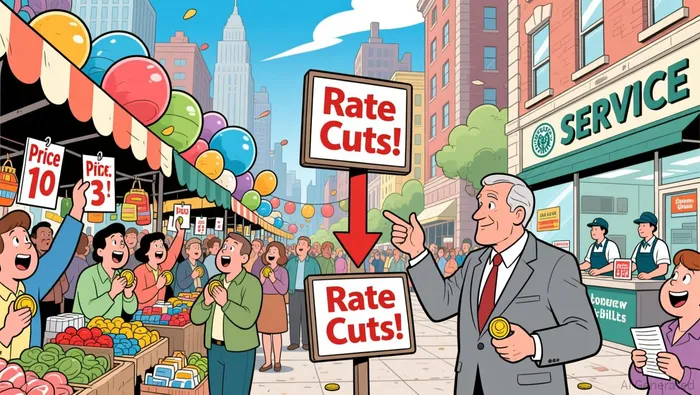 Historical analysis further supports this nuance: large tariff shocks in 2025 raised unemployment but lowered inflation, prompting the Fed to consider loosening policy to support employment . By 2026, this balancing act has created a mixed environment, where goods inflation remains elevated but services inflation stabilizes, offering investors asymmetric opportunities.
Strategic Sectors for Deflationary Gains
Artificial Intelligence and Productivity-Driven Industries AI's role as a deflationary force is gaining traction. As PIMCO notes, AI-driven productivity improvements have offset tariff-induced costs in sectors like manufacturing and logistics. Firms leveraging automation and machine learning to streamline operations are better positioned to absorb input cost increases, making them attractive long-term investments.
Biopharma and Domestic Manufacturing Large-cap biopharma firms, with their focus on U.S.-based production, avoid the tariff volatility affecting global supply chains. This sector's resilience, combined with aging demographics and healthcare demand, positions it as a deflationary beneficiary.
Cybersecurity and National Security Tech Cybersecurity, a rising priority in the post-tariff era, offers durable growth. As supply chains fragment and geopolitical tensions persist, demand for secure, domestically produced tech infrastructure is surging.
Energy and Infrastructure The push for energy independence and infrastructure modernization-accelerated by Trump's trade policies-has created tailwinds for firms in renewable energy and grid modernization. These sectors benefit from both tariff-driven domestic production incentives and Fed rate cuts that lower borrowing costs.
Navigating the Risks
While deflationary opportunities abound, investors must remain cautious. Sectors like agriculture and durable goods manufacturing remain exposed to inflationary shocks, with Deloitte forecasting core PCE inflation to stay above 2% until 2028 . Additionally, the Fed's rate-cutting trajectory is contingent on employment data and global trade tensions, introducing volatility.
Conclusion: Positioning for a Dual Economy
Trump's 2025 tariffs have created a bifurcated economic environment: inflationary pressures in goods sectors coexist with deflationary trends in AI-driven and domestically focused industries. For investors, the key lies in strategic positioning-favoring sectors where productivity gains and policy tailwinds outweigh tariff-driven costs. As the Fed continues to adapt its policy stance, a balanced portfolio emphasizing innovation, domestic resilience, and sector-specific diversification will be critical to navigating this complex landscape.







Comentarios
Aún no hay comentarios