
"Tariffs: A Double-Edged Sword for U.S. Consumers and Economy"
Generado por agente de IAWesley Park
sábado, 1 de febrero de 2025, 8:20 pm ET2 min de lectura
DOUG--
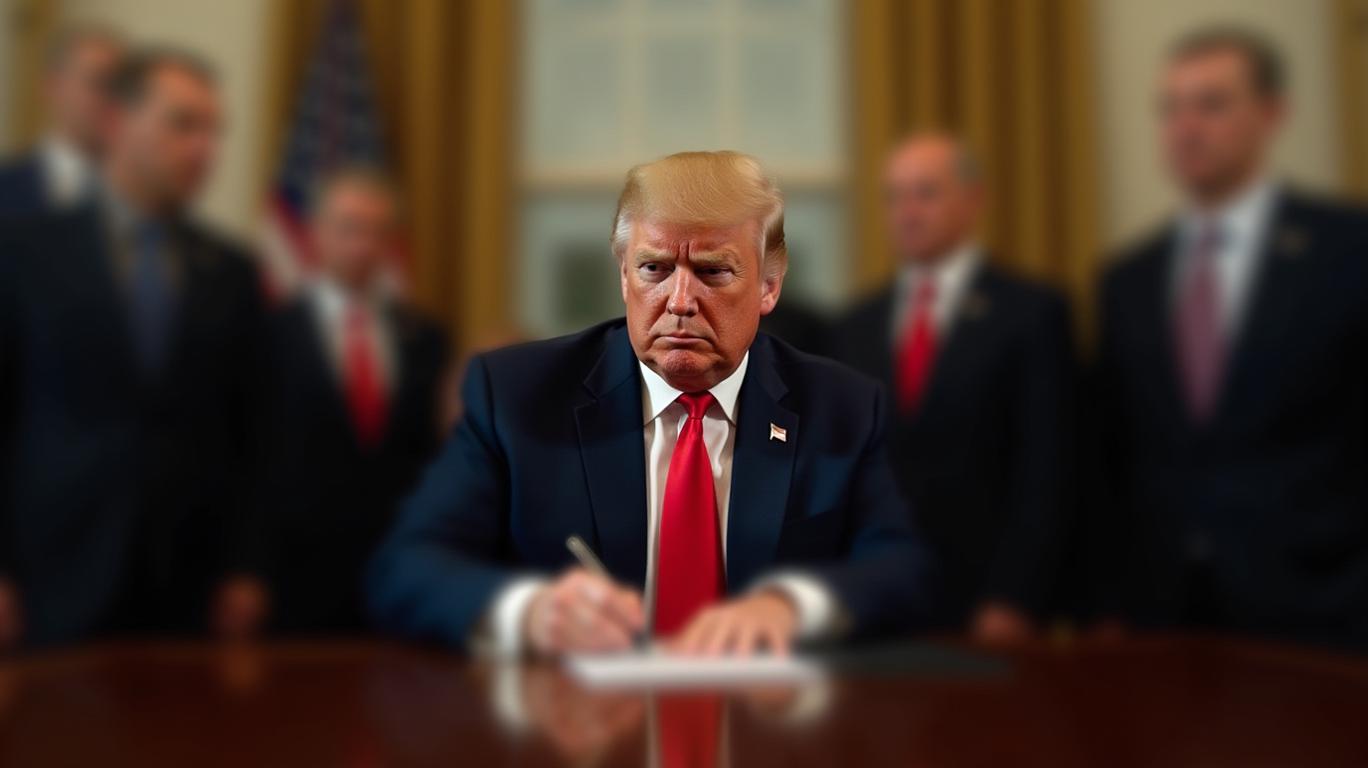
As U.S. President Donald Trump imposes 25% tariffs on imports from Mexico and Canada, and 10% on Chinese goods, industry and corporate leaders are reacting with concern and caution. The tariffs, which Trump claims are necessary to address the flow of undocumented immigrants and fentanyl into the U.S., have sparked fears of a trade war and potential retaliation from the targeted countries.
Ontario Premier Doug Ford has vowed to "hit back and hit back hard," suggesting that Canada will impose retaliatory tariffs on U.S. goods. The Canadian Chamber of Commerce has warned that President Trump's tariffs will have immediate and direct consequences on Canadian and American livelihoods, with tariffs drastically increasing the cost of everything for everyone. Mexico's President Andrés Manuel López Obrador has stated that Mexico will retaliate against the U.S. tariffs, but he has not specified the exact measures. China has not explicitly stated its retaliatory measures, but it could target U.S. exports such as agricultural products, aircraft, and technology.
The tariffs are expected to increase the cost of goods for American consumers in both the short and long term. In the short term, food prices, particularly for fresh produce imported from Mexico, will likely rise. Gas prices will also increase due to the 10% tariff on Canadian oil imports. Car prices will likely rise as well, given the highly integrated North American auto industry. In the long term, supply chain disruptions, inflation, and potential retaliation from Canada and Mexico could further increase the cost of goods for American consumers.
The tariffs could also have significant impacts on the U.S. trade deficit with these countries and the broader U.S. economy and job market. The U.S. trade deficit with Canada and Mexico has been widening despite the USMCA agreement, and the tariffs could further increase the trade deficit in the short term. However, in the long term, the tariffs could encourage domestic production and reduce imports, potentially narrowing the trade deficit. The tariffs could lead to higher prices for goods, contributing to inflation, and disrupt the highly integrated North American supply chain, leading to higher prices and potential shortages of goods. The net effect on the job market is uncertain and depends on various factors, including the duration and scope of the tariffs.
In conclusion, the tariffs imposed by President Trump on Canada, Mexico, and China are expected to have significant impacts on the U.S. trade deficit with these countries and the broader U.S. economy and job market. The long-term effects are uncertain and depend on various factors, including the duration and scope of the tariffs. It is crucial for the U.S. government to carefully consider the potential consequences and work with its trading partners to find a solution that minimizes the negative impacts on the U.S. and global economy.
PINC--
As U.S. President Donald Trump imposes 25% tariffs on imports from Mexico and Canada, and 10% on Chinese goods, industry and corporate leaders are reacting with concern and caution. The tariffs, which Trump claims are necessary to address the flow of undocumented immigrants and fentanyl into the U.S., have sparked fears of a trade war and potential retaliation from the targeted countries.
Ontario Premier Doug Ford has vowed to "hit back and hit back hard," suggesting that Canada will impose retaliatory tariffs on U.S. goods. The Canadian Chamber of Commerce has warned that President Trump's tariffs will have immediate and direct consequences on Canadian and American livelihoods, with tariffs drastically increasing the cost of everything for everyone. Mexico's President Andrés Manuel López Obrador has stated that Mexico will retaliate against the U.S. tariffs, but he has not specified the exact measures. China has not explicitly stated its retaliatory measures, but it could target U.S. exports such as agricultural products, aircraft, and technology.
The tariffs are expected to increase the cost of goods for American consumers in both the short and long term. In the short term, food prices, particularly for fresh produce imported from Mexico, will likely rise. Gas prices will also increase due to the 10% tariff on Canadian oil imports. Car prices will likely rise as well, given the highly integrated North American auto industry. In the long term, supply chain disruptions, inflation, and potential retaliation from Canada and Mexico could further increase the cost of goods for American consumers.
The tariffs could also have significant impacts on the U.S. trade deficit with these countries and the broader U.S. economy and job market. The U.S. trade deficit with Canada and Mexico has been widening despite the USMCA agreement, and the tariffs could further increase the trade deficit in the short term. However, in the long term, the tariffs could encourage domestic production and reduce imports, potentially narrowing the trade deficit. The tariffs could lead to higher prices for goods, contributing to inflation, and disrupt the highly integrated North American supply chain, leading to higher prices and potential shortages of goods. The net effect on the job market is uncertain and depends on various factors, including the duration and scope of the tariffs.
In conclusion, the tariffs imposed by President Trump on Canada, Mexico, and China are expected to have significant impacts on the U.S. trade deficit with these countries and the broader U.S. economy and job market. The long-term effects are uncertain and depend on various factors, including the duration and scope of the tariffs. It is crucial for the U.S. government to carefully consider the potential consequences and work with its trading partners to find a solution that minimizes the negative impacts on the U.S. and global economy.

Divulgación editorial y transparencia de la IA: Ainvest News utiliza tecnología avanzada de Modelos de Lenguaje Largo (LLM) para sintetizar y analizar datos de mercado en tiempo real. Para garantizar los más altos estándares de integridad, cada artículo se somete a un riguroso proceso de verificación con participación humana.
Mientras la IA asiste en el procesamiento de datos y la redacción inicial, un miembro editorial profesional de Ainvest revisa, verifica y aprueba de forma independiente todo el contenido para garantizar su precisión y cumplimiento con los estándares editoriales de Ainvest Fintech Inc. Esta supervisión humana está diseñada para mitigar las alucinaciones de la IA y garantizar el contexto financiero.
Advertencia sobre inversiones: Este contenido se proporciona únicamente con fines informativos y no constituye asesoramiento profesional de inversión, legal o financiero. Los mercados conllevan riesgos inherentes. Se recomienda a los usuarios que realicen una investigación independiente o consulten a un asesor financiero certificado antes de tomar cualquier decisión. Ainvest Fintech Inc. se exime de toda responsabilidad por las acciones tomadas con base en esta información. ¿Encontró un error? Reportar un problema




Comentarios
Aún no hay comentarios