
U.S. Tariffs on Copper and Pharmaceuticals: Navigating Sector Shifts and Portfolio Risks
The U.S. administration's July 2025 announcement of a 50% tariff on copper imports and threats of a 200% tariff on pharmaceuticals have created a seismic shift in market dynamics. For investors, this marks a critical juncture to reassess sector allocations, particularly in commodities and healthcare. While copper-related assets surge, pharmaceutical stocks face existential headwinds. This analysis explores the tactical opportunities and risks, urging a strategic reallocation ahead of the August 1 tariff deadline.
Copper: A Commodity Boom Ignites
The immediate impact of the copper tariff is undeniable. Futures contracts for September delivery spiked 10.5% to $5.8955 per pound, while Freeport-McMoRanFCX-- (FCX), a major U.S. producer, saw shares rise 5% in a single session. This tariff, framed as a national security measure under Section 232, directly benefits domestic miners and infrastructure projects reliant on local supply.
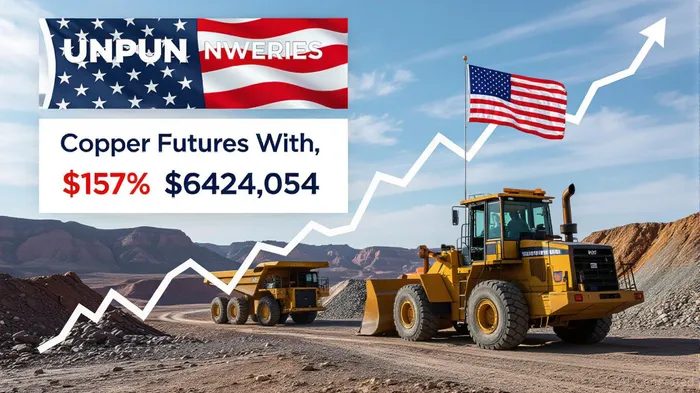
Investment Play: Investors should capitalize on this trend via copper ETFs like CPER (Global X Copper Miners ETF), which tracks miners and equipment suppliers. The tariff's immediate implementation and lack of exemptions for major producers like Chile and China suggest sustained price momentum.
Pharmaceuticals: The 200% Tariff Threat Looms
While copper soars, pharmaceuticals face an uncertain horizon. A 200% tariff on imports, delayed by 12–18 months, could disrupt a $212 billion industry. Companies like PfizerPFE-- (PFE) and MerckMRK-- (MRK) rely heavily on foreign inputs, and sudden reshoring demands may strain margins. The delay provides a reprieve but not immunity—stocks in the sector have already dipped on rumors, with the SPDR S&P Pharmaceuticals ETF (XPH) down 3% since the July announcement.
Risk Exposure: The tariff's delayed trigger creates a “wait-and-see” trap. Investors must prepare for volatility when the grace period ends (likely mid-2026). Shorting overvalued pharma stocks or hedging with inverse ETFs like PHAR.S (ProShares Short Pharmaceutical ETF) could mitigate losses.
Macro Risks: Inflation and Fed Policy
The copper tariff's immediate impact on prices adds fuel to inflationary pressures. With the Federal Reserve already hiking rates to combat price spikes, further tightening could dampen broader market sentiment. Commodity-heavy sectors may outperform in this environment, while rate-sensitive sectors like tech and consumer discretionary face headwinds.
Valuation Gaps: Copper-linked assets trade at historically low valuations relative to their growth trajectory, while pharmaceutical stocks face P/E contractions if tariffs materialize. The valuation spread between CPER (P/E ~12) and XPHXPH-- (P/E ~20) suggests a clear divergence in risk-reward profiles.
Portfolio Strategy: Sector Rotation and Hedging
- Long Commodities, Short Pharmaceuticals:
- Buy CPER or FCX to capture copper's upside.
Short XPH or use inverse ETFs to hedge pharma risks.
Hedge Against Inflation:
Add TIPS (Treasury Inflation-Protected Securities) or GLD (gold ETF) to mitigate broader market volatility.
Monitor the August 1 Deadline:
- Tariffs on other sectors (e.g., semiconductors) may expand post-August 1, pressuring global supply chains.
Conclusion: Act Before the Tariff Wave Crashes
The U.S. tariffs are not mere trade measures—they're a structural shift in global economics. Copper's immediate gains and pharma's looming risks demand decisive action. Investors should pivot toward commodity plays while hedging exposure to tariff-sensitive equities. With August 1 fast approaching, portfolios must be reallocated now to navigate the coming turbulence.
Final Note: Stay vigilant. The tariff landscape is fluid—legal challenges or diplomatic negotiations could alter timelines. Monitor developments closely, but do not delay positioning for this new economic reality.





Comentarios
Aún no hay comentarios