
Tariffs on the Brink: China’s Emergency Moves and What Investors Need to Know Now
The trade war between China and the U.S. just took a dangerous turn—and investors are left holding the bag. China’s emergency tariff exemptions, retaliatory measures, and domestic stimulus plans are reshaping global markets. Let’s break down what’s happening, why it matters, and where to position your portfolio now.
The Tariff Tightrope: China’s Calculated Moves
China isn’t backing down from the trade war, but it’s also not letting U.S. tariffs cripple its economy. The Politburo’s 2025 strategy combines defiance with pragmatism: exempting critical U.S. imports like semiconductors, medical equipment, and industrial chemicals while doubling down on domestic stimulus. This isn’t just about tariffs—it’s about safeguarding supply chains and keeping industries like tech and healthcare from collapsing.
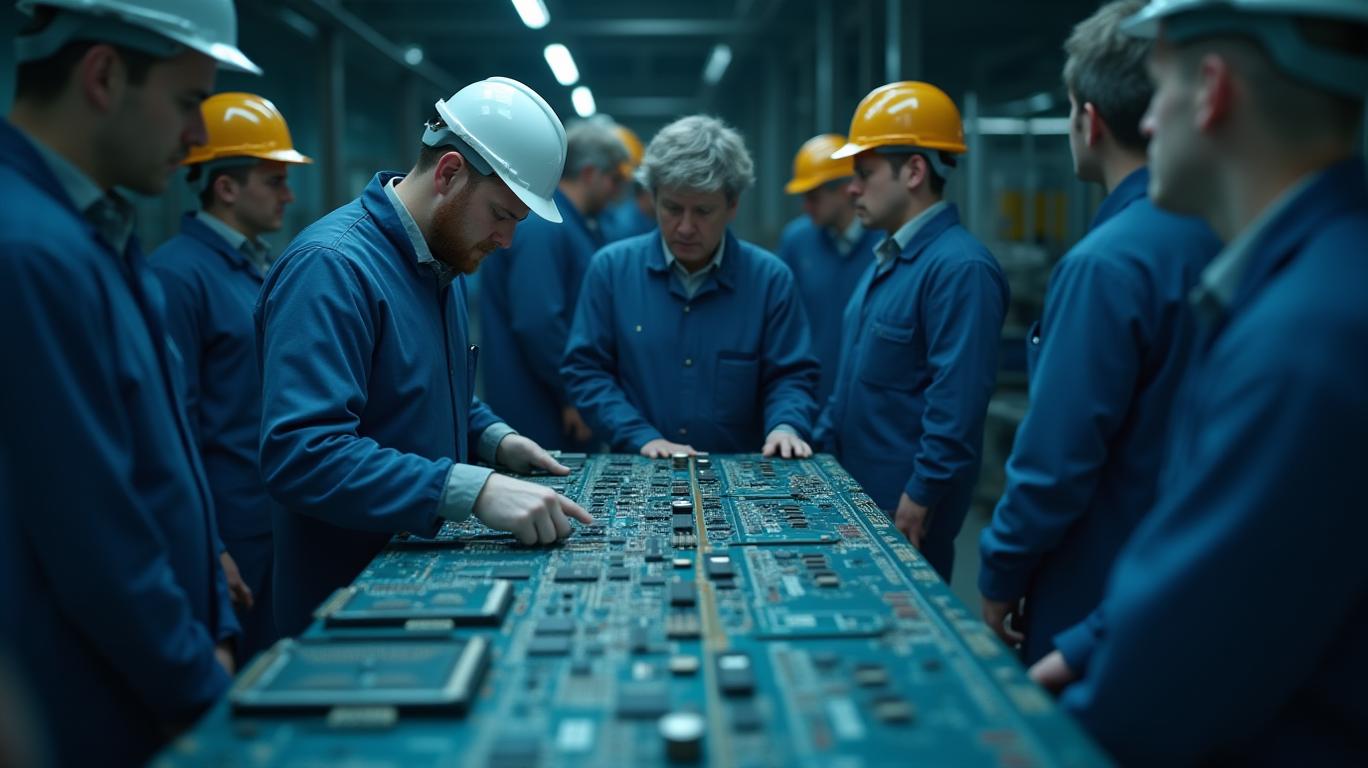
The exemption of eight U.S. semiconductor products from China’s 125% tariffs is a game-changer. Why? Because semiconductors are the lifeblood of everything from smartphones to electric cars. If China can’t source these components, its tech giants—like Huawei or Xiaomi—get kneecapped. The U.S. suppliers (think Applied Materials (AMAT) or Texas Instruments (TXN)) suddenly become critical suppliers again.
The U.S. Paying the Price
While China plays defense, the U.S. is paying a steep toll. The Tax Foundation’s analysis shows U.S. GDP will drop 0.8% from tariffs alone, with another 0.2% lost due to retaliation. That’s a 1% hit to growth—the equivalent of a recession’s starting gun. And let’s not forget the average American family: tariffs now cost them an extra $1,243 annually, disproportionately squeezing low-income households.
But the real pain is in trade volumes. U.S. imports could plummet by $800 billion (23%) by 2025. That’s a massive drop—far worse than the 2008 crisis. The losers? Companies like Caterpillar (CAT) or Boeing (BA), whose exports to China are now taxed at 145%. The winners? Firms that supply China’s exempted sectors or cater to its domestic stimulus programs.
The Hidden Opportunity: China’s Stimulus Playbook
China isn’t just fighting tariffs—it’s rebuilding its economy. The Politburo’s focus on urban renewal, unemployment insurance, and service-sector growth is a direct shot at boosting consumption. This isn’t just about saving face; it’s about ensuring the middle class stays intact.
Look at the numbers: China’s 2025 fiscal measures could pump $166.6 billion into its economy through tariff revenue alone (despite the GDP drag). That’s real money to fund infrastructure, healthcare, and tech innovation. Investors should ask: Which companies will profit from this spending?
- Semiconductor suppliers (as mentioned) get a direct lifeline.
- Medical equipment makers (like General Electric (GE) or Medtronic (MDT)) could see orders surge as China upgrades healthcare infrastructure.
- Construction and real estate firms tied to urban renewal projects (think Beijing Enterprises Holdings (0392.HK)) could thrive.
The Geopolitical Minefield
Don’t be fooled by the “exemption talks.” Behind the scenes, tensions are boiling over. The U.S. claims “meetings are ongoing,” but China’s foreign ministry flatly denies active negotiations. This isn’t diplomacy—it’s a standoff.
Meanwhile, markets are schizophrenic. Asian-Pacific stocks spiked after exemption rumors, but that’s short-term euphoria. The reality? A mutual embargo with no clear end. Canada and the EU are slapping their own tariffs, costing U.S. exporters $330 billion in 2025. This isn’t a trade war—it’s an economic World War.
The Bottom Line: Play Defense, Then Attack
Here’s what investors must do:
- Avoid companies reliant on U.S.-China trade. Auto manufacturers, steel producers, and energy exporters are sitting ducks.
- Buy into China’s exemptions. Semiconductor and medical suppliers with exposure to Beijing’s stimulus plans are golden.
- Watch the stimulus sectors. Urban renewal and service-sector growth mean opportunities in real estate, construction, and tech infrastructure.
The data is clear: protectionism is a lose-lose game. But smart investors can profit by spotting the cracks in the tariff armor. China’s emergency plans aren’t just about tariffs—they’re about survival. And survival, in investing, is often the first step to victory.
Final Call to Action
The trade war won’t end anytime soon. Investors who ignore this reality risk being crushed. Focus on resilience:
- Exempt sectors (semiconductors, medical tech).
- Domestic stimulus plays (urban renewal, low-income support).
- Diversification—don’t bet the farm on either side of the conflict.
The numbers don’t lie. In 2025, it’s not about picking winners—it’s about avoiding losers. Stay aggressive, stay focused, and don’t get caught in the crossfire.
Conclusion: The U.S.-China trade war is now a full-blown economic war, with both sides bleeding. China’s exemptions and stimulus measures offer fleeting opportunities, while U.S. companies face existential threats. Investors must pivot to sectors shielded by exemptions or fueled by domestic spending. The Tax Foundation’s 1% GDP hit and the $1,243 household burden are stark reminders: this isn’t a game. Play it smart, or lose it all.







Comentarios
Aún no hay comentarios