
Tariff Uncertainty Looms Over Nvidia's Stock Amidst Strong AI Chip Demand
Generado por agente de IATheodore Quinn
jueves, 27 de febrero de 2025, 3:14 pm ET2 min de lectura
INTC--
Nvidia Corporation (NVDA), a leading semiconductor company, has been riding a wave of success driven by the high demand for artificial intelligence (AI) chips. However, the ongoing tariff uncertainty, spearheaded by former President Donald Trump, continues to cast a shadow over the company's stock performance. As Nvidia's shares drop by more than 10%, investors are left to ponder the potential implications for the semiconductor sector and the global economy at large.
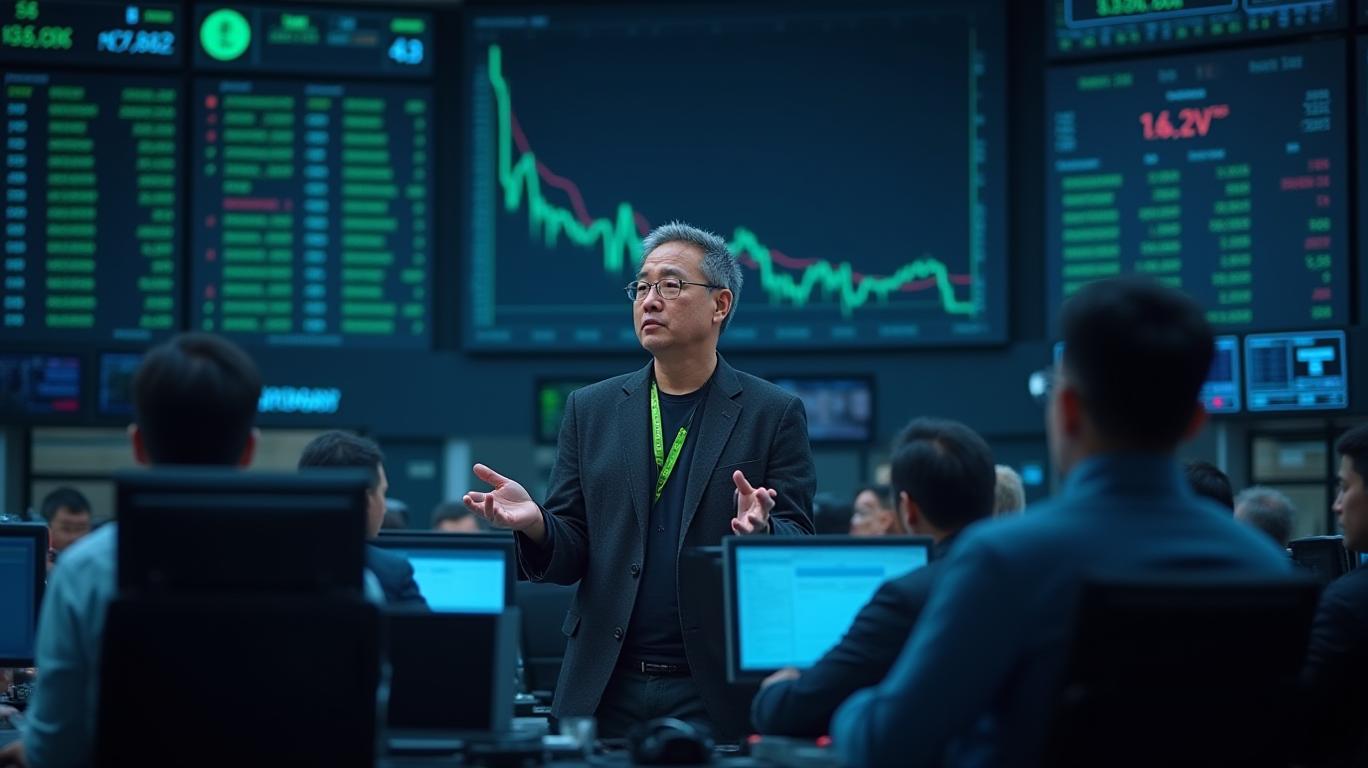
The semiconductor industry, which includes giants like NvidiaNVDA--, IntelINTC--, and AMD, is highly sensitive to changes in international trade policies. As one of the most vital components of modern technology, semiconductors are integral to everything from smartphones and laptops to self-driving cars and artificial intelligence systems. Given their critical role in powering the global digital economy, any disruption in the supply of semiconductors can have far-reaching consequences.
Nvidia, like many other tech companies, relies on a complex global supply chain to manufacture its chips, with much of its production taking place in China. The imposition of tariffs on Chinese-made components could lead to higher manufacturing costs, which may, in turn, affect Nvidia's bottom line. Furthermore, if the U.S. government pursues trade restrictions, Nvidia could face difficulty accessing the vast Chinese market, which represents a significant portion of its revenue. These developments have left many investors questioning the future trajectory of Nvidia and the broader semiconductor industry.
Despite the tariff uncertainty, Nvidia's earnings and revenue projections reflect a strong demand for AI chips. The company is expected to report strong earnings and revenue for Q4 2024, with projected revenue of $38.1 billion. This is driven by high demand for GPUs in data centers and AI applications. The data center segment is anticipated to show significant growth, with revenues climbing from $22.2 billion last year to an estimated $34 billion this quarter. This growth is a clear indicator of the high demand for AI chips in data centers.
Nvidia CEO Jensen Huang does not see the DeepSeek incident as a threat. He believes that using high-powered chips to run models like DeepSeek's actually gives better results, encouraging companies to invest more in top-tier processors. A report by Reuters stated that Chinese companies are increasing their orders for Nvidia's H20 AI chip due to growing demand for DeepSeek's low-cost AI models. This suggests that the DeepSeek incident has not dampened demand for Nvidia's high-end processors.
In conclusion, while tariff uncertainty continues to hang over Nvidia's stock, the strong demand for AI chips remains a driving force behind the company's robust financial performance. As Nvidia navigates the challenges posed by tariffs and trade restrictions, investors should remain cautious but optimistic about the company's long-term growth prospects. The semiconductor sector's vulnerability to trade policies and the broader implications for the tech industry highlight the importance of diversifying supply chains and fostering innovation in the face of geopolitical risks.
NVDA--
Nvidia Corporation (NVDA), a leading semiconductor company, has been riding a wave of success driven by the high demand for artificial intelligence (AI) chips. However, the ongoing tariff uncertainty, spearheaded by former President Donald Trump, continues to cast a shadow over the company's stock performance. As Nvidia's shares drop by more than 10%, investors are left to ponder the potential implications for the semiconductor sector and the global economy at large.
The semiconductor industry, which includes giants like NvidiaNVDA--, IntelINTC--, and AMD, is highly sensitive to changes in international trade policies. As one of the most vital components of modern technology, semiconductors are integral to everything from smartphones and laptops to self-driving cars and artificial intelligence systems. Given their critical role in powering the global digital economy, any disruption in the supply of semiconductors can have far-reaching consequences.
Nvidia, like many other tech companies, relies on a complex global supply chain to manufacture its chips, with much of its production taking place in China. The imposition of tariffs on Chinese-made components could lead to higher manufacturing costs, which may, in turn, affect Nvidia's bottom line. Furthermore, if the U.S. government pursues trade restrictions, Nvidia could face difficulty accessing the vast Chinese market, which represents a significant portion of its revenue. These developments have left many investors questioning the future trajectory of Nvidia and the broader semiconductor industry.
Despite the tariff uncertainty, Nvidia's earnings and revenue projections reflect a strong demand for AI chips. The company is expected to report strong earnings and revenue for Q4 2024, with projected revenue of $38.1 billion. This is driven by high demand for GPUs in data centers and AI applications. The data center segment is anticipated to show significant growth, with revenues climbing from $22.2 billion last year to an estimated $34 billion this quarter. This growth is a clear indicator of the high demand for AI chips in data centers.
Nvidia CEO Jensen Huang does not see the DeepSeek incident as a threat. He believes that using high-powered chips to run models like DeepSeek's actually gives better results, encouraging companies to invest more in top-tier processors. A report by Reuters stated that Chinese companies are increasing their orders for Nvidia's H20 AI chip due to growing demand for DeepSeek's low-cost AI models. This suggests that the DeepSeek incident has not dampened demand for Nvidia's high-end processors.
In conclusion, while tariff uncertainty continues to hang over Nvidia's stock, the strong demand for AI chips remains a driving force behind the company's robust financial performance. As Nvidia navigates the challenges posed by tariffs and trade restrictions, investors should remain cautious but optimistic about the company's long-term growth prospects. The semiconductor sector's vulnerability to trade policies and the broader implications for the tech industry highlight the importance of diversifying supply chains and fostering innovation in the face of geopolitical risks.

Divulgación editorial y transparencia de la IA: Ainvest News utiliza tecnología avanzada de Modelos de Lenguaje Largo (LLM) para sintetizar y analizar datos de mercado en tiempo real. Para garantizar los más altos estándares de integridad, cada artículo se somete a un riguroso proceso de verificación con participación humana.
Mientras la IA asiste en el procesamiento de datos y la redacción inicial, un miembro editorial profesional de Ainvest revisa, verifica y aprueba de forma independiente todo el contenido para garantizar su precisión y cumplimiento con los estándares editoriales de Ainvest Fintech Inc. Esta supervisión humana está diseñada para mitigar las alucinaciones de la IA y garantizar el contexto financiero.
Advertencia sobre inversiones: Este contenido se proporciona únicamente con fines informativos y no constituye asesoramiento profesional de inversión, legal o financiero. Los mercados conllevan riesgos inherentes. Se recomienda a los usuarios que realicen una investigación independiente o consulten a un asesor financiero certificado antes de tomar cualquier decisión. Ainvest Fintech Inc. se exime de toda responsabilidad por las acciones tomadas con base en esta información. ¿Encontró un error? Reportar un problema


SOBRE NOSOTROS
Nuestra historiaAutores de noticiasBase de conocimientosPolítica de privacidadTérmino de usoDescargo de responsabilidad de corretaje de tercerosTérminos de uso de AIMEDivulgaciones de riesgos de AInvest AICarrerasCONTÁCTENOS
Email: support@ainvest.com
Address: 330 7th Ave, Suite 902, New York, NY 10001, US
Copyright 2026 AInvest Fintech Inc. All rights reserved.


Comentarios
Aún no hay comentarios