
Tariff Uncertainty Forces CEOs to Lower Profit Forecasts
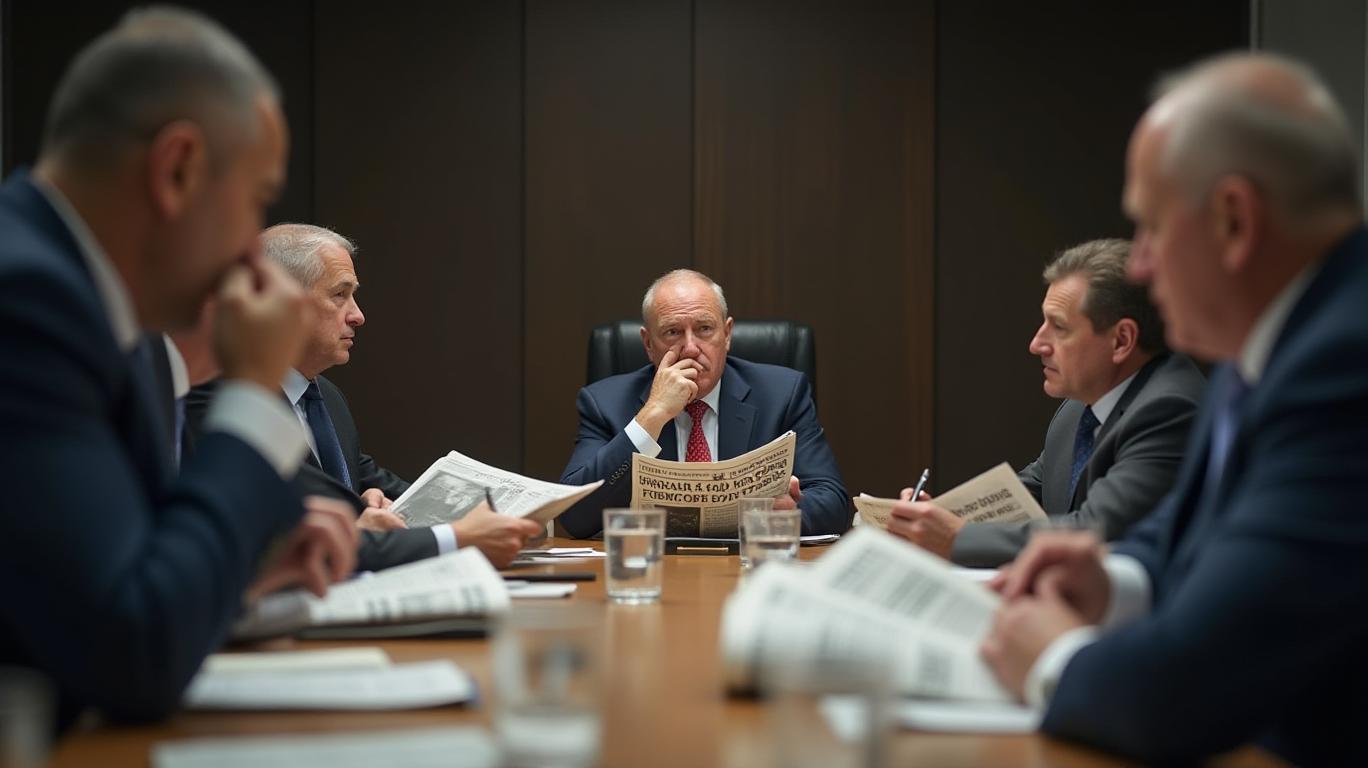
During the current earnings season, American CEOs have expressed widespread concern over the unpredictable nature of tariff policies, which are causing significant disruptions to corporate planning and profit forecasts. This uncertainty is not only affecting business operations but also eroding consumer confidence, leading to potential price increases for high-priced goods such as cars and mobile phones. The tourism industry, being particularly sensitive to economic changes, has already begun to feel the impact.
Robert Isom, CEO of American AirlinesAAL--, highlighted the challenges posed by the unpredictable tariff policies, stating that it has become "almost impossible" for companies to formulate future strategies and provide performance guidance. The uncertainty has led to cautious operations, with companies hesitant to hire new employees or introduce new planes, resulting in a reduction in overall economic activity. Consumers, too, are hesitant when planning for large expenses such as vacations, as no one likes uncertainty when spending hard-earned money.
Based on this unpredictable economic environment, several airlines, including American Airlines, Southwest AirlinesLUV--, and Alaska Air GroupALK--, have reported a decline in leisure travel demand and have lowered their full-year performance outlook. United AirlinesUAL-- even issued two versions of performance forecasts, corresponding to scenarios of economic stability and economic recession. David Solomon, CEO of Goldman Sachs, warned that the current level of uncertainty is "too high" and is having a real impact on investment, spending, and planning, which will affect growth and the economy. This sentiment contrasts with the widespread optimism in the industry at the beginning of the Trump administration, with Richard Branson, founder of the Virgin Group, warning that unpredictable trade policies could cause "lasting damage" to the economy.
The shadow of tariffs is directly cast on consumers, affecting their confidence and purchasing decisions. Richard Fairbank, CEO of Capital One Financial, observed a dual phenomenon: on one hand, consumers seem to have increased their purchases of large items such as electronics and cars in anticipation of price increases, temporarily boosting retail spending; on the other hand, the proportion of people paying only the minimum amount on their credit card bills has exceeded pre-pandemic levels, suggesting that potential financial pressure is building.
Several companies have explicitly warned that rising costs may ultimately be passed on to consumers. Procter & Gamble, a consumer goods giant, has publicly stated that it is "considering" raising the prices of some of its products. The automotive industry is even more urgent, with an industry organization representing major manufacturers such as General Motors, Volkswagen, and Toyota writing to President Trump, urging him to reconsider the plan to impose a 25% tariff on imported automotive parts, warning that this would make the cost of buying and maintaining cars and trucks even higher.
In the technology and communications sector, Verizon's CEO Hans Vestberg said that if high tariffs are imposed on mobile phones, consumers will have to pay more for smartphones because "it is impossible for the company to fully absorb the cost." AT&T's CEO John Stankey also believes that although mobile phones are the last thing consumers will give up, "unfortunately, we will have to come up with some new ways for customers to digest this cost increase." In recent years, both companies have raised the prices of some wireless and broadband packages. Recently, Verizon also launched a three-year price lock guarantee for some service plans to reassure customers.
The real estate market is also not immune. Large residential builder PulteGroup estimates that tariffs will increase the cost of a new $500,000 home by about $5,000 (or 1%), as a variety of building materials from tile floors to water heaters and circuit breakers are affected. The company's vice president, James Zeumer, emphasized that this will "affect every price point and consumer group we serve."
In response to the unpredictable tariff policies, American companies are using all their resources to cope with the challenges. Most CEOs have expressed concern and frustration with the current situation, hoping that the uncertainty of the policy will end as soon as possible. Tesla CEO Elon Musk, after the company released disappointing quarterly results, sighed deeply when discussing tariff issues. He said he had been advocating for lower tariffs to President Trump and would continue to do so, but ultimately "the decision is entirely up to the U.S. President."
In addition to executive statements and industry lobbying, companies are actively seeking internal solutions to mitigate the impact. Flexibly adjusting the global supply chain is a common strategy for large multinational companies. William Brown, CEO of 3M, which has thousands of products and 110 factories worldwide, emphasized the importance of maintaining relations with the China market. He said 3M could use its global network to adjust the flow of goods, for example, by changing the products originally shipped from the U.S. to China to be shipped from Europe, while also exploring the use of free trade zones, adjusting pricing strategies, and optimizing global logistics to "mitigate some of the impact and maintain our good business in China."
Increasing investment in the U.S. does not seem to be a foolproof "shield." RTX, a giant in aerospace and defense, is investing nearly $350 million to expand its factories in Arizona and North Carolina, but the company expects that even after taking cost-cutting, price increases, and applying for tariff exemptions, it may still face up to $850 million in potential tariff impacts this year. The company's chief financial officer, Neil Mitchill, expressed his frustration and confusion: "Will these tax rates remain as announced? How long will they last? Can we find other ways to further mitigate them? Will they be revoked and have other impacts? I don't know."
Meanwhile, there are clear voices supporting the tariff policy. Mark Millett, CEO of Steel Dynamics, believes that the tariffs on imported steel and aluminum are "extremely beneficial." Whirlpool, a home appliance manufacturer, also believes that tariffs help create a "fair competitive environment."





Comentarios
Aún no hay comentarios