
Tariff Turmoil: U.S. and Canada Clash, Markets Reel
Generado por agente de IAWesley Park
miércoles, 12 de marzo de 2025, 3:53 am ET2 min de lectura
ANSC--
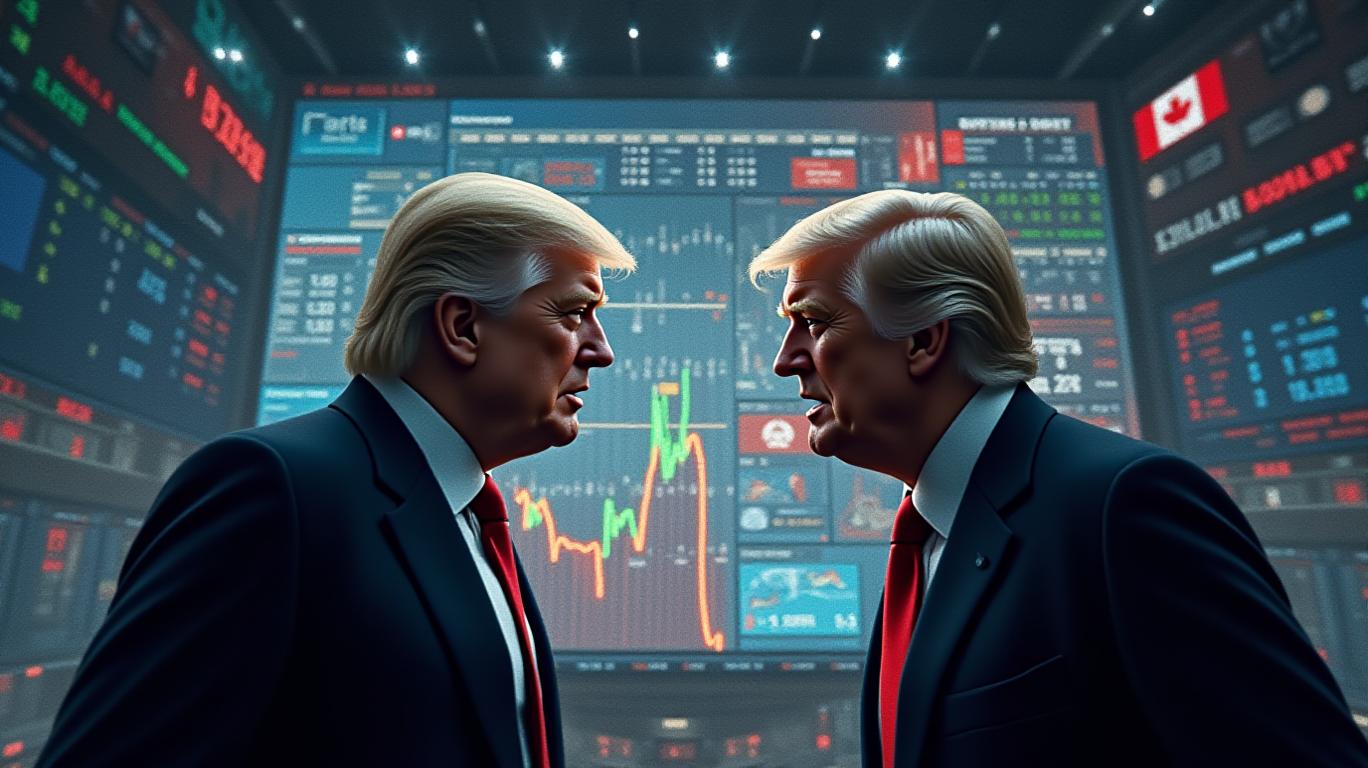
Ladies and gentlemen, buckle up! The trade war between the U.S. and Canada is heating up, and the markets are feeling the heat. President Trump has just signed executive orders to impose tariffs on Canada, Mexico, and China, and the fallout is already being felt. The 10 percent tariffs on all imports from China took effect on February 4, 2025, and the tariffs on Canada and Mexico are set to take effect on March 4, 2025. But that's not all—Trump has also announced plans to increase the tariffs on China by another 10 percent beginning March 4. This is a game-changer, folks, and you need to be prepared.
The proposed tariffs on Canada and Mexico are estimated to reduce long-run GDP by 0.3 percent, which is a significant hit to the economy. This reduction in GDP can lead to decreased consumer spending and investment, which in turn can negatively affect the stock prices of companies in various sectors. For example, sectors such as automotive, manufacturing, and agricultureANSC--, which rely heavily on cross-border trade, are likely to be most vulnerable to these fluctuations. Companies in these sectors may face increased costs due to tariffs, which can reduce their profitability and, consequently, their stock prices.
But it's not just the U.S. that's feeling the pain. China has already announced retaliation on about $13.9 billion worth of U.S. exports at rates of 10 percent and 15 percent, which took effect on February 10. This is a classic case of tit-for-tat, and it's only going to get worse. The market hates uncertainty, and this trade war is creating a lot of it. So, what should you do?
First, stay away from sectors that are heavily reliant on cross-border trade with Canada, such as automotive, aerospace, and agriculture. These sectors are likely to be hit the hardest by the tariffs, and their stock prices are likely to take a beating. Second, consider investing in domestic production, as businesses seek to avoid the increased costs of imported goods. However, be aware that this could also lead to increased competition and lower profit margins for domestic producers, as they may be forced to compete with lower-cost imports from other countries.
But don't just take my word for it. Look at the historical data. The 2018-2019 trade war tariffs imposed by Trump and retained by Biden reduced long-run GDP by 0.2 percent, the capital stock by 0.1 percent, and employment by 142,000 full-time equivalent jobs. This is a clear indication that tariffs have a negative impact on the economy, and the current tariffs are likely to have a similar effect.
So, what's the bottom line? The ongoing tariff war between the U.S. and Canada is a major concern for investors, and it's important to be prepared for the potential long-term economic implications. The tariffs are likely to increase prices for consumers and businesses, which can lead to a decrease in consumer spending and business investment, further exacerbating the economic slowdown. Additionally, the tariffs could lead to a reduction in employment, as businesses may be forced to cut jobs in response to increased costs and decreased demand.
But don't let this scare you. There are still opportunities out there, and you need to be ready to seize them. So, stay informed, stay vigilant, and stay ahead of the game. The market is a fickle beast, but with the right strategy, you can tame it. BOO-YAH!
Ladies and gentlemen, buckle up! The trade war between the U.S. and Canada is heating up, and the markets are feeling the heat. President Trump has just signed executive orders to impose tariffs on Canada, Mexico, and China, and the fallout is already being felt. The 10 percent tariffs on all imports from China took effect on February 4, 2025, and the tariffs on Canada and Mexico are set to take effect on March 4, 2025. But that's not all—Trump has also announced plans to increase the tariffs on China by another 10 percent beginning March 4. This is a game-changer, folks, and you need to be prepared.
The proposed tariffs on Canada and Mexico are estimated to reduce long-run GDP by 0.3 percent, which is a significant hit to the economy. This reduction in GDP can lead to decreased consumer spending and investment, which in turn can negatively affect the stock prices of companies in various sectors. For example, sectors such as automotive, manufacturing, and agricultureANSC--, which rely heavily on cross-border trade, are likely to be most vulnerable to these fluctuations. Companies in these sectors may face increased costs due to tariffs, which can reduce their profitability and, consequently, their stock prices.
But it's not just the U.S. that's feeling the pain. China has already announced retaliation on about $13.9 billion worth of U.S. exports at rates of 10 percent and 15 percent, which took effect on February 10. This is a classic case of tit-for-tat, and it's only going to get worse. The market hates uncertainty, and this trade war is creating a lot of it. So, what should you do?
First, stay away from sectors that are heavily reliant on cross-border trade with Canada, such as automotive, aerospace, and agriculture. These sectors are likely to be hit the hardest by the tariffs, and their stock prices are likely to take a beating. Second, consider investing in domestic production, as businesses seek to avoid the increased costs of imported goods. However, be aware that this could also lead to increased competition and lower profit margins for domestic producers, as they may be forced to compete with lower-cost imports from other countries.
But don't just take my word for it. Look at the historical data. The 2018-2019 trade war tariffs imposed by Trump and retained by Biden reduced long-run GDP by 0.2 percent, the capital stock by 0.1 percent, and employment by 142,000 full-time equivalent jobs. This is a clear indication that tariffs have a negative impact on the economy, and the current tariffs are likely to have a similar effect.
So, what's the bottom line? The ongoing tariff war between the U.S. and Canada is a major concern for investors, and it's important to be prepared for the potential long-term economic implications. The tariffs are likely to increase prices for consumers and businesses, which can lead to a decrease in consumer spending and business investment, further exacerbating the economic slowdown. Additionally, the tariffs could lead to a reduction in employment, as businesses may be forced to cut jobs in response to increased costs and decreased demand.
But don't let this scare you. There are still opportunities out there, and you need to be ready to seize them. So, stay informed, stay vigilant, and stay ahead of the game. The market is a fickle beast, but with the right strategy, you can tame it. BOO-YAH!

Divulgación editorial y transparencia de la IA: Ainvest News utiliza tecnología avanzada de Modelos de Lenguaje Largo (LLM) para sintetizar y analizar datos de mercado en tiempo real. Para garantizar los más altos estándares de integridad, cada artículo se somete a un riguroso proceso de verificación con participación humana.
Mientras la IA asiste en el procesamiento de datos y la redacción inicial, un miembro editorial profesional de Ainvest revisa, verifica y aprueba de forma independiente todo el contenido para garantizar su precisión y cumplimiento con los estándares editoriales de Ainvest Fintech Inc. Esta supervisión humana está diseñada para mitigar las alucinaciones de la IA y garantizar el contexto financiero.
Advertencia sobre inversiones: Este contenido se proporciona únicamente con fines informativos y no constituye asesoramiento profesional de inversión, legal o financiero. Los mercados conllevan riesgos inherentes. Se recomienda a los usuarios que realicen una investigación independiente o consulten a un asesor financiero certificado antes de tomar cualquier decisión. Ainvest Fintech Inc. se exime de toda responsabilidad por las acciones tomadas con base en esta información. ¿Encontró un error? Reportar un problema




Comentarios
Aún no hay comentarios