
Tariff Turbulence Shakes Ford and Wall Street: A New Era of Uncertainty for Automakers?
The U.S. stock market opened lower this week as fresh tariff threats from the Trump administration sent shockwaves through industries reliant on global supply chains. Among the hardest-hit companies is Ford MotorF-- Co., which shocked investors by withdrawing its 2025 financial guidance entirely due to the “potential range of outcomes” created by the tariffs. With automakers facing an estimated $41.7 billion in combined costs from tariffs, Ford’s decision underscores a growing reckoning for industries caught between rising protectionism and globalized production.
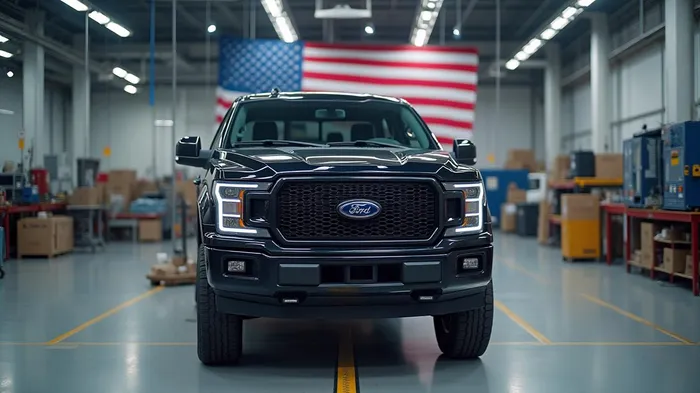
The Tariff Tsunami
The tariffs—25% duties on imported vehicles and parts—have become a financial anchor for Ford. The company now estimates tariffs will reduce its 2025 adjusted EBIT by $1.5 billion, with total gross profit losses reaching $2.5 billion. The pain is most acute in its flagship F-150 line, where per-vehicle production costs have risen by $400 due to tariffs on Canadian aluminum imports. Across the industry, per-vehicle costs have jumped by $4,911, according to the Center for Automotive Research.
Ford’s Q1 2025 results offered a glimpse of resilience amid the storm. Revenue hit $40.7 billion, topping analyst expectations, while its subscription services and software offerings grew by 20%. Yet these positives were overshadowed by stark divisions:
- Ford Pro (Commercial Vehicles): Adjusted EBIT fell to $1.3 billion, down from $2.2 billion in 2024, as plant downtime and fleet pricing pressures took a toll.
- Ford Blue (ICE Vehicles): EBIT plummeted to $96 million, down 90% year-over-year, as lower volumes and Kentucky plant slowdowns bit into profits.
- Ford Model e (Electric Vehicles): The division widened its loss to $849 million, though U.S. retail EV sales rose 15% thanks to promotions like free home chargers.
Why Wall Street Is Nervous
Ford’s decision to abandon its $7–$8.5 billion EBIT target reflects more than just tariff costs—it signals a systemic breakdown in predictability. The company cited “industrywide supply chain disruption,” the risk of retaliatory tariffs from trade partners, and shifting tax/emissions policies as critical uncertainties. These factors have also led peers like General Motors and Amazon to withdraw guidance, creating a ripple effect across markets.
Analysts warn that Ford’s $50 billion bet on U.S. manufacturing since 2020—a strategy to insulate against tariffs—may not be enough. While 80% of its U.S. sales are domestically produced, imported parts still account for 20% of costs, and delays in launching EVs like the all-electric F-150 Lightning threaten to deepen losses. Meanwhile, GM, which relies on 46% imported vehicles, faces $4–5 billion in tariff costs, highlighting Ford’s relative advantage but also the industry’s vulnerability.
The Path Forward
Ford’s cost-cutting measures—such as using bond carriers to bypass Mexican tariffs—will offset only $1 billion of the $2.5 billion tariff burden. The company is now pinning its hopes on clearer trade policies and a rebound in EV demand. Its J.D. Power quality improvements and $1 billion in fixed-cost savings offer glimmers of hope, but the Model e division’s projected $5 billion annual loss in 2025 looms large.
Investors face a dilemma: Ford’s stock has outperformed the S&P 500 so far in 2025, rising 6.4% amid Q1’s strong revenue, but its withdrawal of guidance signals prolonged uncertainty. The automaker’s fate now hinges on whether the White House will ease tariffs or allow the market to absorb the costs—a decision that could redefine the U.S. auto industry’s trajectory.
Conclusion: Tariffs and the Tipping Point
Ford’s suspension of guidance is more than a financial footnote—it’s a wake-up call for investors. With $1.5 billion in tariff-driven EBIT losses and $5 billion in annual EV deficits on the horizon, the company’s success depends on navigating a minefield of policy risks and production bottlenecks. While its U.S.-centric manufacturing and quality gains provide a foundation, the broader auto sector’s $41.7 billion tariff bill underscores an industry in crisis.
For now, Wall Street’s lower opening reflects a market bracing for the fallout. Investors in automakers must ask: Can Ford—and its peers—weather the storm, or will tariffs force a reset of expectations for the entire industry? The answer could determine not just this year’s earnings, but the shape of manufacturing in the decade ahead.





Comentarios
Aún no hay comentarios